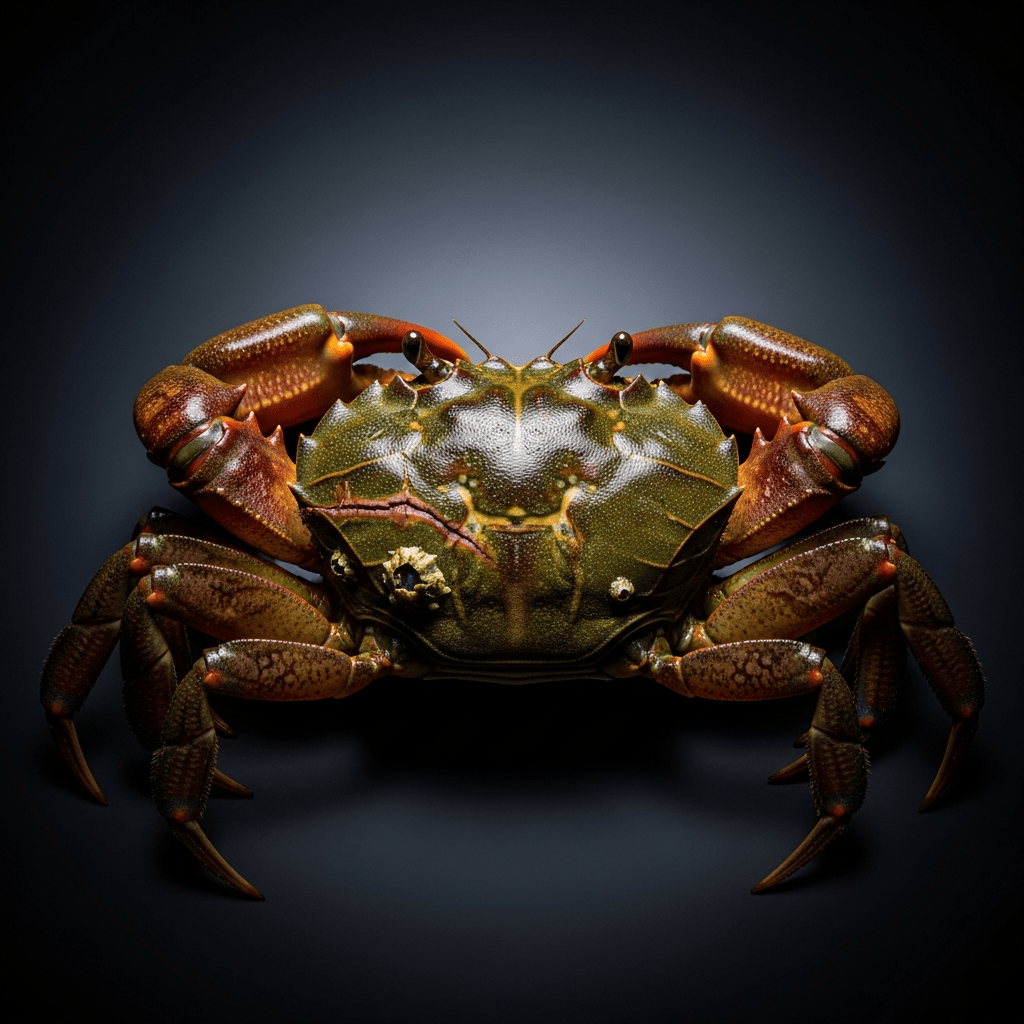
Mud Crab
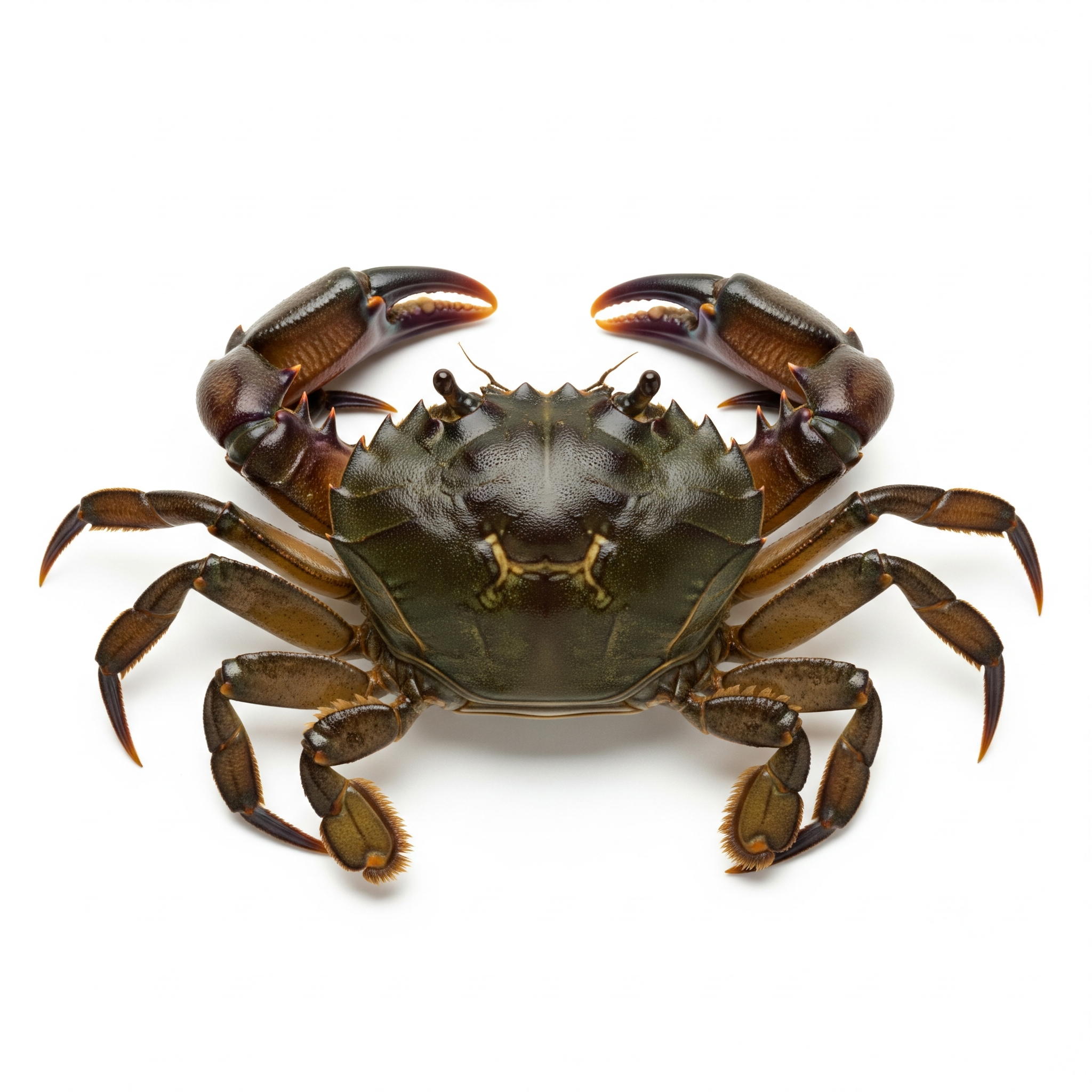
The mud crab (Scylla serrata) is a large, robust true crab native to the Indo-Pacific region, prized for its edible flesh and significant role in coastal aquaculture and fisheries.
The mud crab (Scylla serrata) is a large, robust true crab native to the Indo-Pacific region, prized for its edible flesh and significant role in coastal aquaculture and fisheries.
First described by Forskål in 1775, the mud crab naturally inhabits mangrove and estuarine environments spanning from South Africa and the Indian Ocean through Southeast Asia to northern Australia and the western Pacific islands. Over time, it has become a focus of extensive aquaculture development, with selective breeding enhancing growth and disease resistance in farmed populations.
The mud crab belongs to the family Portunidae within the infraorder Brachyura, which encompasses true crabs. Its genus is Scylla, distinguishing it among swimming crabs known for their broad carapaces and powerful claws.
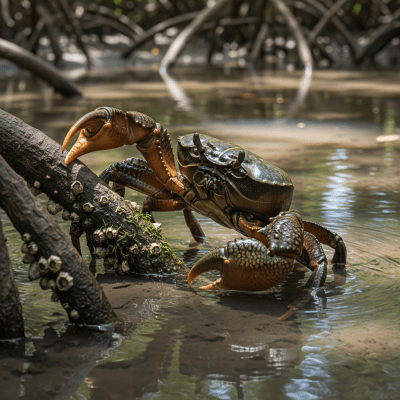
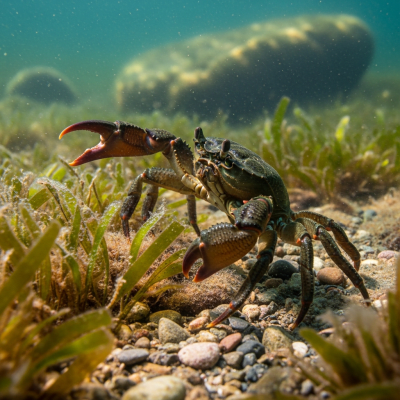
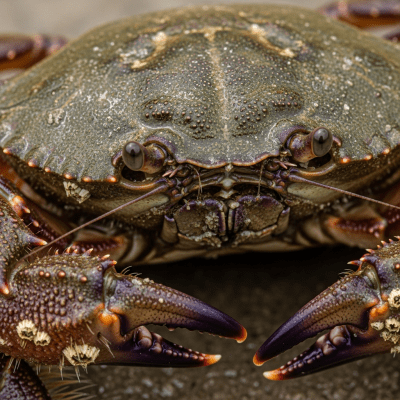
The mud crab features a broad, dark green to brown carapace that can reach up to 25 cm in width. Its strong chelae (claws) are a defining trait, with males exhibiting larger claws and females a wider abdomen, reflecting clear sexual dimorphism. The crab's sturdy form and coloration provide effective camouflage within muddy, mangrove habitats.
Mud crabs are opportunistic omnivores, feeding on detritus, mollusks, small fish, and plant material. They exhibit burrowing behavior and can survive periods of low oxygen, adapting well to fluctuating estuarine conditions. Their rapid growth and adaptability have made them a cornerstone species in commercial aquaculture.
Bring this kind into your world illustrated posters, mugs, and shirts.
Archival print, museum-grade paper
Buy Poster
Stoneware mug, dishwasher safe
Buy Mug
Soft cotton tee, unisex sizes
Buy ShirtCelebrated in many Southeast Asian and Oceanic cuisines, the mud crab features prominently in iconic dishes such as Singaporean chili crab and Filipino ginataang alimasag. Beyond culinary appeal, it holds cultural value as a symbol of coastal livelihoods and traditional fishing communities.
Primarily inhabiting mangrove forests and estuarine environments, mud crabs thrive in brackish waters where salinity fluctuates between 5 and 35 ppt. Their burrowing behavior helps them avoid predators and cope with low oxygen conditions. As omnivores, they play a vital ecological role by recycling organic material and controlling populations of smaller aquatic organisms.
Mud crabs reproduce through external fertilization, with females carrying fertilized eggs beneath their abdomen until hatching. Juveniles undergo several larval stages before settling into benthic habitats. Rapid growth allows them to reach market size within months, supporting both wild populations and aquaculture operations. Sexual maturity is marked by distinct morphological differences between males and females.
While mud crabs are widely harvested and farmed, habitat loss and overfishing pose localized threats. Aquaculture efforts have helped alleviate pressure on wild stocks, but sustainable management remains essential to maintain healthy populations. No major global conservation listing currently restricts their harvest, though regional monitoring continues.
Beyond their culinary value, mud crabs contribute economically through fisheries and aquaculture, supporting livelihoods in many coastal communities. Their farming has driven advances in hatchery techniques and selective breeding. However, intensive culture can lead to disease outbreaks and environmental concerns, necessitating responsible practices. Additionally, mud crabs are sometimes used in traditional medicine and local cultural rituals.