Mangrove Tree Crab
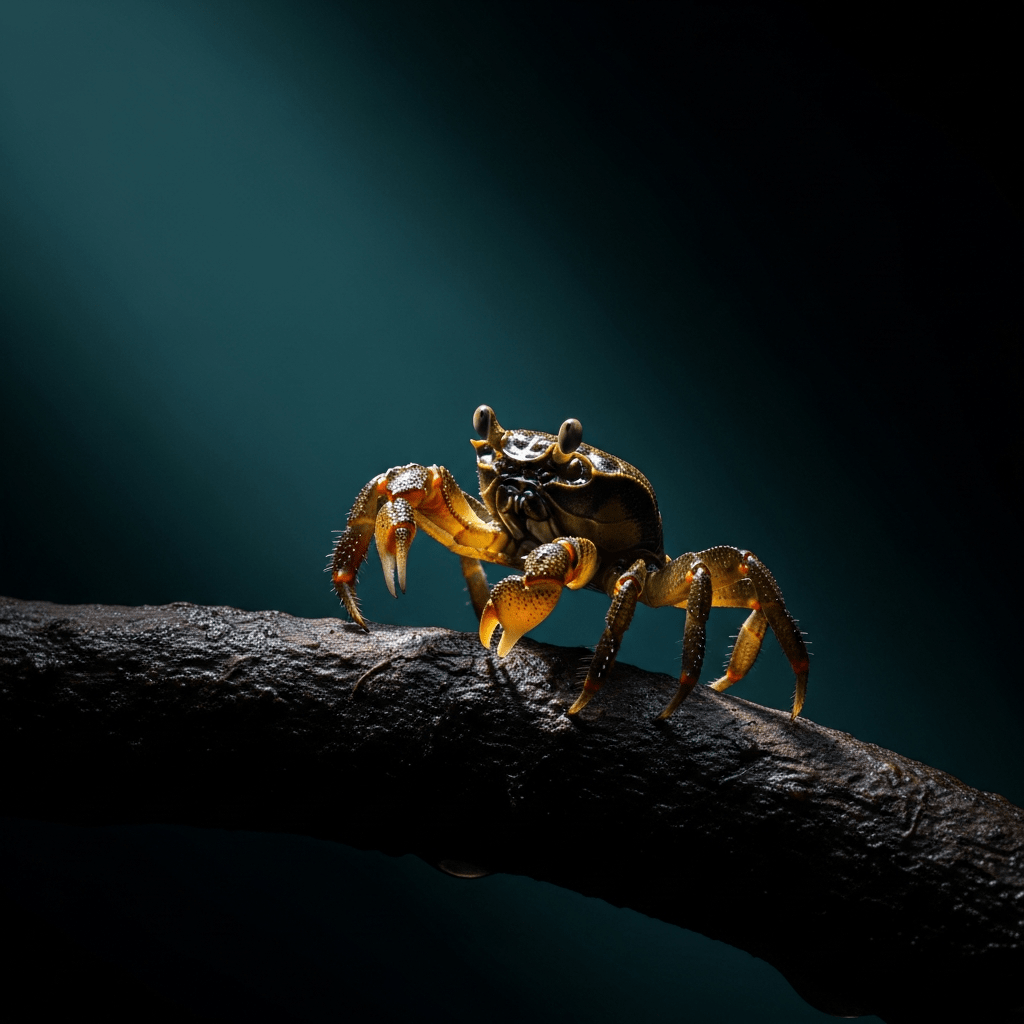
The Mangrove Tree Crab (Aratus pisonii) is a small, arboreal crab native to mangrove ecosystems along the Atlantic coasts of the Americas, uniquely adapted to both terrestrial and aquatic life.
The Mangrove Tree Crab (Aratus pisonii) is a small, arboreal crab native to mangrove ecosystems along the Atlantic coasts of the Americas, uniquely adapted to both terrestrial and aquatic life.
First described by Henri Milne-Edwards in 1837, the Mangrove Tree Crab originates from the mangrove forests of the Americas. It is a naturally occurring wild species, with its type locality rooted in these coastal habitats where it has evolved specialized traits for arboreal living.
The Mangrove Tree Crab belongs to the family Sesarmidae within the genus Aratus. As a member of the infraorder Brachyura, it is classified among the true crabs, distinguished by their compact body and folded abdomen.
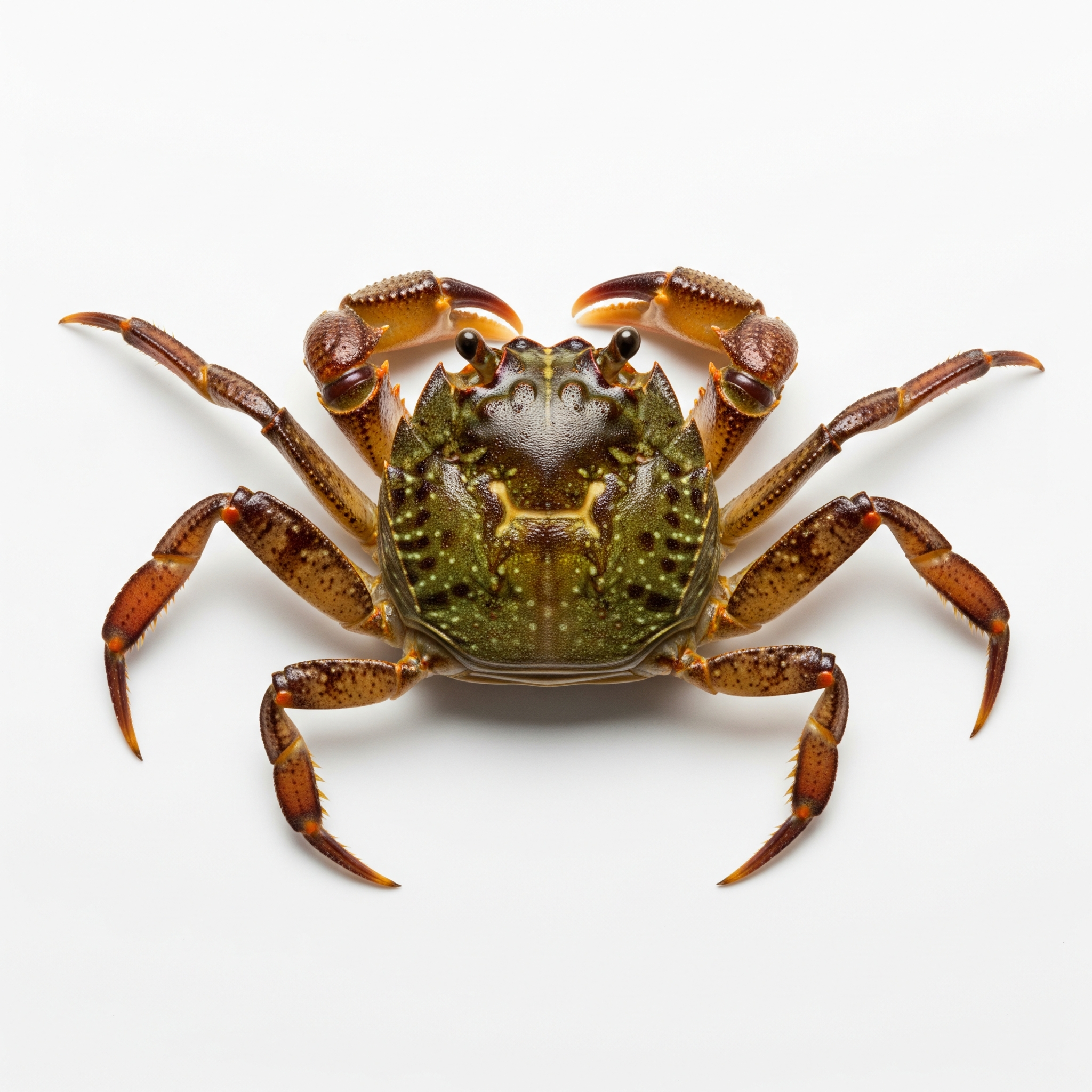
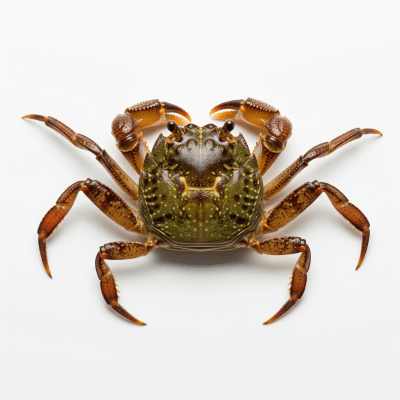
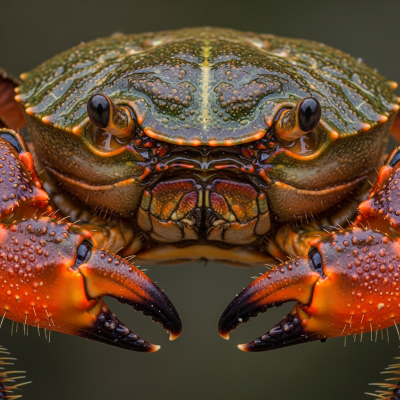
This crab measures up to 5 cm in carapace width and displays an olive-brown to dark green shell complemented by lighter legs. Its flattened legs and sharp claws are finely adapted for gripping the bark and leaves of mangrove trees. Males are typically larger and bear more robust claws, reflecting strong sexual dimorphism.
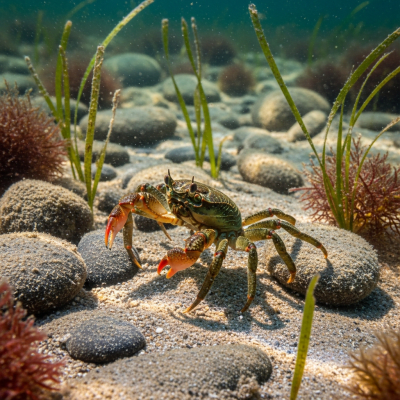
Exhibiting arboreal climbing behavior, the Mangrove Tree Crab thrives both on land and in water. It feeds omnivorously on mangrove leaves, detritus, and small invertebrates, playing an important role in the mangrove food web. Its tolerance to fluctuating salinity allows it to survive submerged or exposed for extended periods.
Bring this kind into your world illustrated posters, mugs, and shirts.
Archival print, museum-grade paper
Buy Poster
Stoneware mug, dishwasher safe
Buy Mug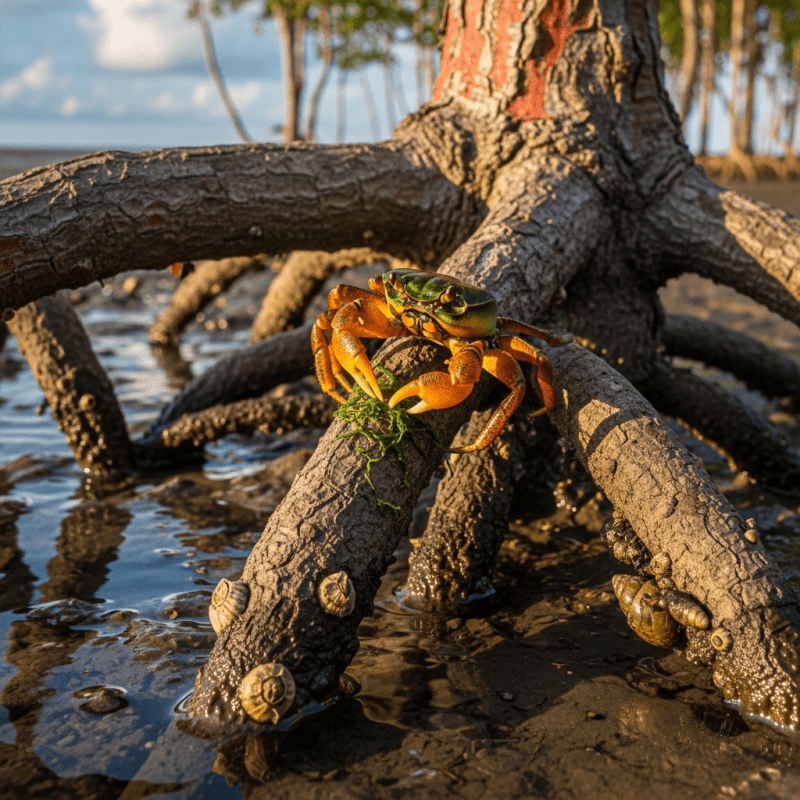
Soft cotton tee, unisex sizes
Buy ShirtWhile not prominent in art or mythology, the Mangrove Tree Crab holds ecological significance in coastal communities, often recognized locally by names such as "Cangrejo de mangle." Its presence underscores the health and complexity of mangrove ecosystems.
Native to mangrove forests along the Atlantic coasts of the Americas, the Mangrove Tree Crab occupies a unique ecological niche. Its arboreal habits allow it to exploit resources unavailable to many other crabs, feeding on foliage and detritus while also serving as prey for various predators. Its ability to tolerate fluctuating salinity and survive both submerged and exposed conditions reflects its adaptation to the dynamic mangrove environment.

The Mangrove Tree Crab grows continuously through molting, with both juveniles and adults exhibiting climbing behavior. While detailed breeding habits are not extensively documented, like other sesarmid crabs, it likely undergoes a larval planktonic stage before settling into its arboreal habitat. Sexual dimorphism suggests distinct roles or competition among males during reproduction.
Currently, the Mangrove Tree Crab faces no major conservation threats and is not listed as endangered. Its populations remain stable within healthy mangrove ecosystems, though habitat loss from coastal development and mangrove deforestation could pose future risks.
Humans impact the Mangrove Tree Crab primarily through habitat alteration rather than direct use. While it holds minimal economic or culinary importance, its role in mangrove ecology supports coastal fisheries and biodiversity. In some areas, it is collected locally for bait or occasional consumption, but its greatest value lies in maintaining the health of mangrove habitats that protect shorelines and support diverse marine life.