Mangrove Crab
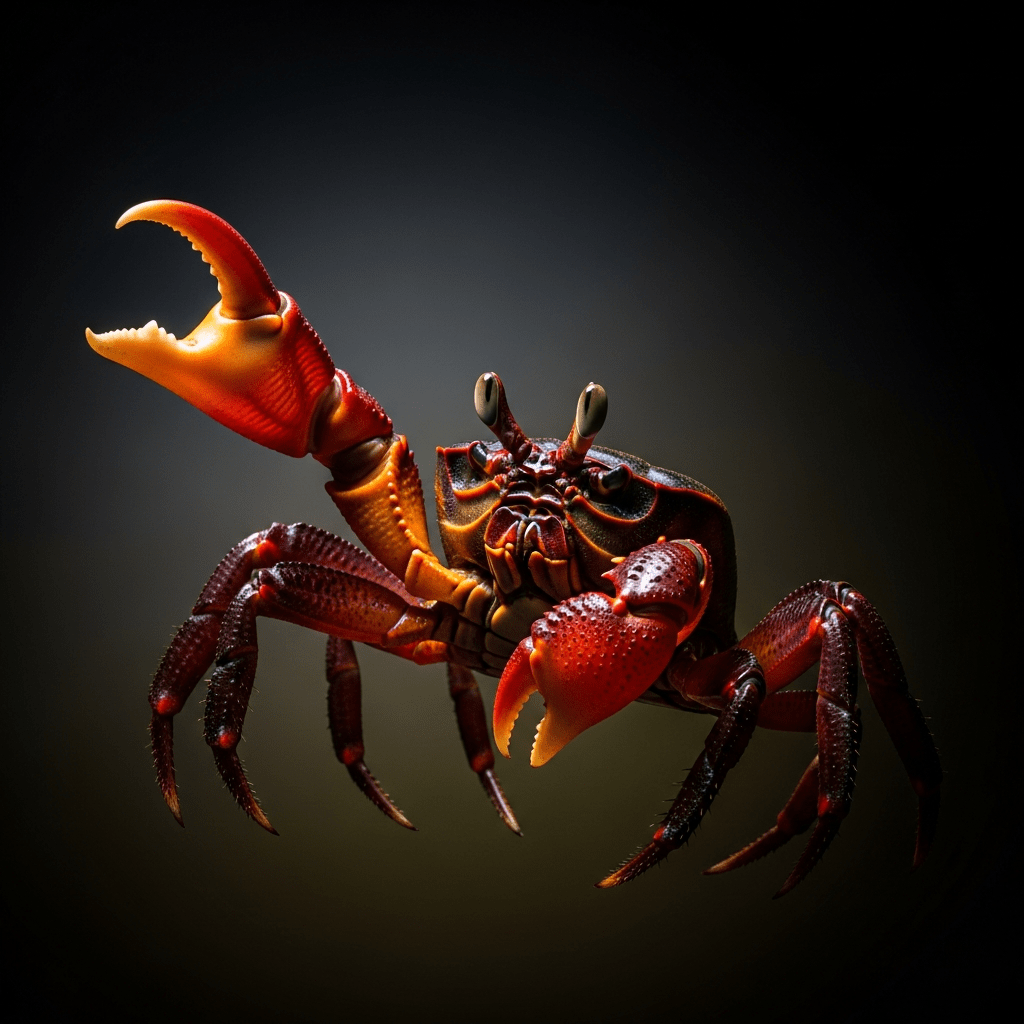
The mangrove crab is a group of true crabs within the genus Perisesarma, known for their vital role in tropical and subtropical mangrove ecosystems where they aid in leaf litter decomposition and nutrient cycling.
The mangrove crab is a group of true crabs within the genus Perisesarma, known for their vital role in tropical and subtropical mangrove ecosystems where they aid in leaf litter decomposition and nutrient cycling.
The genus Perisesarma was first described by De Man in 1895. These crabs evolved within the family Sesarmidae, adapting to a semi-terrestrial lifestyle in mangrove forests along tropical and subtropical coasts. Their discovery spans the late 19th and early 20th centuries, with species catalogued by global marine biodiversity authorities.
Mangrove crabs belong to the family Sesarmidae and genus Perisesarma, placing them firmly within the infraorder Brachyura of true crabs. This classification reflects their evolutionary adaptations for life in mangrove habitats and distinguishes them from other crab groups such as king crabs or hermit crabs.
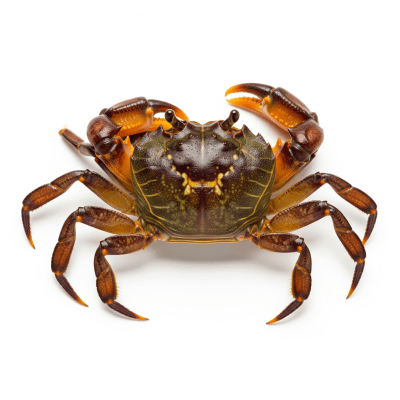
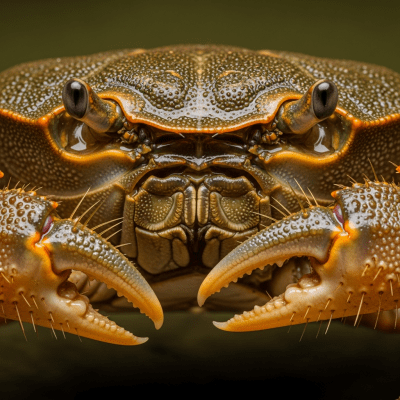
Mangrove crabs typically have a square-shaped carapace about 3.5 cm wide, with coloration ranging from brownish to greenish hues that help them blend into mangrove substrates. They possess robust claws specially adapted for manipulating leaf litter and burrowing among mangrove roots, reflecting their ecological niche.
These crabs are primarily detritivores, feeding on leaf litter and playing a crucial role in breaking down organic material within mangrove forests. Their growth and activity patterns are influenced by tidal cycles, and both juveniles and adults occupy burrows in mud or among mangrove roots, contributing to soil aeration and nutrient recycling.
Bring this kind into your world illustrated posters, mugs, and shirts.
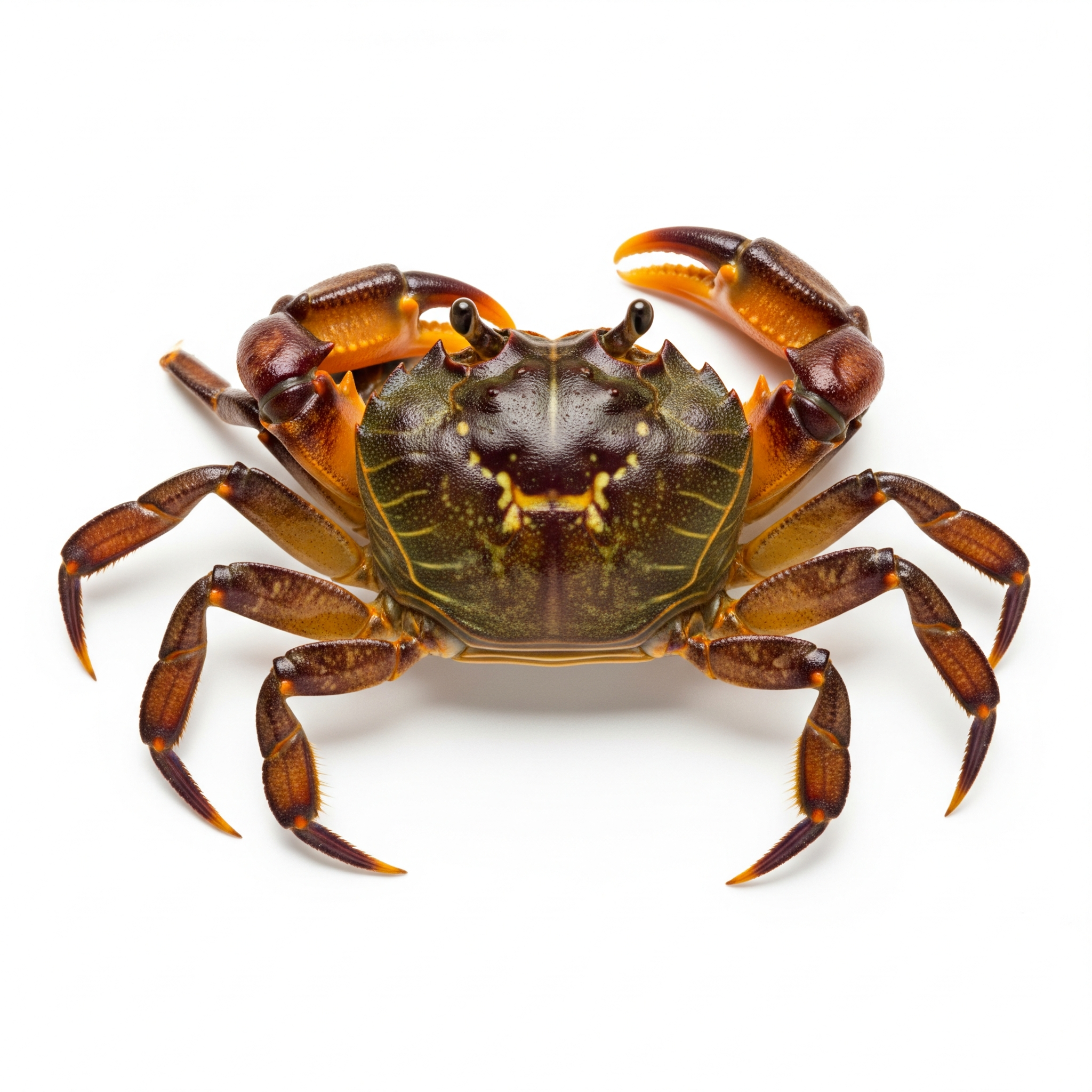
Archival print, museum-grade paper
Buy Poster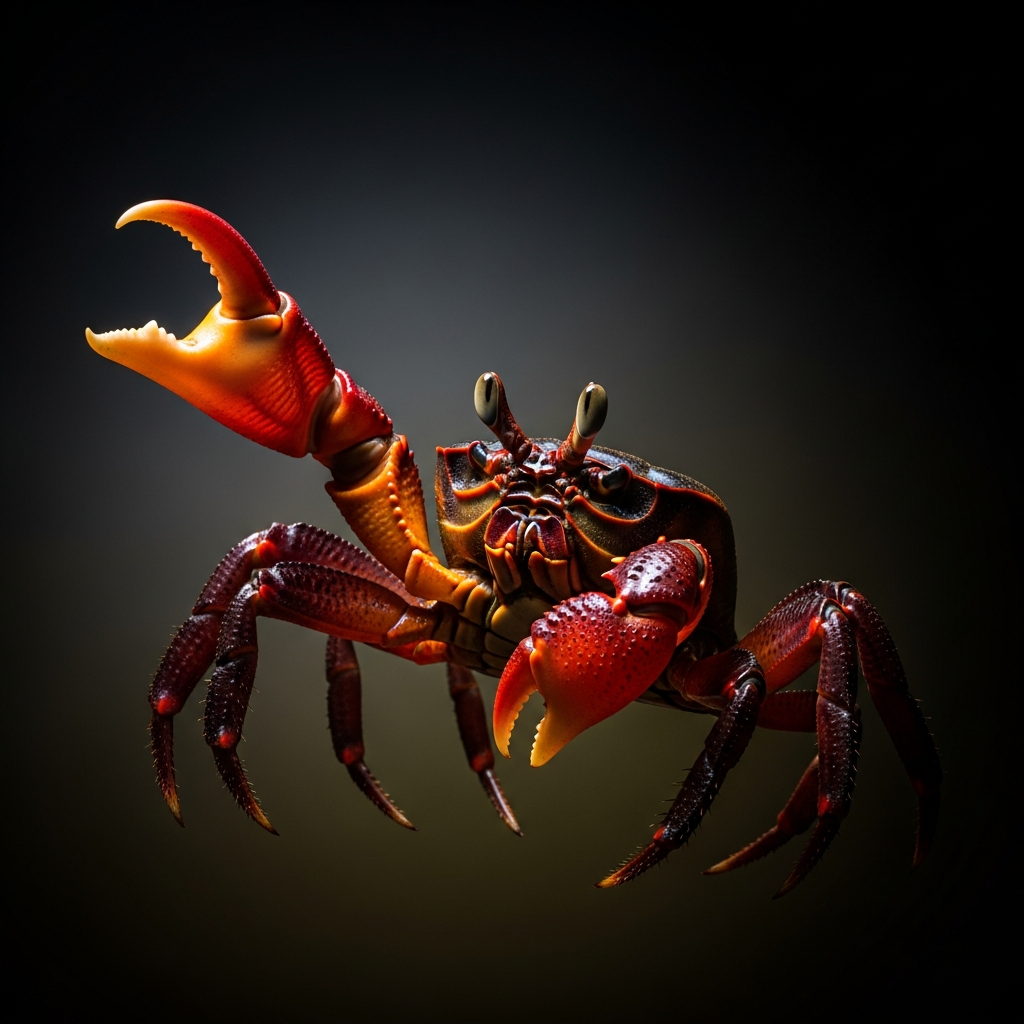
Stoneware mug, dishwasher safe
Buy Mug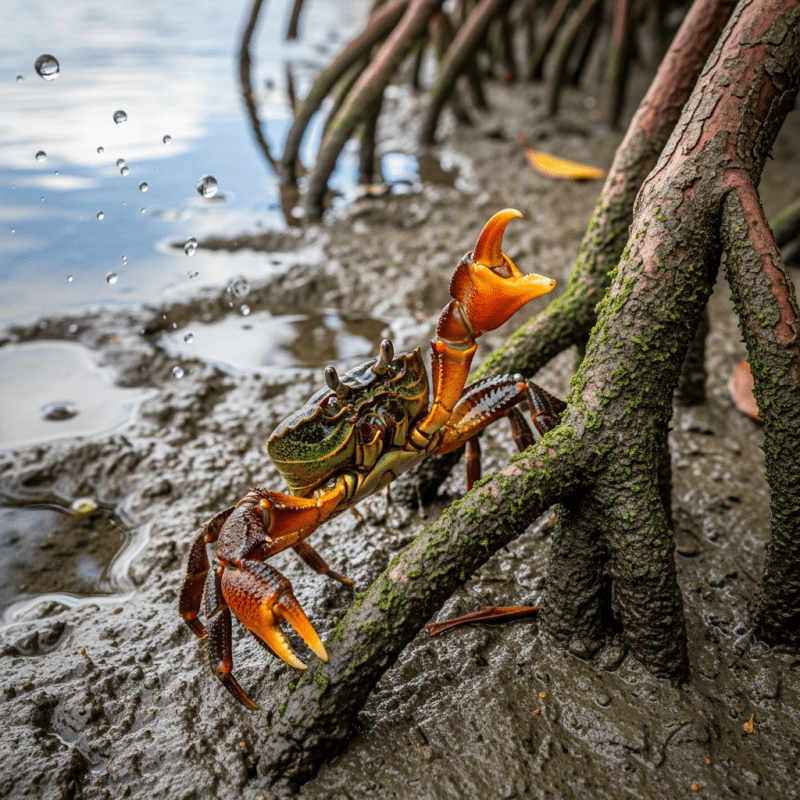
Soft cotton tee, unisex sizes
Buy ShirtIn regions such as Southeast Asia and West Africa, mangrove crabs hold cultural importance as a local food source. They appear in traditional dishes and regional culinary practices, reflecting the close relationship between coastal communities and their mangrove environments.
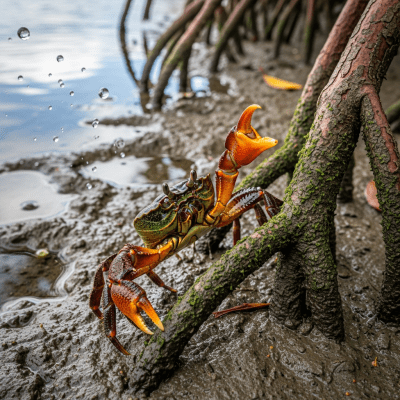
Mangrove crabs inhabit tropical and subtropical mangrove forests, where they thrive in the muddy, brackish environment. Their ecological role centers on processing leaf litter, which helps maintain soil health and nutrient availability. By burrowing, they also improve sediment aeration, supporting the overall productivity of mangrove ecosystems.
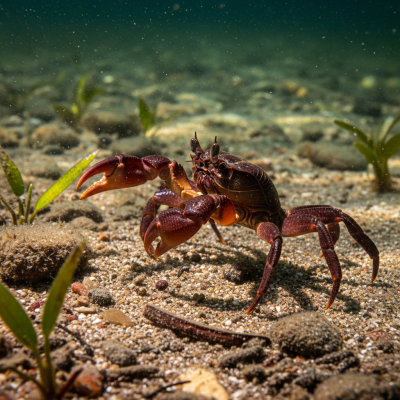
Growth and molting in mangrove crabs are influenced by tidal cycles, with juveniles and adults occupying burrows within mangrove mud or roots. While specific breeding behaviors vary by species, their lifecycle includes typical crab stages from larvae to mature adults adapted to semi-terrestrial conditions.
Mangrove crabs face threats primarily from habitat loss due to coastal development and pollution. While they are not widely assessed for conservation status, protecting mangrove habitats is essential for their survival and the health of coastal ecosystems.
Humans interact with mangrove crabs mainly through small-scale harvesting for local consumption, especially in Southeast Asia and West Africa. Beyond culinary use, their presence supports mangrove ecosystem services that benefit coastal communities, such as shoreline protection and fisheries productivity.