Japanese Spider Crab
The Japanese Spider Crab (Macrocheira kaempferi) is the largest living crab species, famed for its extraordinary leg span reaching up to 3.7 meters, making it a striking inhabitant of Japan's deep marine waters.
The Japanese Spider Crab (Macrocheira kaempferi) is the largest living crab species, famed for its extraordinary leg span reaching up to 3.7 meters, making it a striking inhabitant of Japan's deep marine waters.
First described in 1837 by Johann Friedrich von Brandt, the Japanese Spider Crab originates from the waters surrounding Japan, particularly Sagami Bay. This species has evolved naturally without any artificial breeding or hybridization, maintaining a wild lineage in its native deep-sea environment.
Belonging to the family Inachidae within the infraorder Brachyura, the Japanese Spider Crab is classified under the genus Macrocheira. It is part of the superfamily Majoidea, grouping it among other spider crabs known for their elongated limbs and distinctive carapaces.
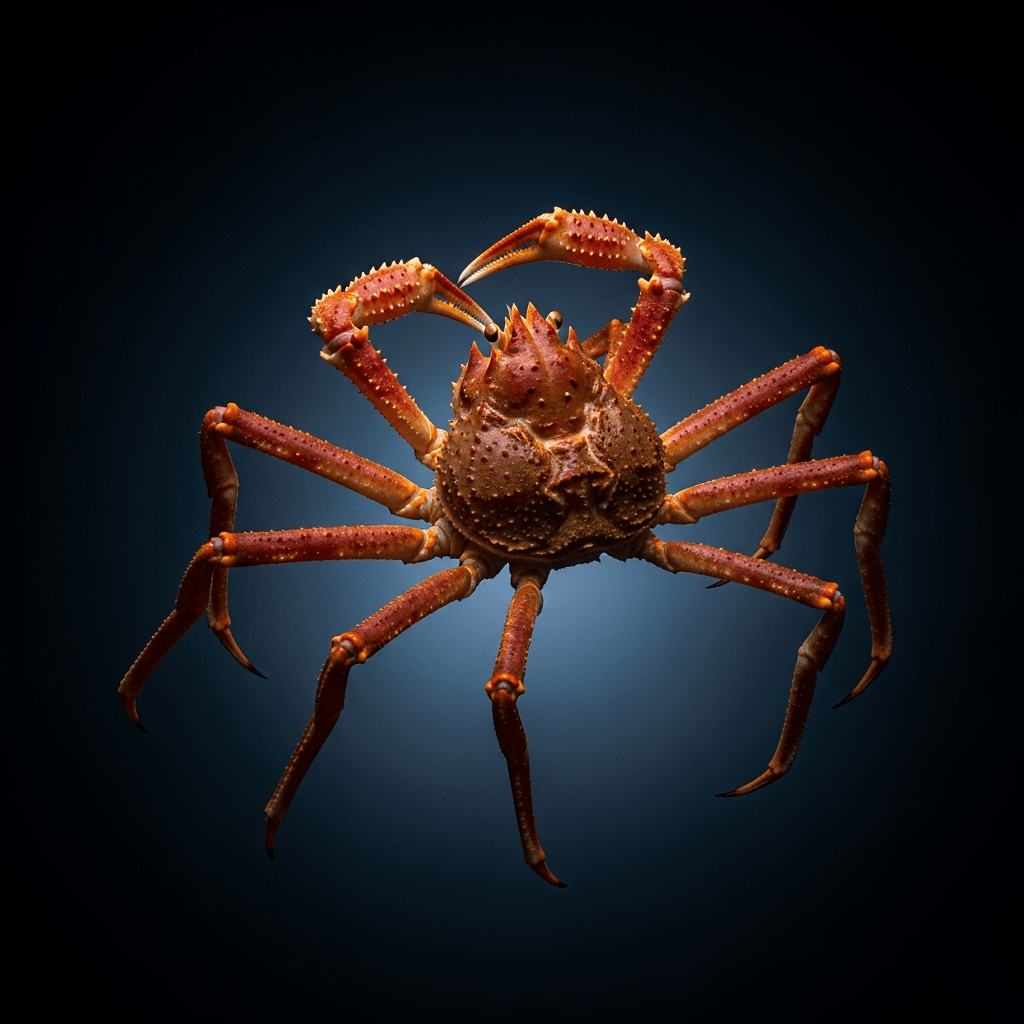
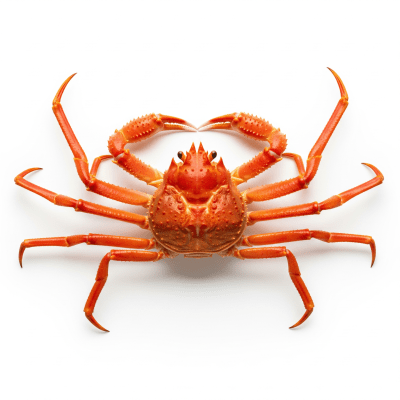
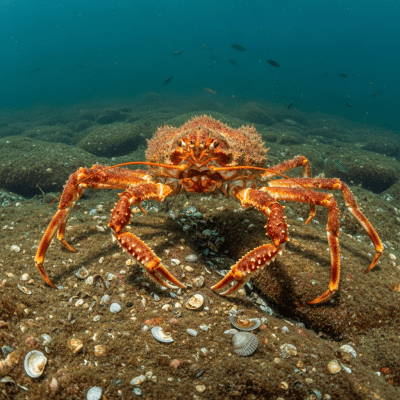
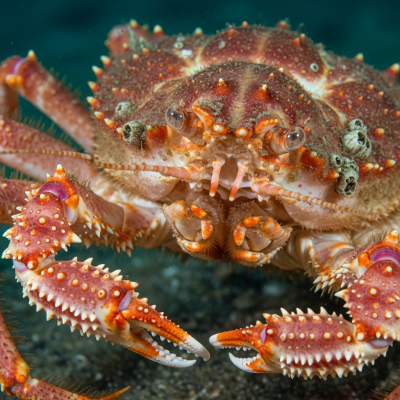
This crab features a compact, spiny carapace typically measuring around 40 centimeters wide, adorned with a vibrant orange coloration contrasted by white-tipped legs. Its most remarkable trait is its exceptionally long legs, which can span up to 3.7 meters, giving it a spider-like silhouette that is both imposing and elegant.
The Japanese Spider Crab is an omnivorous scavenger, feeding primarily on dead animals and shellfish found on the ocean floor. Adapted to deep marine habitats between 50 and 600 meters, it tolerates high pressure and low temperatures. Its slow growth and long lifespan support a steady ecological role in its environment.
Bring this kind into your world illustrated posters, mugs, and shirts.
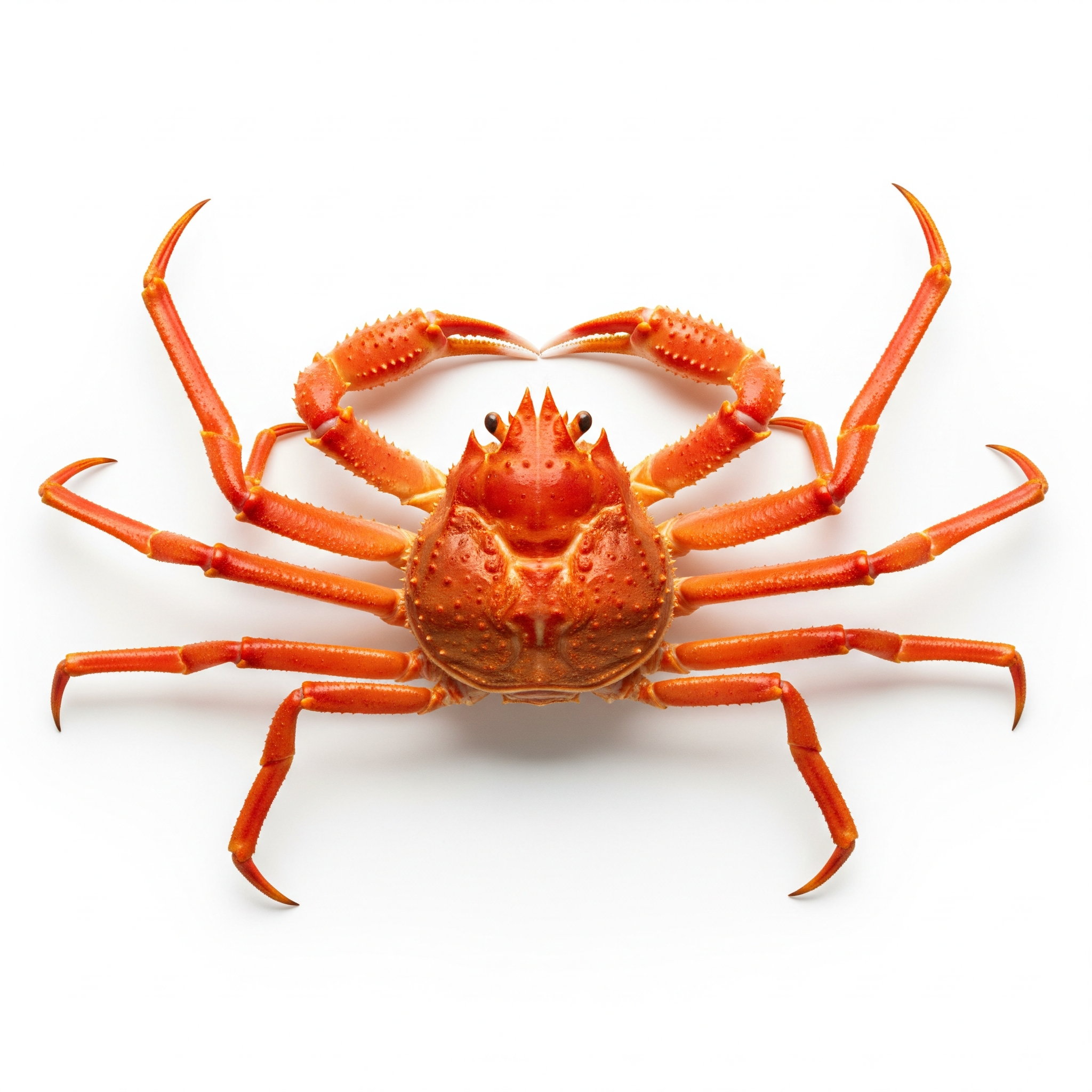
Archival print, museum-grade paper
Buy Poster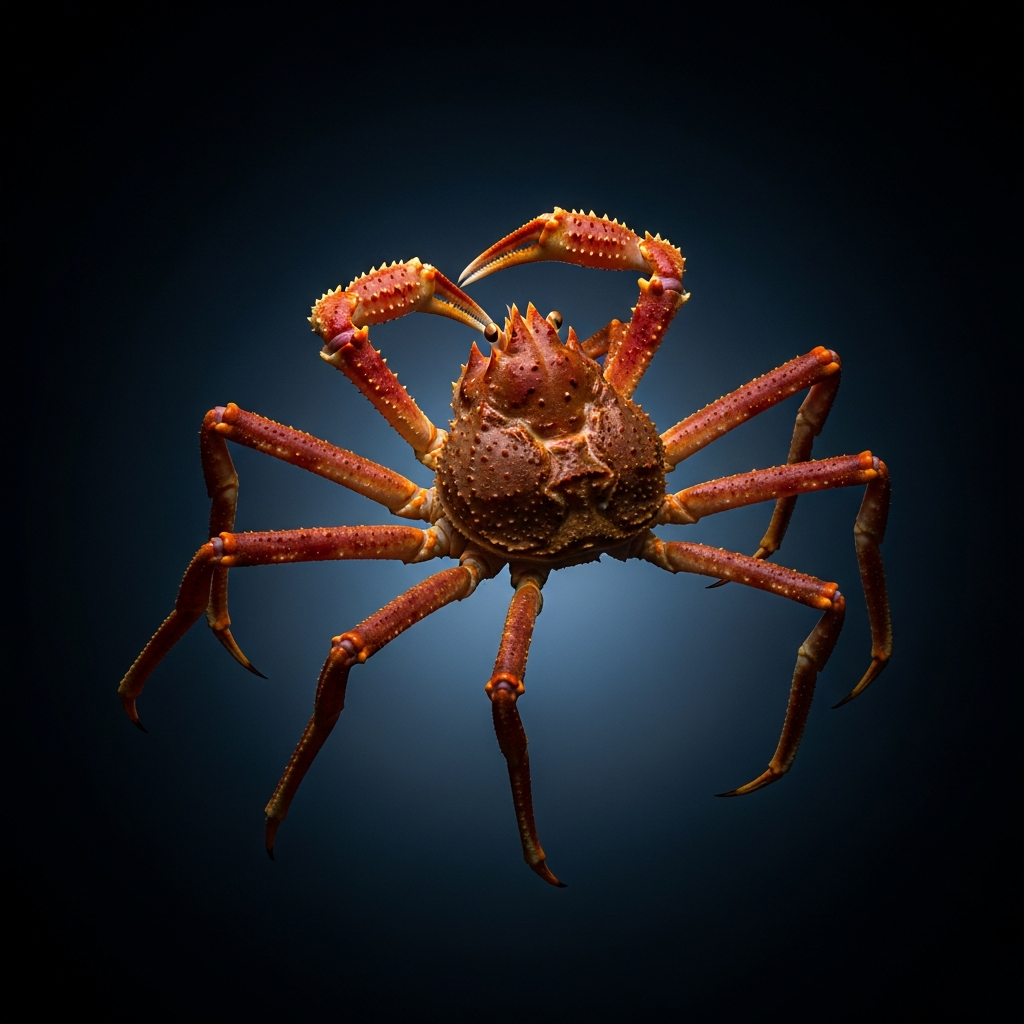
Stoneware mug, dishwasher safe
Buy Mug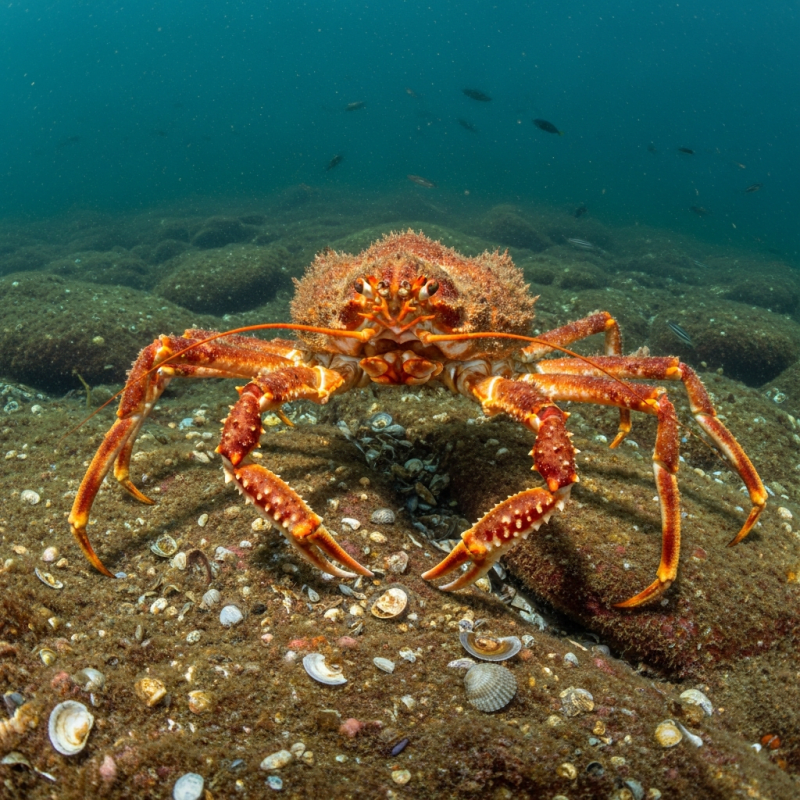
Soft cotton tee, unisex sizes
Buy ShirtIn Japan, the Japanese Spider Crab holds cultural importance as a delicacy and a symbol of the ocean's grandeur. Known locally as Taka-ashi-gani (meaning "long-legged crab"), it appears in regional folklore and is occasionally showcased in aquariums, captivating visitors with its impressive size and unique form.
The Japanese Spider Crab inhabits deep marine environments off the coast of Japan, dwelling at depths between 50 and 600 meters. It favors sandy and rocky substrates where it scavenges the ocean floor. Its ecological role includes recycling nutrients by feeding on carrion and shellfish, contributing to the health of benthic ecosystems.

While detailed reproductive behaviors are not extensively documented, the Japanese Spider Crab is known for slow growth and a long lifespan, estimated up to 100 years. Like other crabs, it undergoes molting to grow, reaching sexual maturity gradually over many years in its deep-sea habitat.
Though not formally assessed by major conservation bodies, the Japanese Spider Crab faces vulnerabilities from overfishing and habitat disturbance due to its slow growth and long lifespan. Commercial harvests are regulated in Japan to help maintain sustainable populations and protect this iconic species.
Humans interact with the Japanese Spider Crab primarily through regulated fisheries, as it is considered a prized delicacy in Japan. Beyond culinary use, it is occasionally displayed in aquariums for education and tourism, fostering appreciation for deep-sea biodiversity. Its rarity and size also make it a subject of fascination and cultural pride.