Fiddler Crab
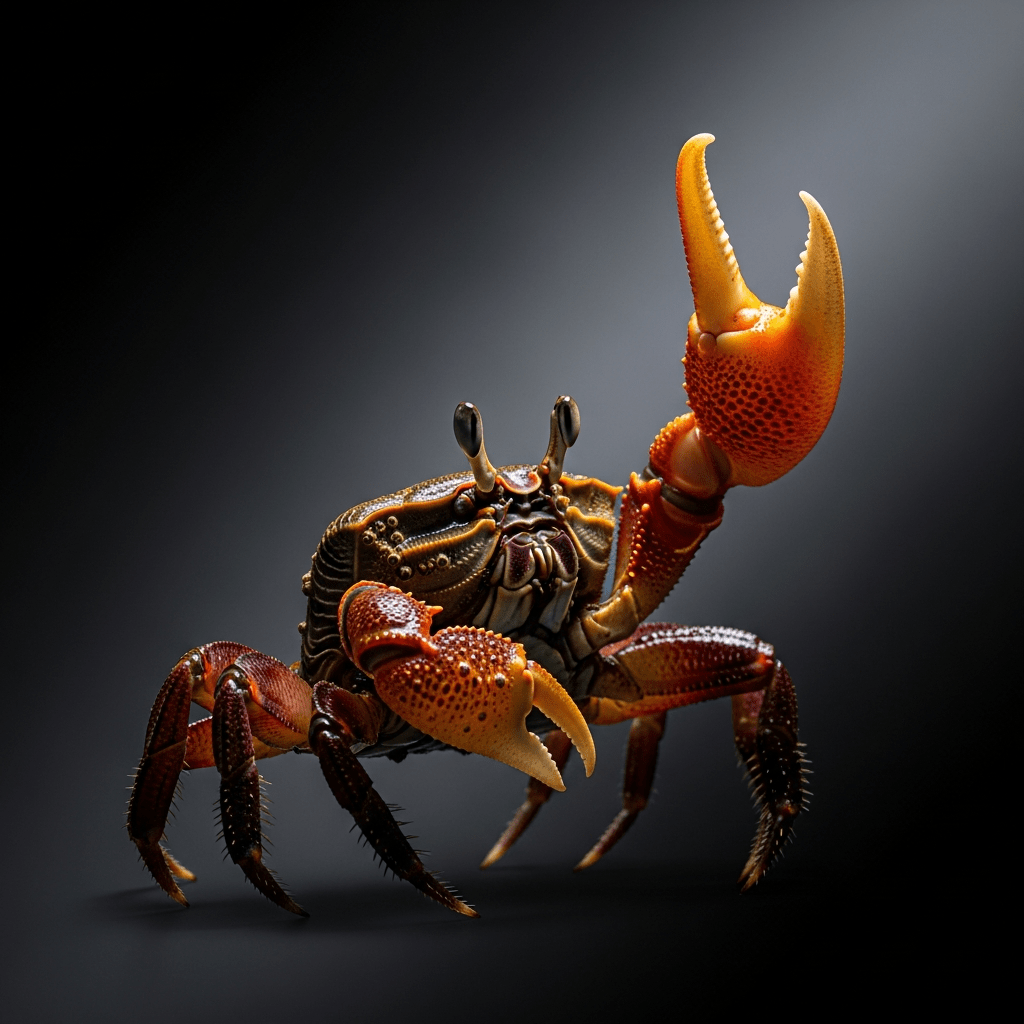
Fiddler crabs are small true crabs known for the males' distinctive single oversized claw, which they use for communication and competition.
Fiddler crabs are small true crabs known for the males' distinctive single oversized claw, which they use for communication and competition.
The genus Uca, encompassing fiddler crabs, was first described by Leach in 1814. These crabs have a cosmopolitan presence across tropical and subtropical coastal regions, with species documented by naturalists over the 19th and 20th centuries. Their lineage forms a monophyletic group within the family Ocypodidae, with ongoing research refining their evolutionary relationships.
Fiddler crabs belong to the family Ocypodidae within the infraorder Brachyura, the true crabs. The genus Uca includes over 100 recognized species, characterized by their unique sexual dimorphism and ecological roles in intertidal habitats.
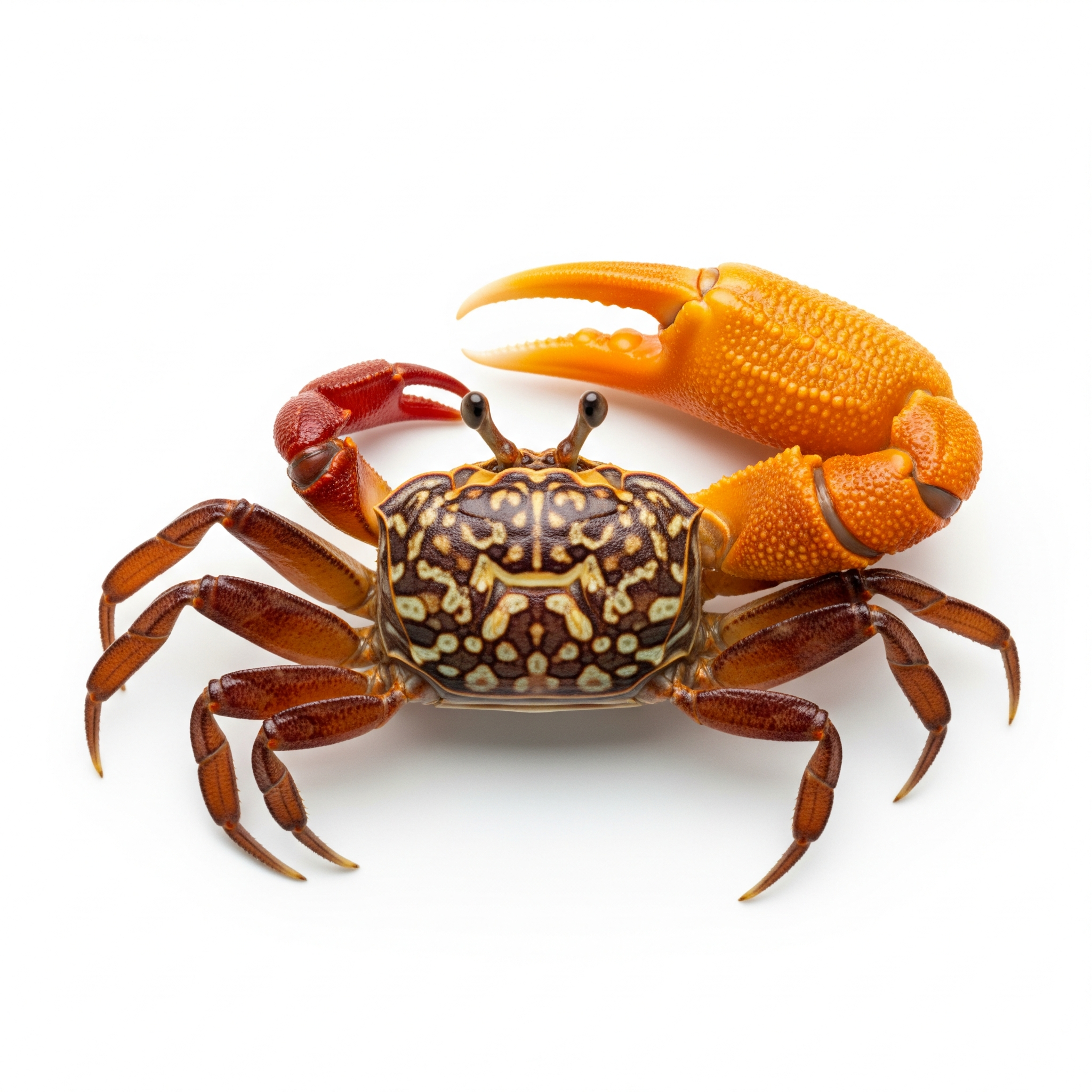
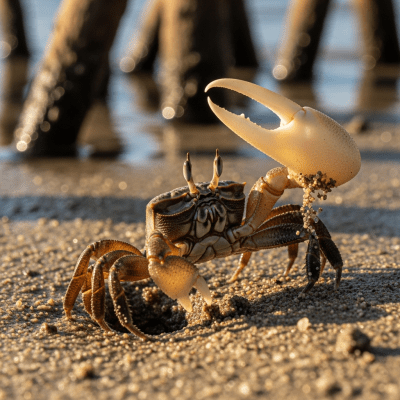
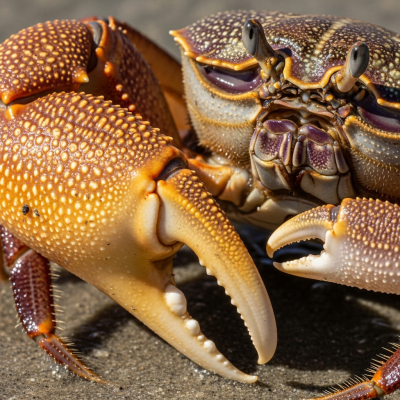
Typically measuring up to 5 cm across the carapace, fiddler crabs exhibit a wide range of colors from muted browns and grays to vibrant reds, blues, and yellows. Males are instantly recognizable by their greatly enlarged single claw, which can weigh nearly half their body mass, while females possess two small, equal-sized claws. Their compact bodies and burrowing adaptations suit life in muddy and sandy intertidal zones.
Fiddler crabs are known for their burrowing and sediment-sifting behaviors, which play a vital role in nutrient cycling and sediment structure in coastal ecosystems. Males perform conspicuous claw-waving displays to signal territory and attract mates. As detritivores, they feed by filtering organic matter from sediment, contributing to the health of their habitats.
Bring this kind into your world illustrated posters, mugs, and shirts.
Archival print, museum-grade paper
Buy Poster
Stoneware mug, dishwasher safe
Buy Mug
Soft cotton tee, unisex sizes
Buy ShirtWhile fiddler crabs are not prominent in widespread cultural traditions, their distinctive claw-waving behavior has inspired local nicknames such as "calling crab" and "soldier crab." In some regions, they appear in educational exhibits and aquaria, serving as engaging examples of animal communication and coastal ecology.
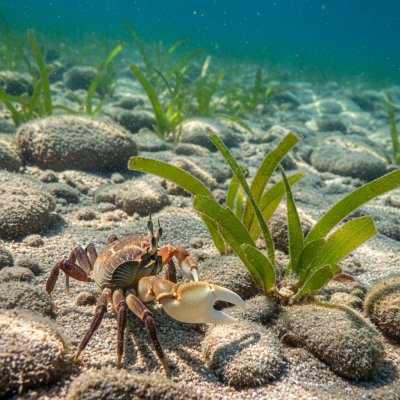
Fiddler crabs thrive in intertidal environments across tropical and subtropical coasts worldwide. They prefer mudflats, sandflats, and mangrove swamps where they construct burrows for shelter and breeding. Their burrowing and feeding activities enhance sediment aeration and nutrient cycling, making them key ecological engineers in these habitats. They require brackish to marine salinity levels and are sensitive to environmental changes.
Fiddler crabs reproduce by mating within their burrows, where females lay eggs that develop into free-swimming larvae. These larvae undergo several planktonic stages before settling as juvenile crabs. Growth rates and lifespan vary by species and environment, but most live between one and two years. Males develop their large claw as they mature, which plays a crucial role in mating rituals.
Fiddler crabs face threats primarily from habitat loss, pollution, and coastal development, which degrade their intertidal environments. While many species remain abundant, localized declines have been noted. Their tolerance to desiccation and hypoxia offers some resilience, but ongoing habitat protection is essential to maintain healthy populations.
Beyond their limited use as bait and occasional aquarium pets, fiddler crabs provide ecological benefits that indirectly support human interests by maintaining healthy coastal ecosystems. Their sediment turnover aids in water quality and supports fisheries by sustaining food webs. Human activities impacting coastal habitats, however, can threaten fiddler crab populations and the services they provide.