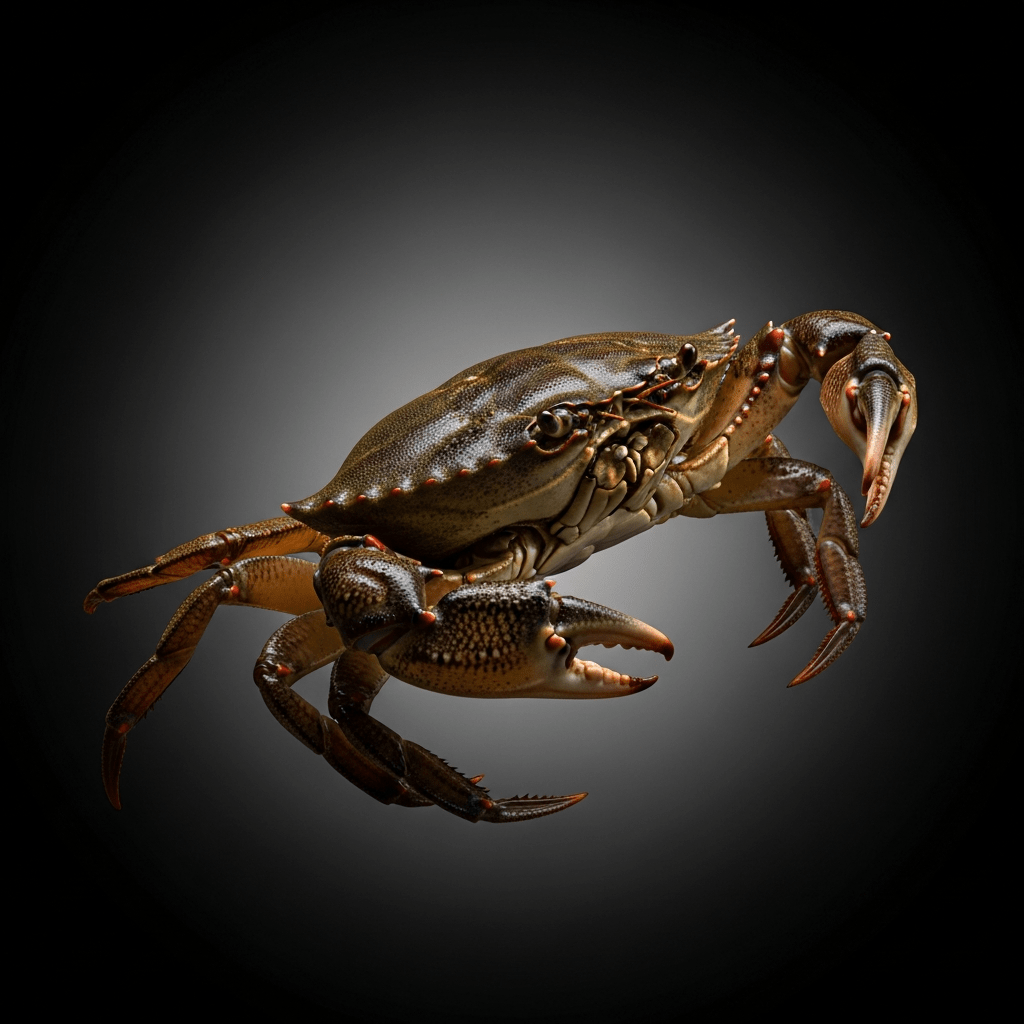
European Green Crab
The European green crab (Carcinus maenas) is a small, adaptable true crab known for its greenish carapace and invasive presence across global coastal waters.
The European green crab (Carcinus maenas) is a small, adaptable true crab known for its greenish carapace and invasive presence across global coastal waters.
Native to the northeast Atlantic coasts of Europe and North Africa, the European green crab was first described by Carl Linnaeus in 1758. It has since spread worldwide through ballast water discharge, aquaculture activities, and accidental transport, establishing invasive populations on every continent except Antarctica.
The European green crab belongs to the family Portunidae within the infraorder Brachyura, the true crabs. It is monotypic within the genus Carcinus, with a stable taxonomic status supported by molecular studies revealing cryptic diversity.
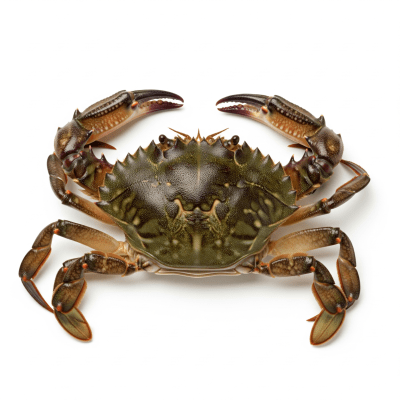
This species typically reaches up to 9 cm in carapace width, featuring a roughly pentagonal shell. Its coloration ranges from green to red or yellow, influenced by molt stage and environment. Distinctive traits include five sharp lateral spines on each side of the eyes and three spines between them, giving it a spiny, angular appearance.
The European green crab is an opportunistic feeder, preying on bivalves, small crustaceans, fish, and detritus. It tolerates a wide range of salinities (5–35 ppt) and temperatures (0–30°C), demonstrating resilience to pollution and habitat disturbance. Rapid growth with multiple molts per year supports its adaptability and invasive success.
Bring this kind into your world illustrated posters, mugs, and shirts.
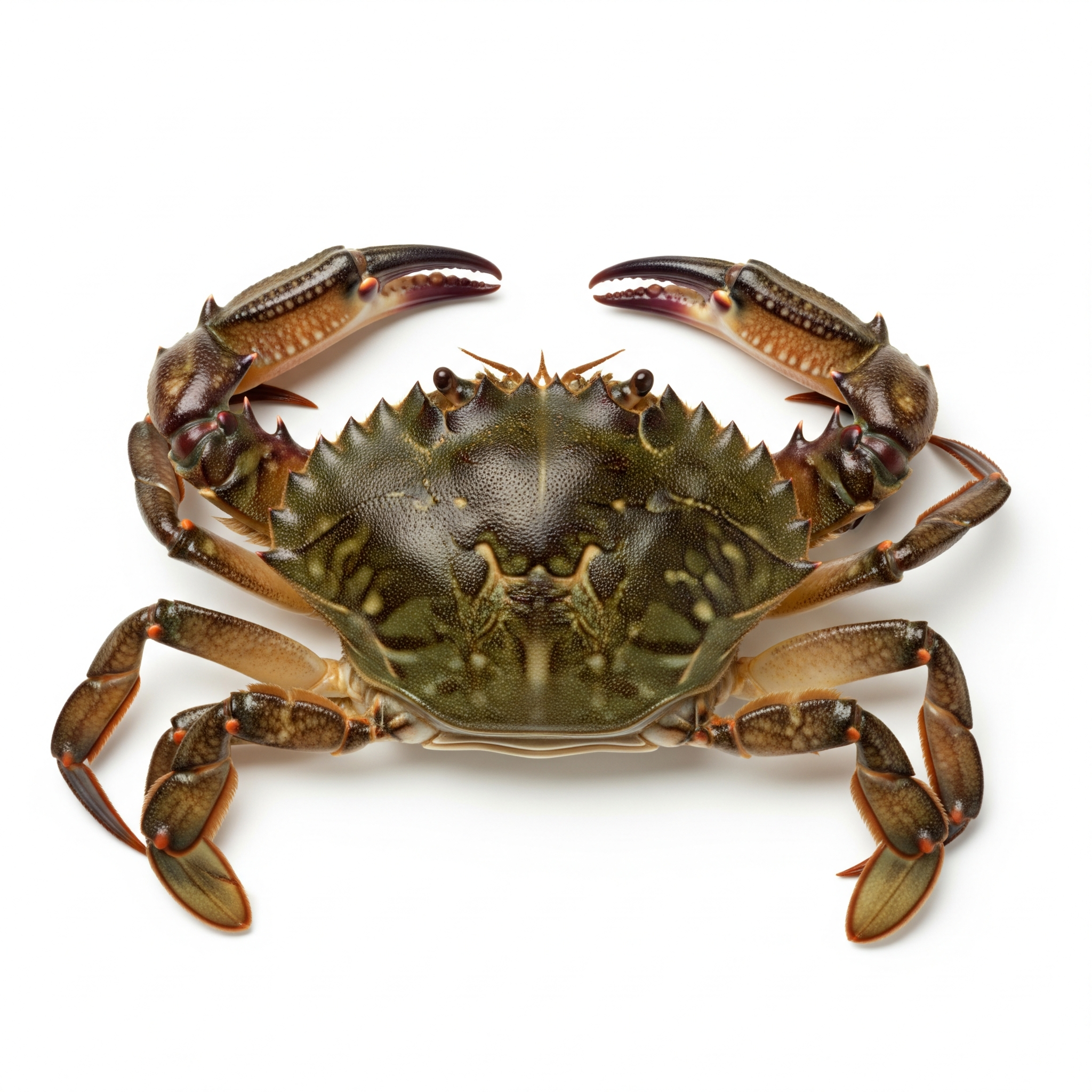
Archival print, museum-grade paper
Buy Poster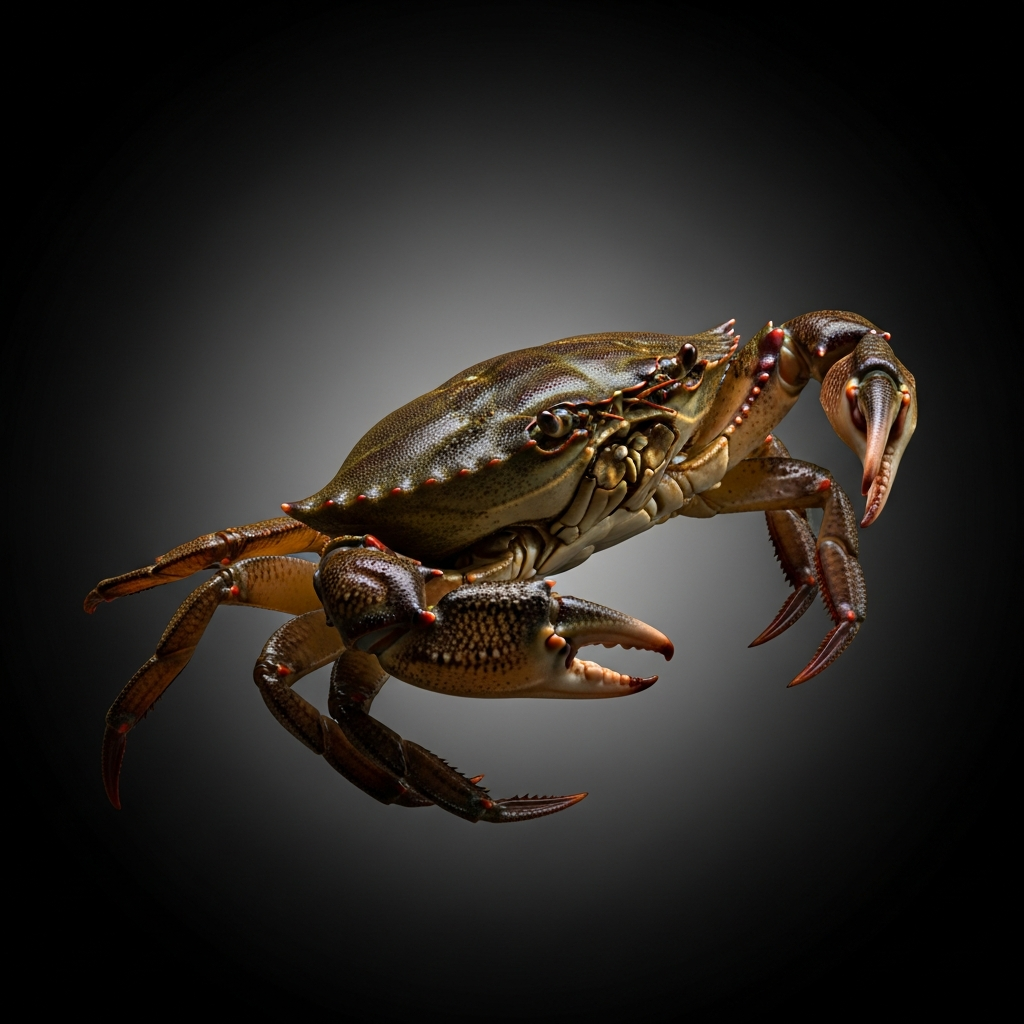
Stoneware mug, dishwasher safe
Buy Mug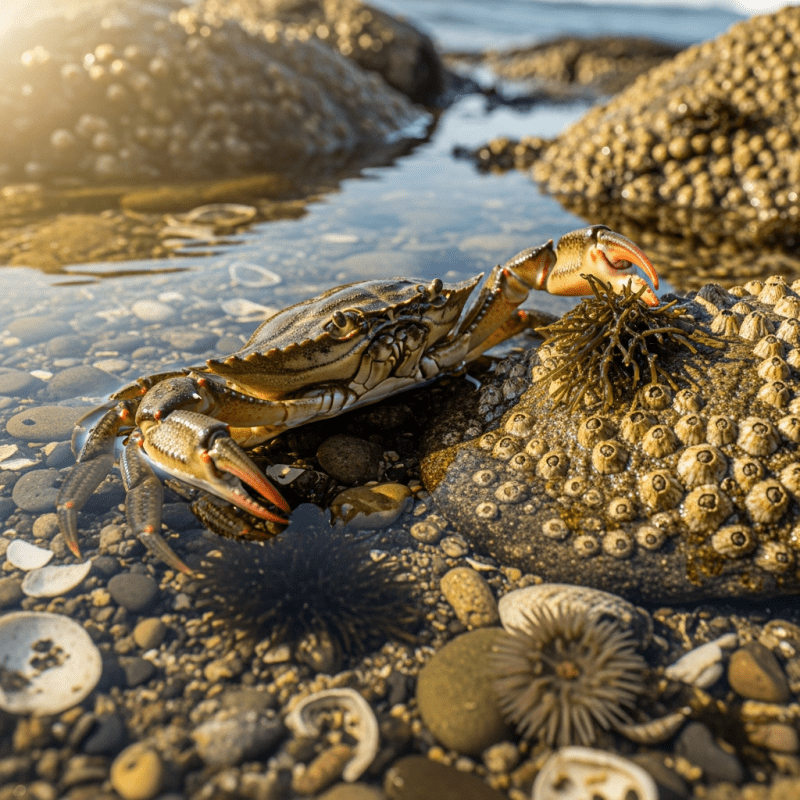
Soft cotton tee, unisex sizes
Buy ShirtWhile not prominent in folklore or art, the European green crab holds cultural significance primarily as an invasive species impacting fisheries and coastal ecosystems. Its presence has prompted scientific and environmental efforts focused on control and management rather than celebration.
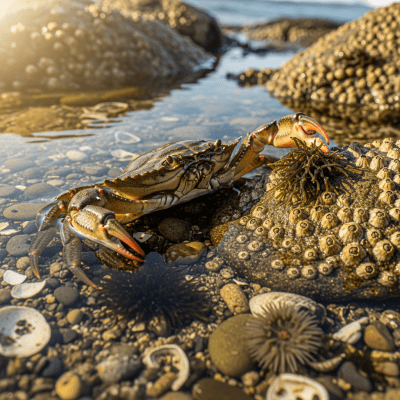
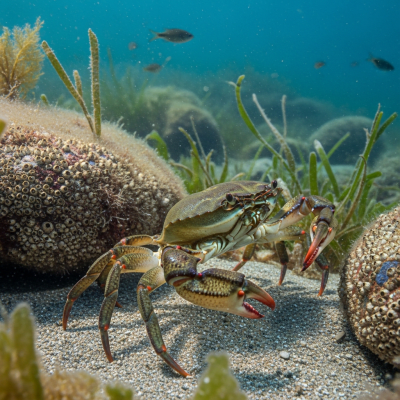
The European green crab inhabits coastal marine and estuarine environments, thriving in intertidal and subtidal zones. Its euryhaline nature allows survival in a broad range of salinities, from brackish estuaries to full marine waters. Ecologically, it is a voracious predator of bivalves and small invertebrates, often altering local food webs and competing with native species.

Females produce large broods of up to 185,000 eggs, which develop through planktonic larval stages before settling as juvenile crabs. Growth is rapid, supported by multiple molts annually. This reproductive strategy, combined with environmental tolerance, facilitates swift population expansion in new habitats.
The European green crab is not currently assessed by the IUCN and faces no conservation threats in its native range. However, as an invasive species, it poses significant ecological risks globally, prompting management efforts aimed at control rather than protection.
Humans impact the European green crab primarily through its unintentional spread via shipping and aquaculture. It negatively affects shellfish industries by preying on economically valuable species, leading to costly control measures. While not commercially harvested, some experimental uses include chitin extraction and fertilizer production, but these remain minor and localized.