Chinese Mitten Crab
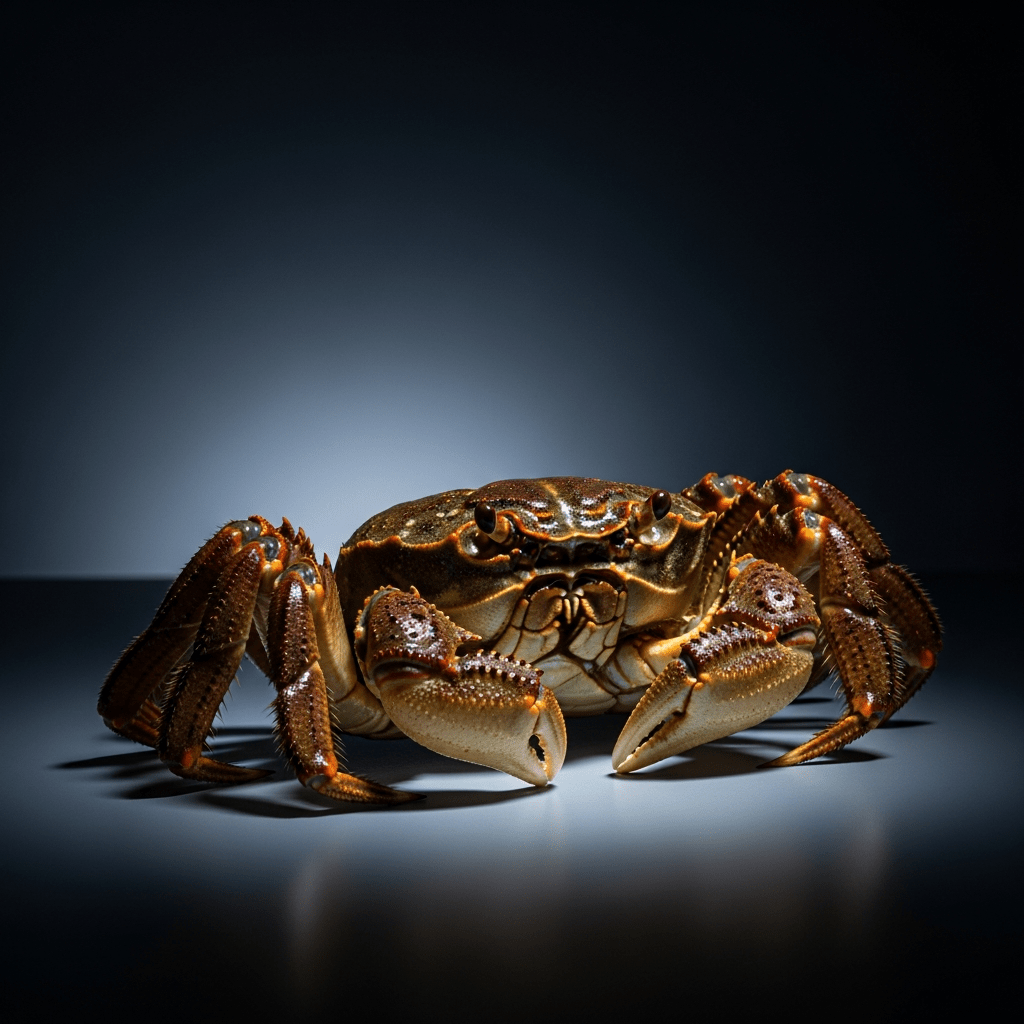
The Chinese mitten crab (Eriocheir sinensis) is a medium-sized, burrowing crab native to East Asia, easily recognized by its dense, hairy claws that resemble mittens.
The Chinese mitten crab (Eriocheir sinensis) is a medium-sized, burrowing crab native to East Asia, easily recognized by its dense, hairy claws that resemble mittens.
First described in 1853 by Henri Milne-Edwards, the Chinese mitten crab originates from the coastal rivers and estuaries of China and Korea. Over the past century, it has spread beyond its native range, establishing invasive populations in Europe and North America through ballast water discharge and aquaculture escapes.
The Chinese mitten crab belongs to the family Varunidae within the infraorder Brachyura, the true crabs. Its genus is Eriocheir, distinguishing it among freshwater and estuarine crabs known for their unique claw morphology.
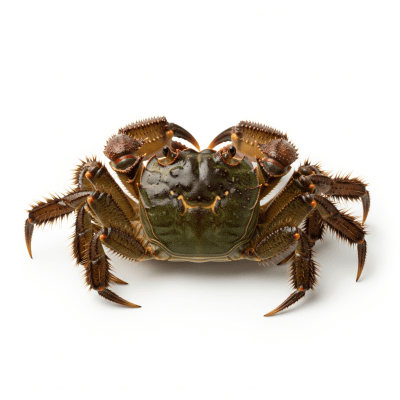
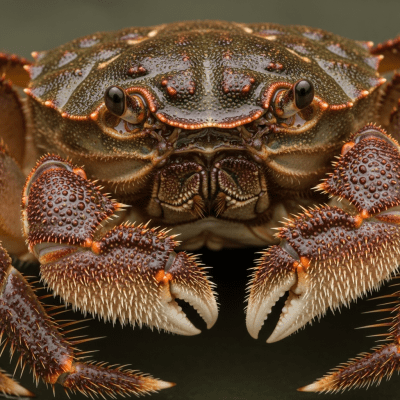
This crab features an olive-green to brown carapace up to 8 centimeters wide. Its most striking trait is the dense, hairy setae covering its claws, especially prominent in males, giving the appearance of furry mittens. The crab’s compact body and claw structure support its burrowing lifestyle.
The Chinese mitten crab exhibits catadromous behavior, living primarily in freshwater but migrating downstream to estuaries to breed. It is a proficient burrower, which can lead to damage of riverbanks and human infrastructure. Its adaptability allows it to tolerate a wide range of salinities and temperatures, aiding its invasive success.
Bring this kind into your world illustrated posters, mugs, and shirts.
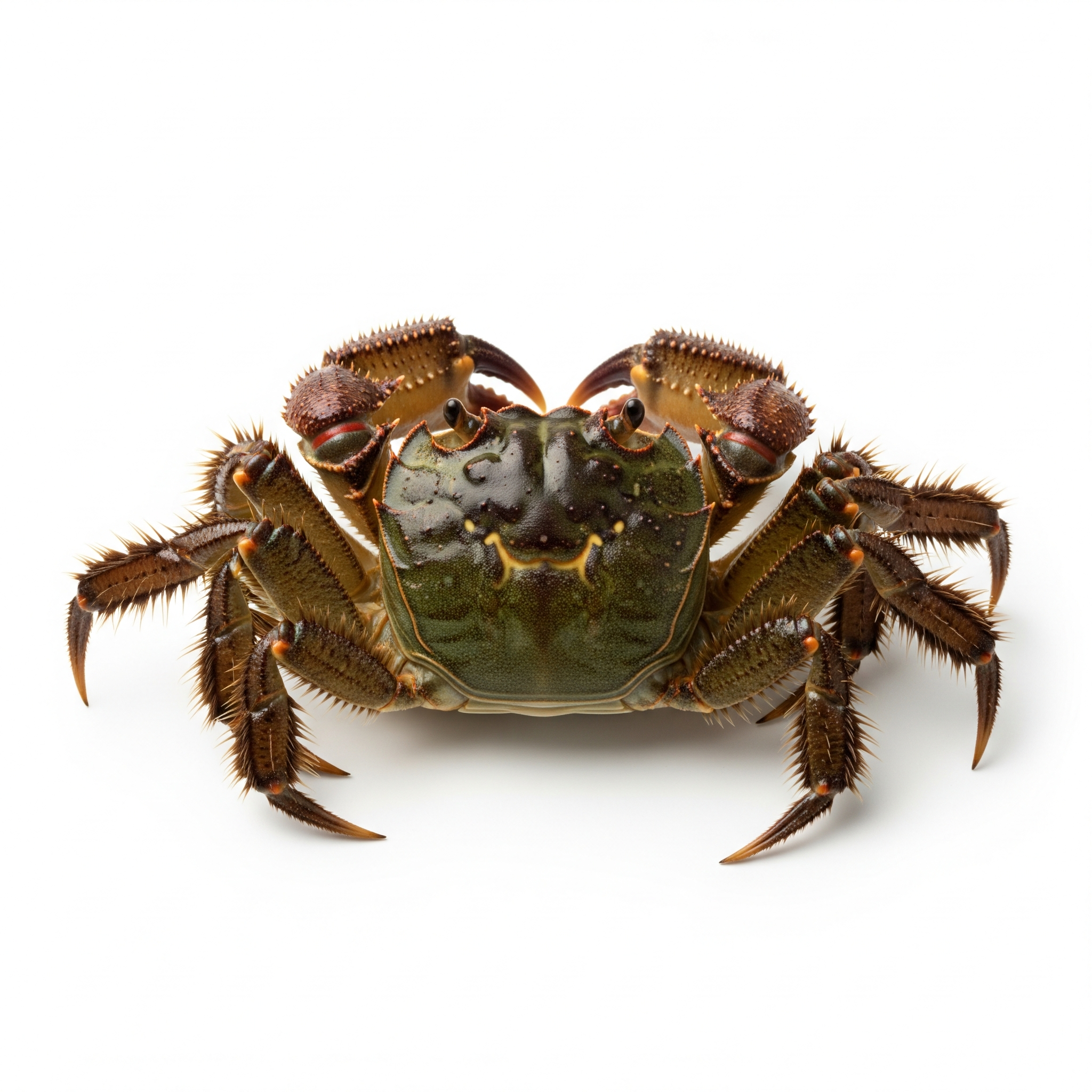
Archival print, museum-grade paper
Buy Poster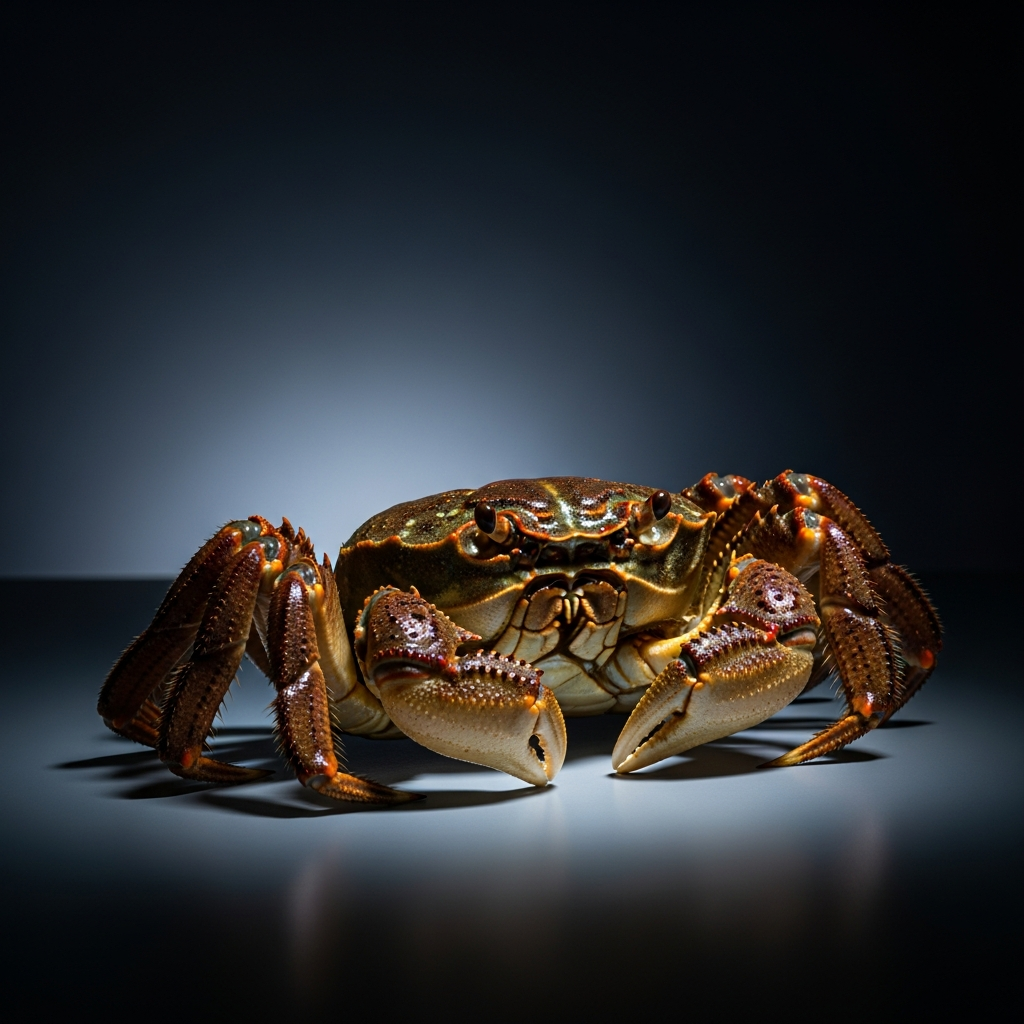
Stoneware mug, dishwasher safe
Buy Mug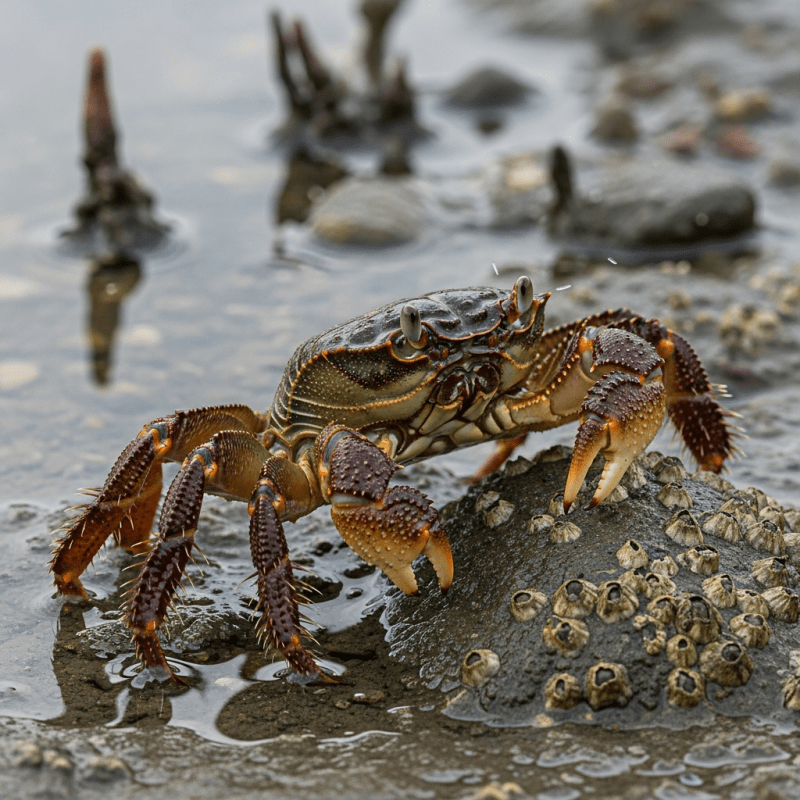
Soft cotton tee, unisex sizes
Buy ShirtIn its native East Asian regions, the Chinese mitten crab holds culinary prestige, especially in Chinese cuisine where it is enjoyed steamed or in savory autumn dishes. It is a symbol of seasonal delicacy and supports significant aquaculture industries, reflecting its cultural and economic importance.
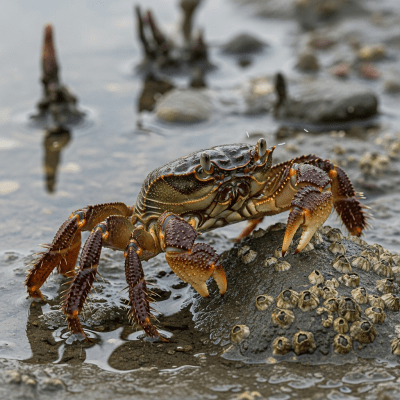
The Chinese mitten crab thrives in freshwater rivers and estuaries, displaying remarkable ecological flexibility. It migrates downstream to brackish estuaries to reproduce, playing a role in nutrient cycling between freshwater and marine environments. Its burrowing can alter riverbank stability and sediment composition.
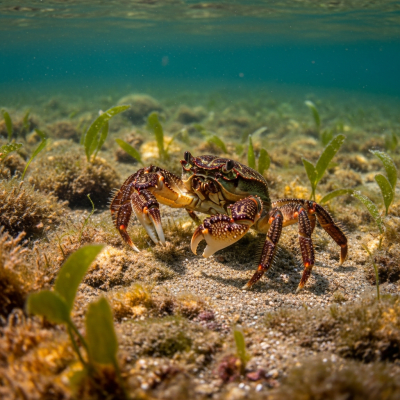
This species follows a catadromous lifecycle, spending most of its life in freshwater before migrating to estuarine waters to breed. Juveniles grow rapidly, reaching maturity within one to two years. After hatching, larvae develop in brackish water before migrating upstream to freshwater habitats.
The Chinese mitten crab is not currently assessed by the IUCN Red List. While abundant in its native range, its invasive populations pose ecological challenges. Its adaptability and rapid growth contribute to its resilience, though habitat disruption and predation during migration are natural vulnerabilities.
Humans have both benefited and been challenged by the Chinese mitten crab. In East Asia, it supports commercial aquaculture and is a prized food source. Conversely, in invasive regions, it is subject to regulation and control efforts due to its environmental impact. Beyond cuisine, its burrowing behavior can damage infrastructure, prompting management concerns.