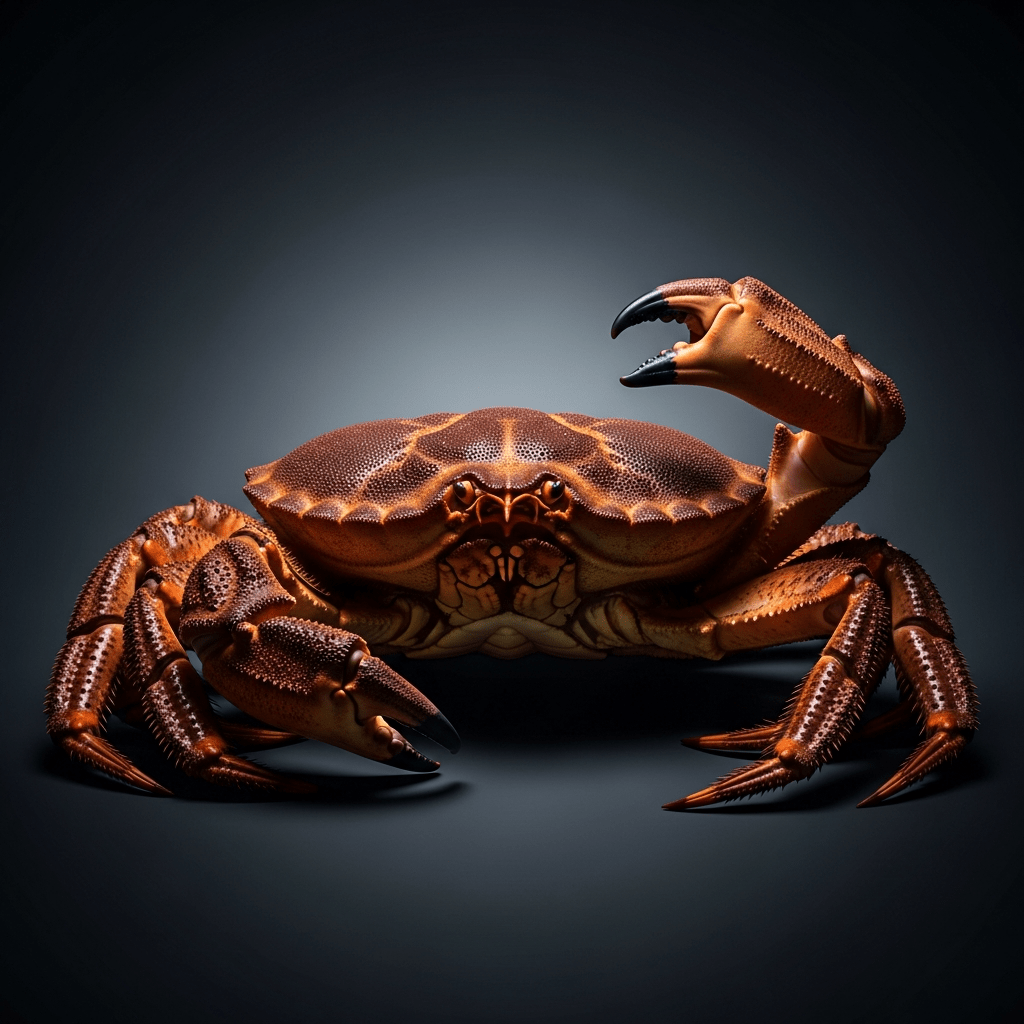
Brown Crab
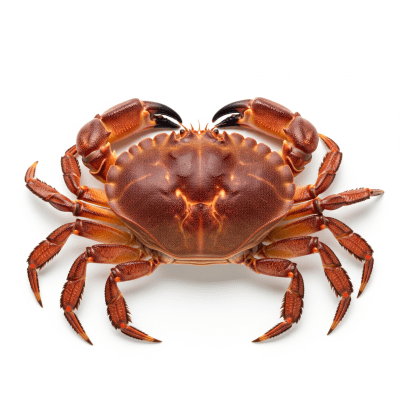
The Brown Crab (Cancer pagurus) is a large, robust true crab native to the northeast Atlantic, recognized for its reddish-brown, oval carapace with a distinctive scalloped edge and significant economic importance in European fisheries.
The Brown Crab (Cancer pagurus) is a large, robust true crab native to the northeast Atlantic, recognized for its reddish-brown, oval carapace with a distinctive scalloped edge and significant economic importance in European fisheries.
First described by Carl Linnaeus in 1758, the Brown Crab has a long-standing presence in European marine biology and fisheries. Its lineage traces back to the family Cancridae, with all populations wild-caught and no known artificial breeding or hybridization.
The Brown Crab belongs to the family Cancridae within the genus Cancer. As a member of the infraorder Brachyura, it is classified among the true crabs, distinguished by a broad, short carapace and a tucked abdomen.
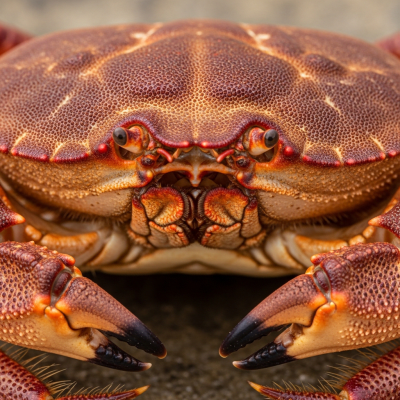
This species features a broad, oval carapace up to 25 cm wide, colored a rich reddish-brown with a unique scalloped or "pie-crust" margin. Its powerful pincers are black-tipped and adapted for crushing shellfish, complementing its sturdy, benthic form.
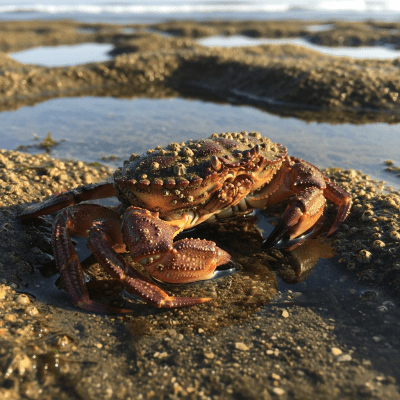
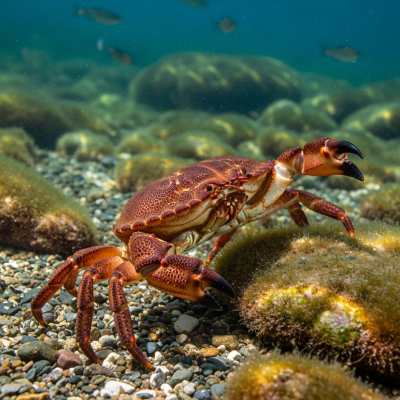
The Brown Crab is a benthic species favoring rocky substrates from the intertidal zone down to depths of 100 meters. It exhibits slow growth, reaching sexual maturity between four and six years, and is tolerant of varying salinities within strictly marine environments.
Bring this kind into your world illustrated posters, mugs, and shirts.
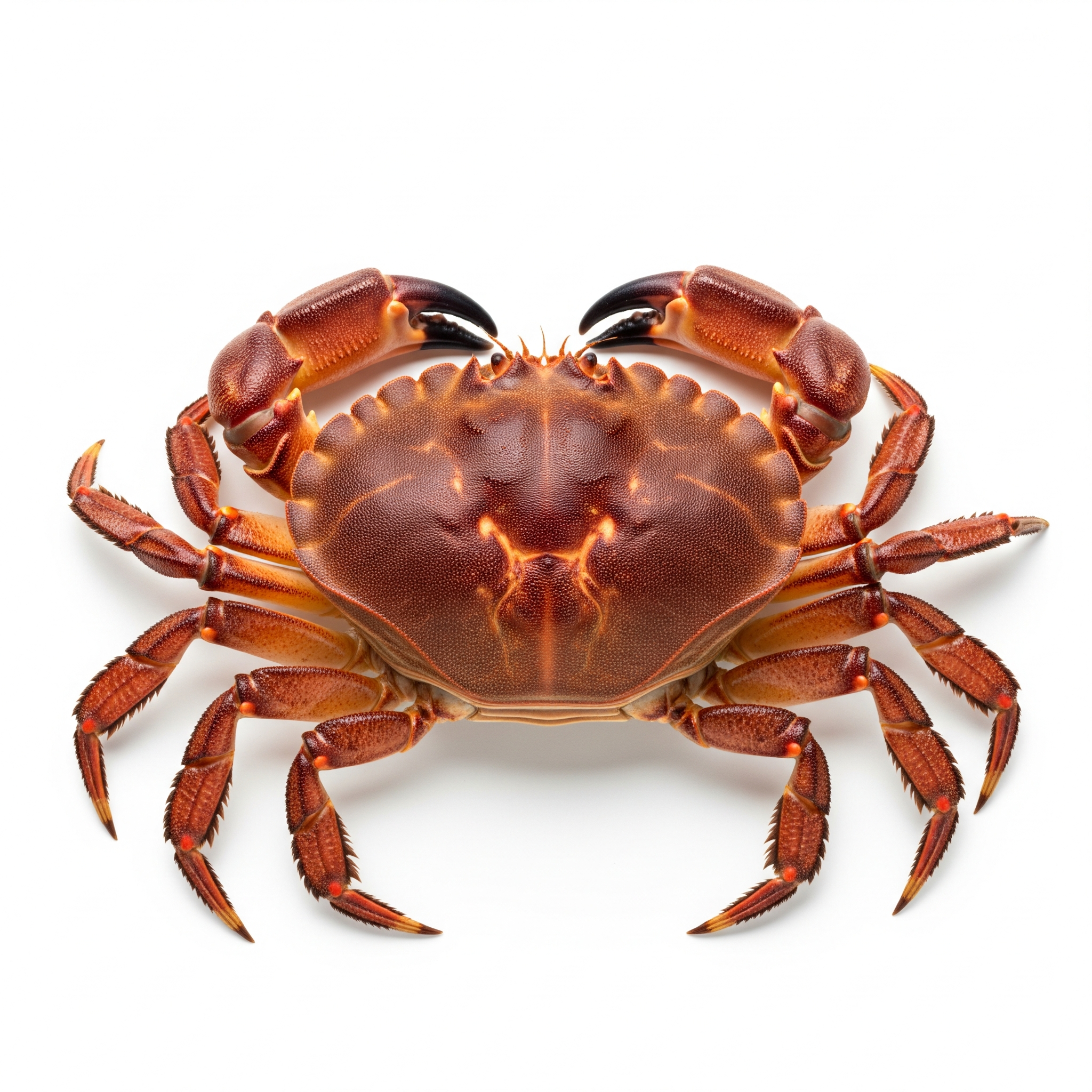
Archival print, museum-grade paper
Buy Poster
Stoneware mug, dishwasher safe
Buy Mug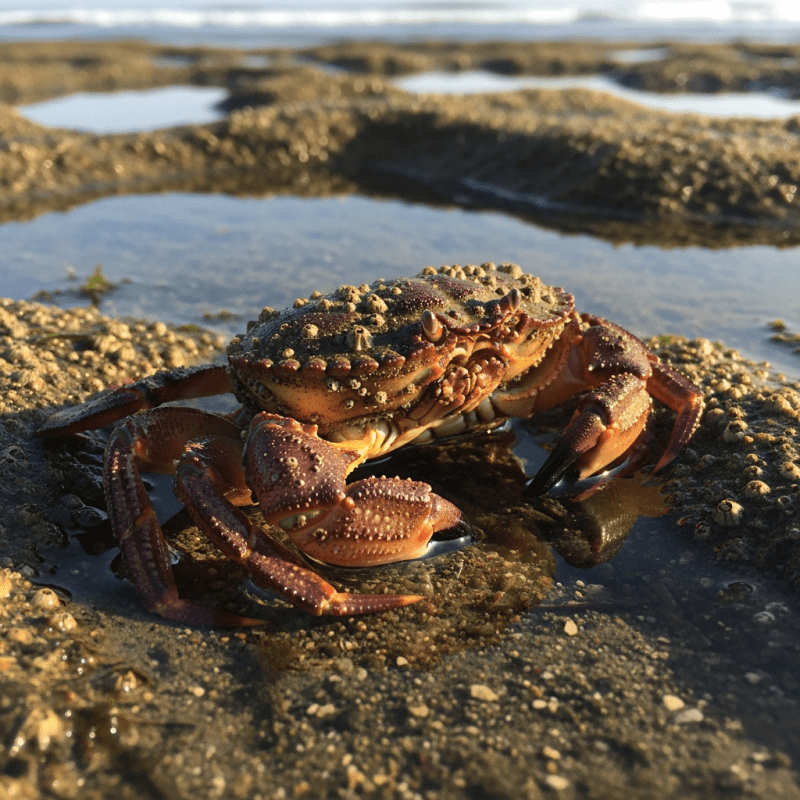
Soft cotton tee, unisex sizes
Buy ShirtEsteemed in British, Irish, French, and Spanish cuisines, the Brown Crab is celebrated for its sweet, firm white meat and rich brown meat from the body and claws. It holds a prominent place in coastal culinary traditions and regional seafood markets.
The Brown Crab thrives in marine environments along rocky substrates from the intertidal zone to depths of about 100 meters. It plays a key ecological role as a benthic predator, using its strong claws to feed on shellfish and other invertebrates, contributing to the balance of coastal ecosystems.
Growth in Brown Crabs is relatively slow, with individuals reaching sexual maturity between four and six years of age. Reproduction occurs in wild populations without artificial intervention, following typical crab life stages from larvae to benthic adults.
While the Brown Crab faces pressures from overfishing and shell disease, it remains abundant across its native range. Regional management measures, including minimum landing sizes and seasonal closures, help sustain populations and support fishery resilience.
Beyond its culinary value, the Brown Crab supports major commercial fisheries in the UK, Ireland, France, and Norway, contributing significantly to coastal economies. Sustainable harvesting practices and regulatory frameworks aim to balance human use with ecological health.