Box Crab
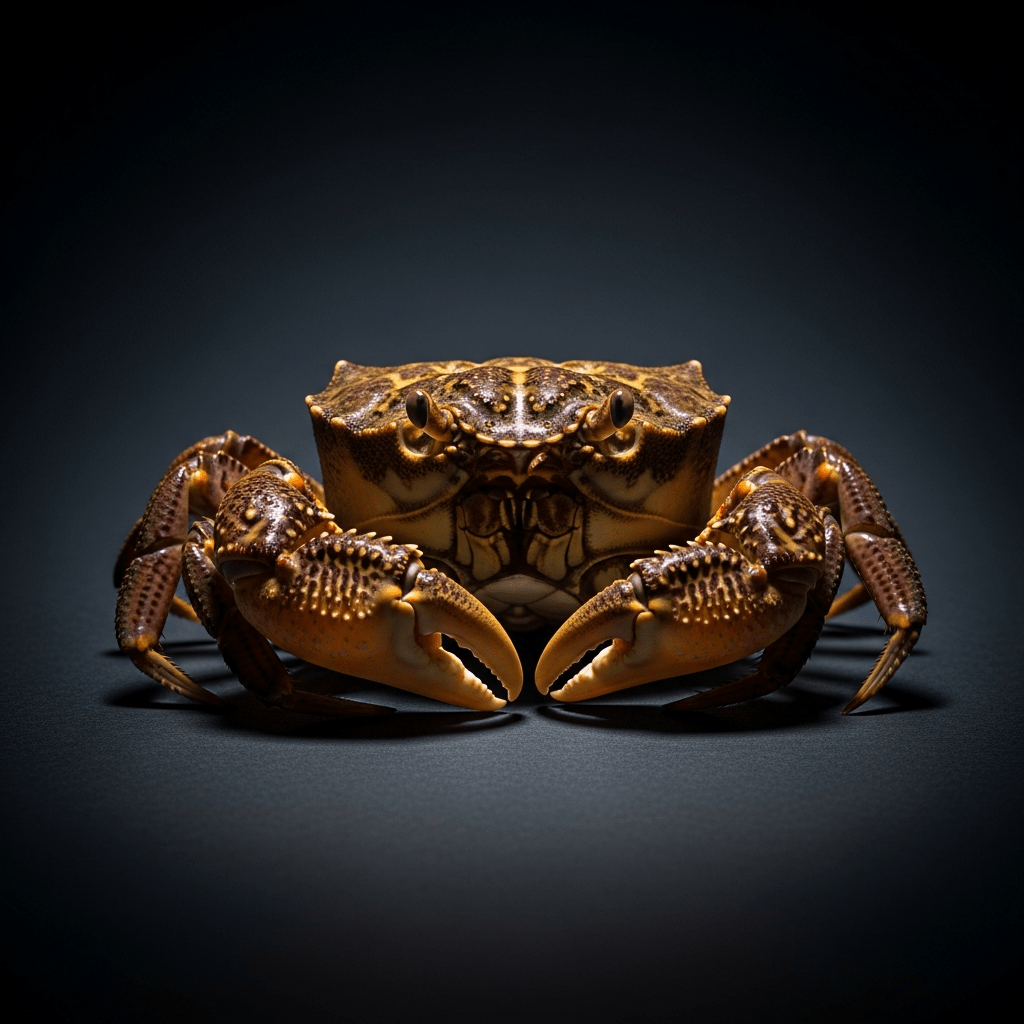
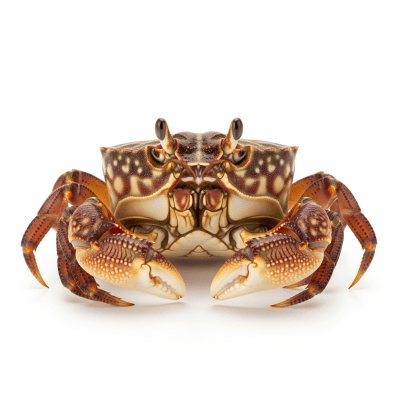
The box crab is a true crab known for its distinctive, robust carapace that forms a compact, box-like shape by tucking its legs and claws tightly beneath its body, providing effective defense against predators.
The box crab is a true crab known for its distinctive, robust carapace that forms a compact, box-like shape by tucking its legs and claws tightly beneath its body, providing effective defense against predators.
Originating from the family Calappidae, the box crab lineage was first scientifically described by Henri Milne-Edwards in 1837. Its earliest records come from 19th-century European naturalists who cataloged specimens across tropical and subtropical marine regions worldwide.
Box crabs belong to the infraorder Brachyura, the true crabs, within the family Calappidae and genus Calappa. This classification places them among crabs characterized by a short, broad carapace and a tucked abdomen, distinguishing them from related crustaceans like hermit or king crabs.
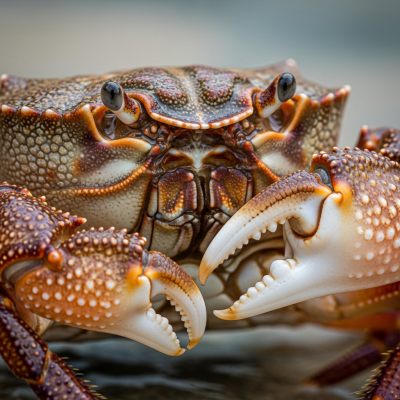
Box crabs feature a broad, convex carapace with pronounced lateral margins, often adorned with spines or tubercles, giving them a sturdy, box-like appearance. Their coloration ranges from pale cream to reddish-brown, frequently mottled or patterned. Notably, their asymmetrical claws include one large crushing claw specialized for breaking mollusk shells and a slender claw used for manipulation. Their unique ability to fold legs and claws tightly under the body creates a compact, protective profile.
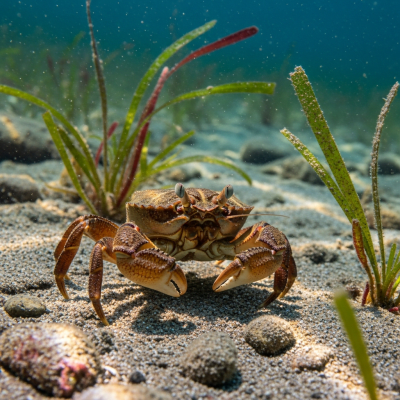
These benthic crabs inhabit sandy or muddy substrates where they burrow to conceal themselves from predators. They can remain buried for extended periods and adopt a defensive posture by folding their limbs beneath their carapace. Their specialized claws enable them to feed on hard-shelled prey, showcasing both defensive and foraging adaptations.
Bring this kind into your world illustrated posters, mugs, and shirts.
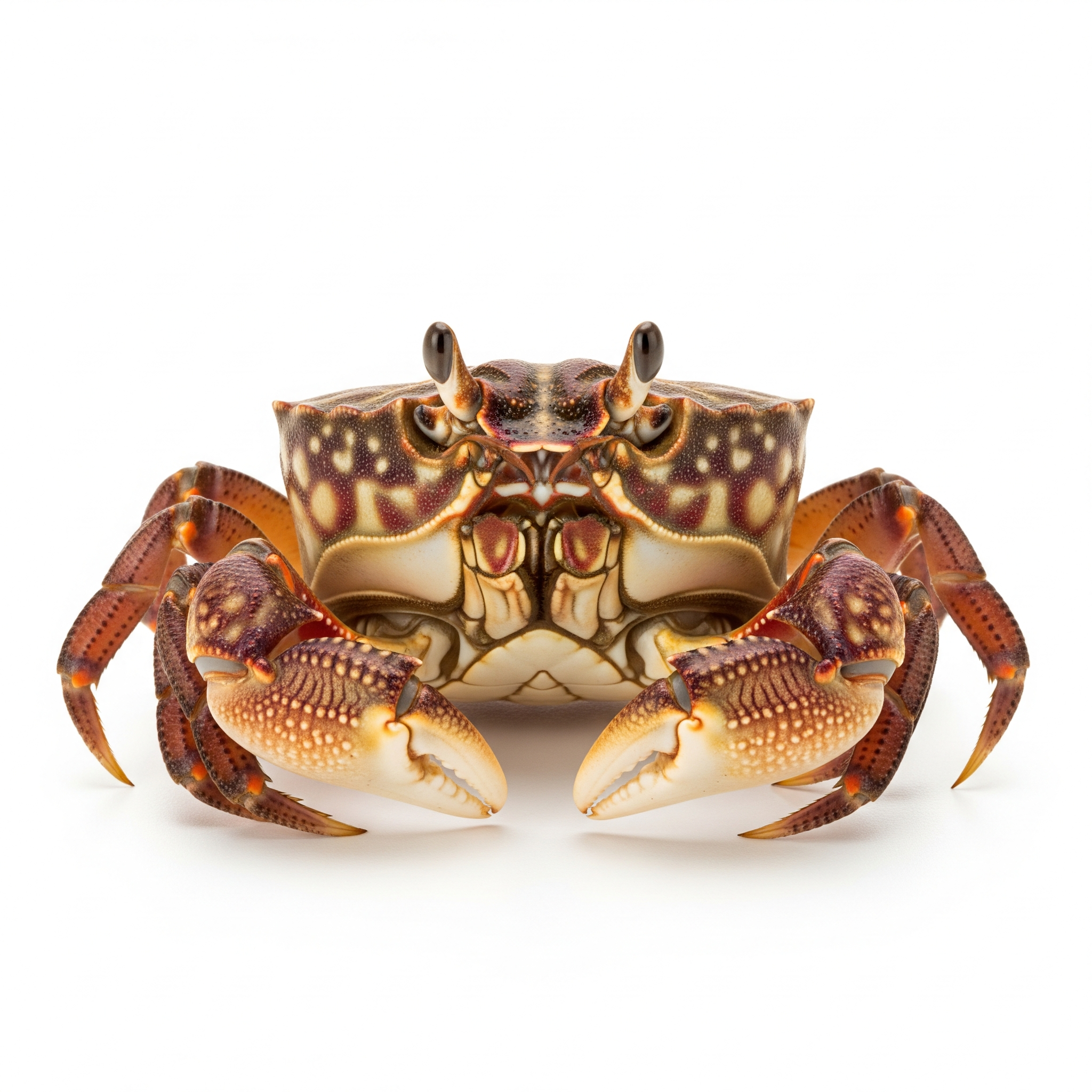
Archival print, museum-grade paper
Buy Poster
Stoneware mug, dishwasher safe
Buy Mug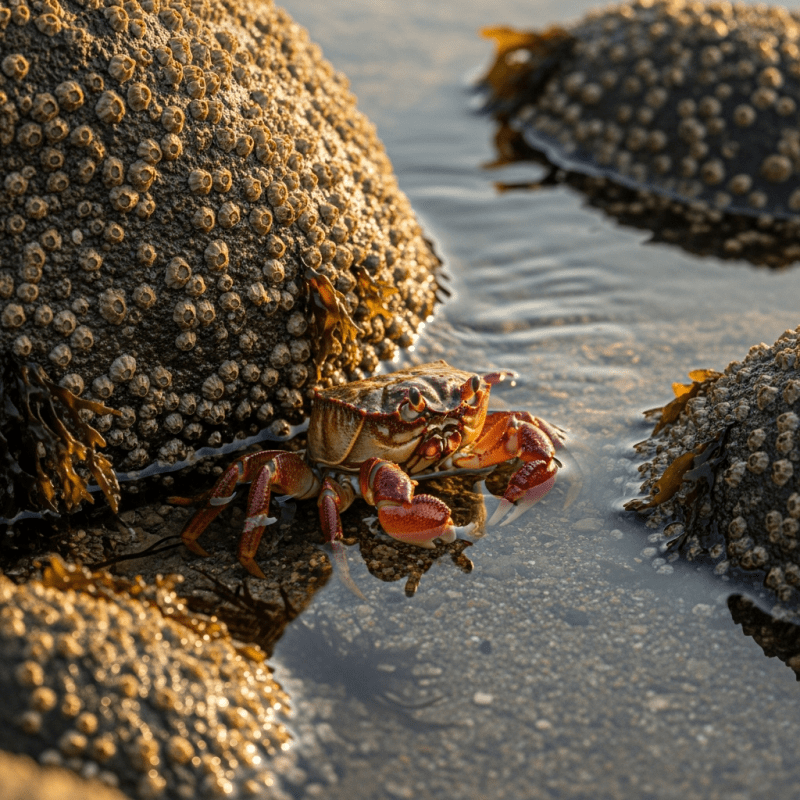
Soft cotton tee, unisex sizes
Buy ShirtWhile box crabs have limited prominence in art or mythology, they are sometimes known as "shame-faced crabs" due to their defensive posture. Regional names such as "crabe boîte" in French and "cangrejo caja" in Spanish reflect their distinctive shape and behavior, though their cultural presence remains modest compared to other crab species.
Box crabs thrive in tropical and subtropical marine environments globally, primarily on sandy or muddy bottoms where they burrow for concealment. As benthic organisms, they play a role in the ecosystem by preying on mollusks and other invertebrates, contributing to the balance of benthic food webs.

Box crabs are gonochoristic, with separate male and female individuals. Their reproductive cycles and growth rates vary among species, but generally, females release planktonic larvae that develop through several stages before settling to the benthic adult form. Molting allows growth, and maturity is reached after multiple molts.
Currently, box crabs face no widespread conservation threats and lack significant protective measures, partly due to their limited commercial exploitation. However, as bycatch in trawl fisheries, their populations could be indirectly affected, though data on population trends remain scarce.
Humans interact with box crabs mainly through incidental capture in commercial trawl fisheries, especially in Southeast Asia and the Indo-Pacific. While not a primary fishery target, they are sometimes consumed locally, typically steamed or boiled. Beyond culinary use, there is little evidence of significant cultural or economic impact, and no current aquaculture efforts exist for this group.