
Atlantic Blue Crab
The Atlantic blue crab (Callinectes sapidus) is a strikingly colored, swimming crab native to the western Atlantic Ocean, renowned for its ecological importance and commercial value.
The Atlantic blue crab (Callinectes sapidus) is a strikingly colored, swimming crab native to the western Atlantic Ocean, renowned for its ecological importance and commercial value.
First described by Mary Jane Rathbun in 1896, the Atlantic blue crab originates from the coastal and estuarine waters of the western Atlantic and Gulf of Mexico. Its lineage traces naturally within the genus Callinectes, with wild populations sustaining its presence without artificial breeding or introduction.
The Atlantic blue crab belongs to the family Portunidae, a group of true crabs known for their swimming abilities. Within the genus Callinectes, it is distinguished as Callinectes sapidus, firmly placed in the infraorder Brachyura, encompassing all true crabs.
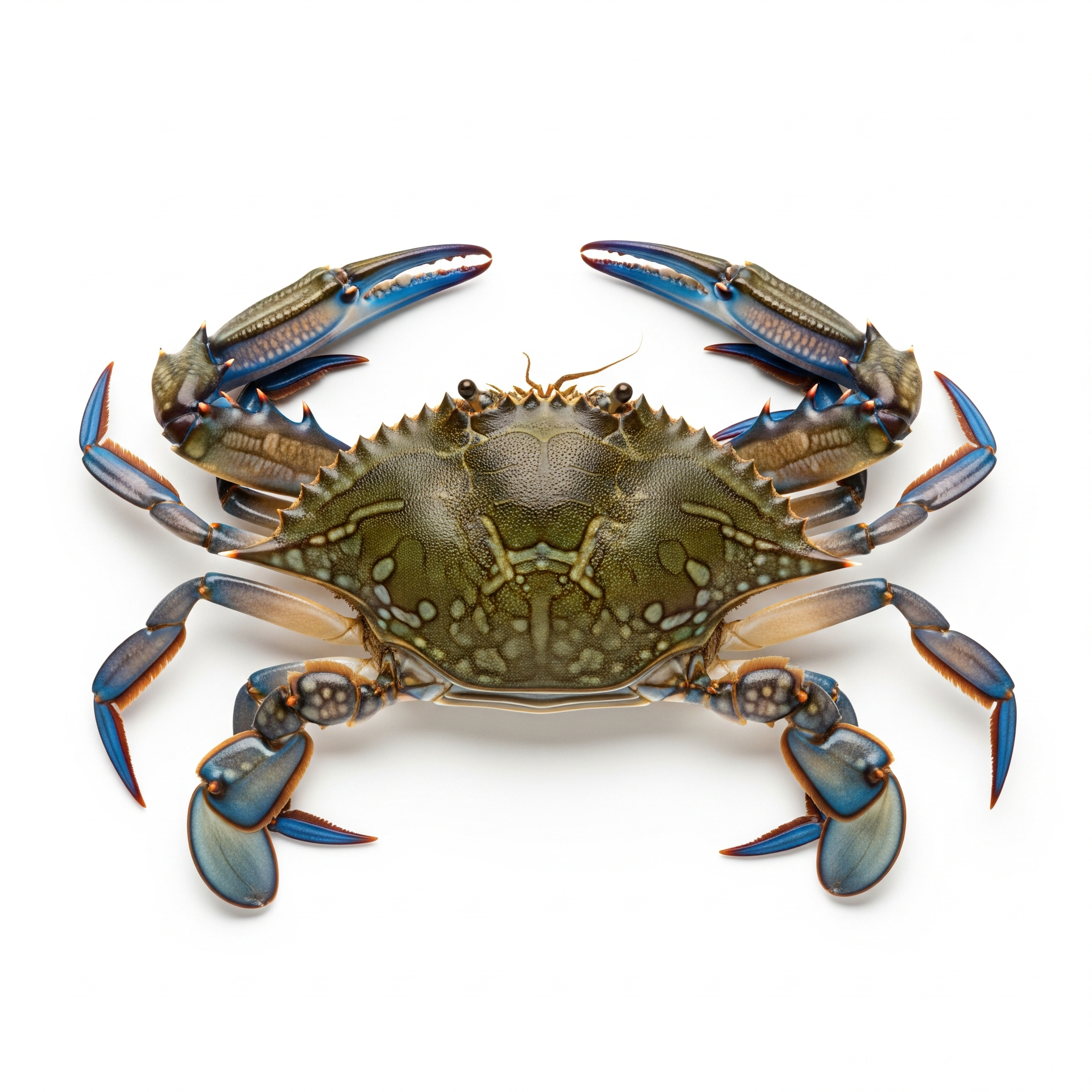
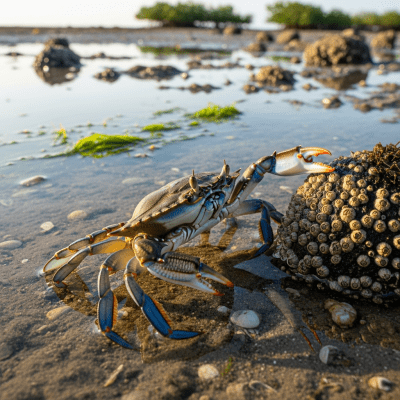
This crab features a broad, flattened carapace measuring up to 23 cm wide, typically olive to bluish-green on top. Its most notable traits include vivid blue claws—especially bright in males—and paddle-shaped rear legs adapted for swimming. Females display red-tipped claws and a more rounded abdomen, highlighting sexual dimorphism.
The Atlantic blue crab is an opportunistic omnivore, feeding on plants, detritus, and small animals. It grows rapidly through multiple molts before reaching maturity around 12 to 18 months. Adapted to variable salinity and temperature, it thrives in estuarine environments, using its paddle-like legs to swim actively and evade predators.
Bring this kind into your world illustrated posters, mugs, and shirts.
Archival print, museum-grade paper
Buy Poster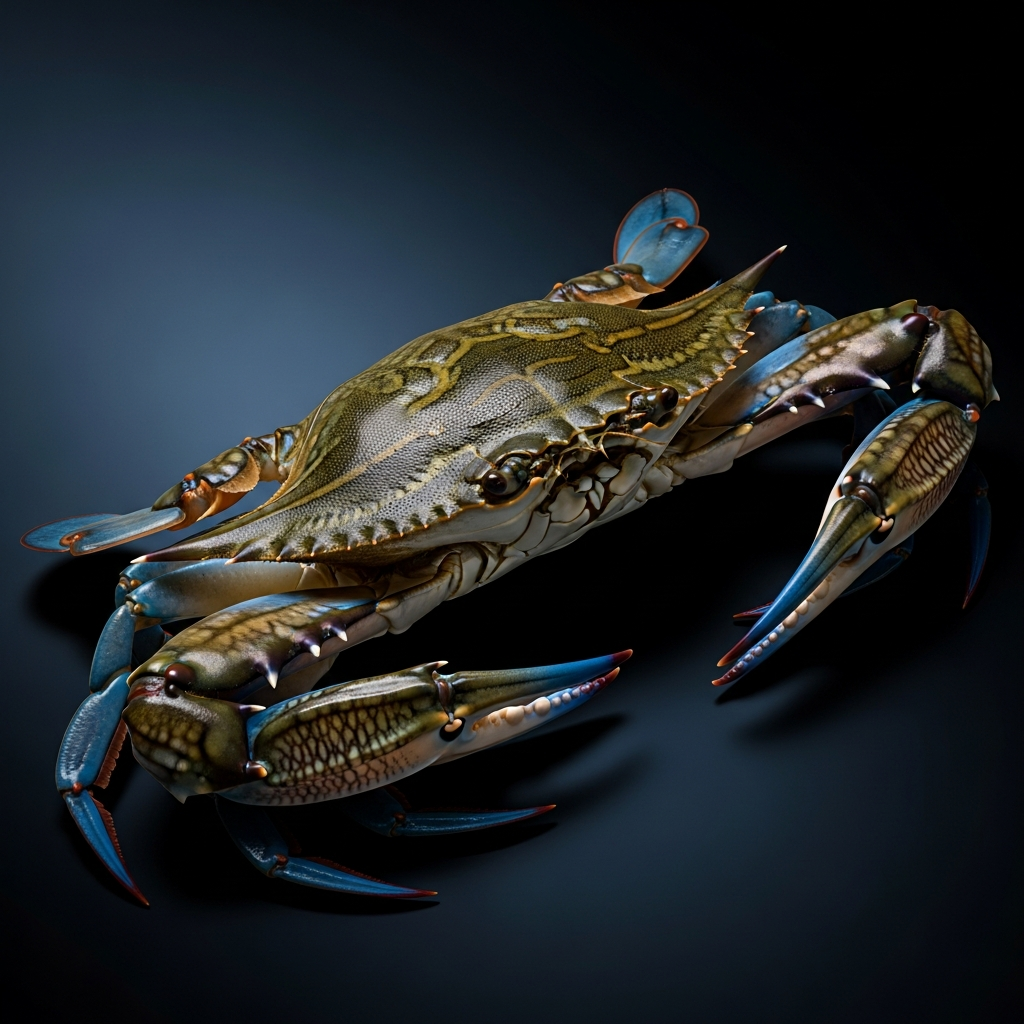
Stoneware mug, dishwasher safe
Buy Mug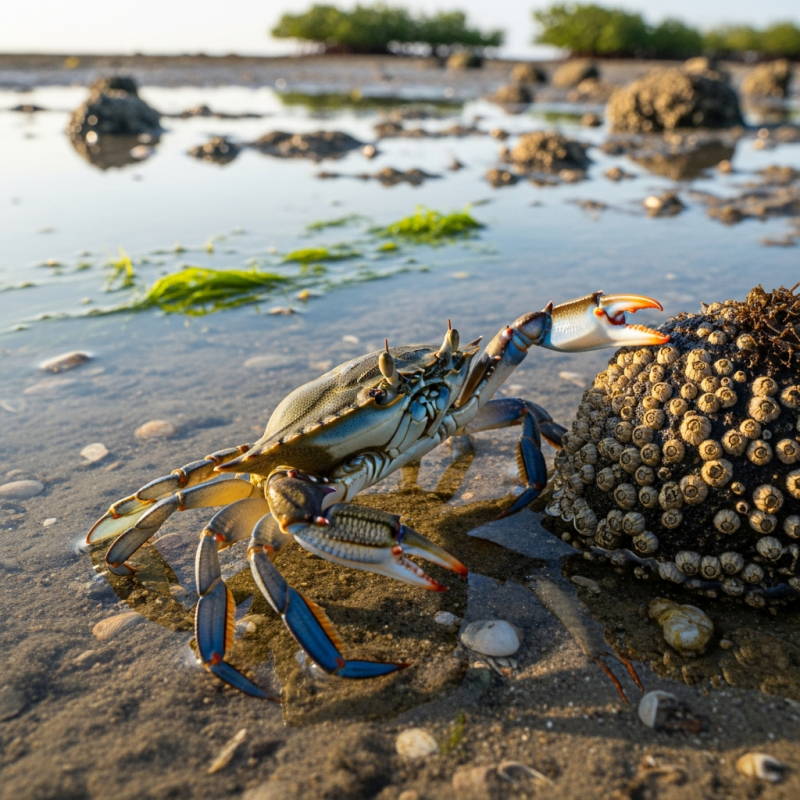
Soft cotton tee, unisex sizes
Buy ShirtCelebrated in regional cuisine, especially along the U.S. Atlantic and Gulf coasts, the Atlantic blue crab is central to dishes like Maryland crab cakes and soft-shell crab delicacies. Beyond food, it features in local festivals and symbolizes coastal heritage, reflecting its deep cultural ties to communities dependent on estuarine ecosystems.
The Atlantic blue crab inhabits estuaries, coastal bays, and nearshore waters where salinity ranges from brackish to marine. It plays a keystone role in these ecosystems as both predator and prey, feeding on a variety of organisms and supporting a wide food web. Its adaptability to fluctuating environmental conditions makes it a resilient species within dynamic estuarine habitats.


Reaching maturity between 12 and 18 months, female Atlantic blue crabs spawn multiple times, releasing up to two million eggs per cycle. Juveniles undergo several molts as they grow, gradually developing their distinctive form and coloration. Their lifecycle is closely tied to seasonal and environmental cues within estuarine waters.
While the Atlantic blue crab supports significant fisheries, it faces threats from overharvesting, habitat degradation, disease, and environmental stressors like hypoxia. Management measures such as size limits, seasonal closures, and gear restrictions are in place to sustain populations, though ongoing monitoring is essential to ensure their long-term viability.
Beyond its culinary prominence, the Atlantic blue crab influences coastal economies through commercial and recreational fisheries. It also serves as an indicator species for estuarine health, with its population trends reflecting environmental changes. Conservation efforts and fishery management practices aim to balance human use with ecosystem sustainability.