Taleggio
Taleggio is a classic Italian washed-rind cheese made from cow’s milk, celebrated for its creamy texture, pungent aroma, and mild, tangy flavor.
Taleggio is a classic Italian washed-rind cheese made from cow’s milk, celebrated for its creamy texture, pungent aroma, and mild, tangy flavor.
Originating in the Val Taleggio of Lombardy, Northern Italy, Taleggio’s history traces back to at least the 9th century. Named after its native valley, the cheese has been a staple in the provinces surrounding Bergamo and Milan for centuries. Its production is deeply tied to the local traditions and geography, and since 1996, Taleggio has held Protected Designation of Origin (PDO) status, ensuring that only cheese made within the specified region and by traditional methods can bear its name.
Taleggio belongs to the family of soft, washed-rind cheeses. This category is defined by cheeses that are moist, supple, and regularly washed during ripening to develop their distinctive rinds and aromas. Within cheese taxonomy, Taleggio is recognized for its cow’s milk base and its regional Italian heritage, setting it apart from other washed-rind varieties made from goat or sheep milk.
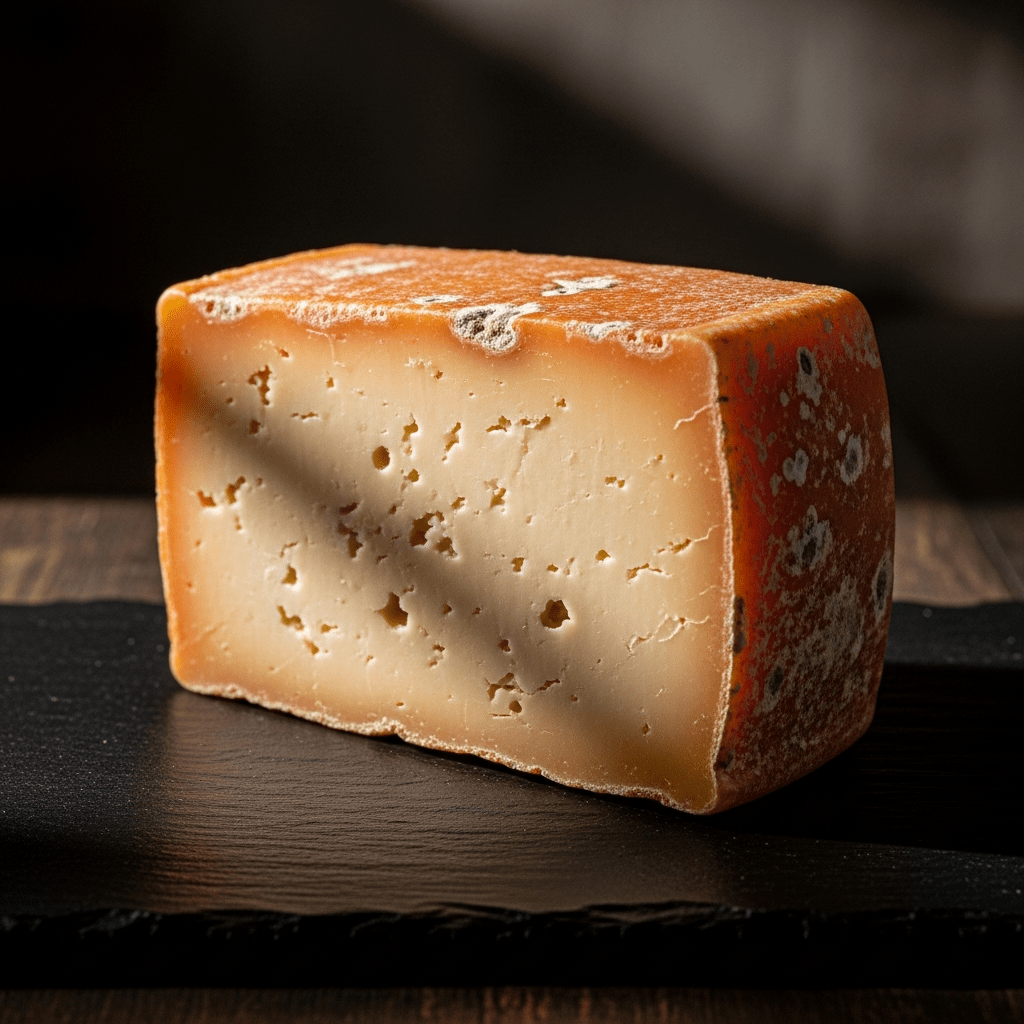
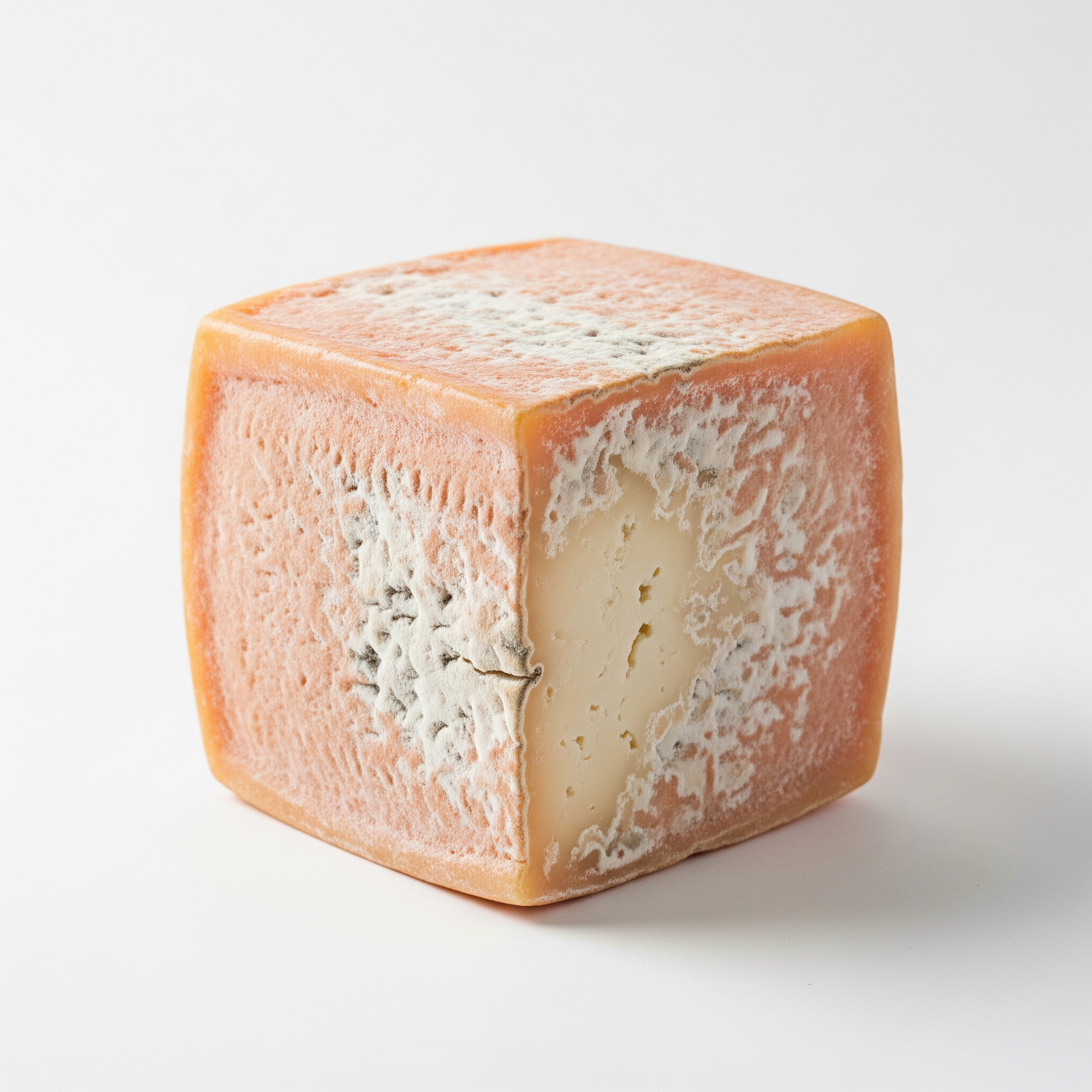
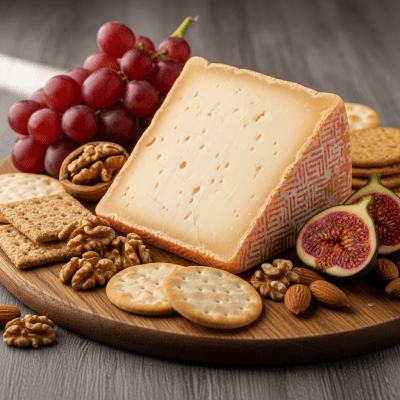
Taleggio is typically shaped as a rectangular or square wheel, weighing around 2 kilograms and measuring approximately 20 cm by 20 cm by 6 cm. Its thin, moist rind glows with an orange-pink hue, often mottled with light gray or greenish patches from surface molds. Inside, the paste is pale straw to ivory, soft, and creamy, inviting both the eye and palate with its luscious texture.
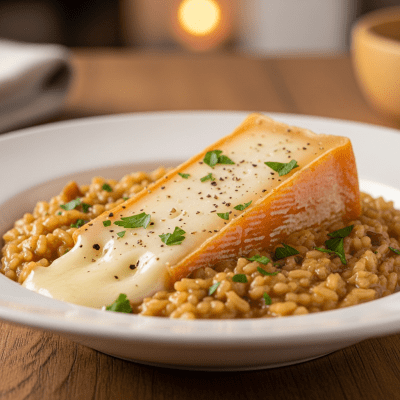
Taleggio’s creamy consistency and meltability make it versatile in the kitchen. It is enjoyed both as a table cheese and as a flavorful ingredient in cooked dishes. Its mild, tangy flavor and aromatic rind add depth to risottos, polenta, pasta, and pizza, while its supple texture makes it ideal for melting in sandwiches or pairing with fruits and cured meats.
Bring this kind into your world illustrated posters, mugs, and shirts.
Archival print, museum-grade paper
Buy Poster
Stoneware mug, dishwasher safe
Buy Mug
Soft cotton tee, unisex sizes
Buy ShirtAs a hallmark of Lombardy’s cheese-making heritage, Taleggio is woven into the culinary and cultural fabric of Northern Italy. Its PDO status reflects its importance as a regional treasure, and it is frequently featured in Italian gastronomy, from rustic family tables to refined cheese boards. The cheese’s distinctive aroma and flavor have inspired chefs and food lovers across Europe and beyond, making Taleggio a symbol of Italian artisanal tradition.
Taleggio is made exclusively from cow’s milk, which imparts a creamy texture and a mild, buttery flavor profile. The richness and subtle tang of cow’s milk are central to Taleggio’s character, distinguishing it from goat or sheep milk cheeses.


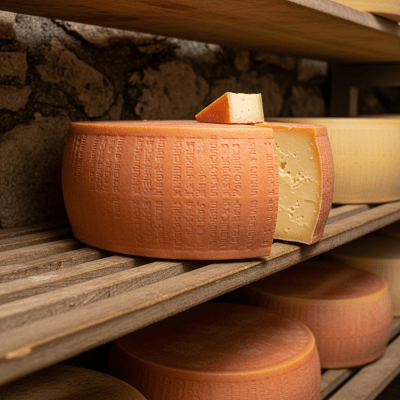
Taleggio is crafted using pasteurized or raw cow’s milk. The curds are formed and shaped into rectangular or square molds, then the cheese is regularly washed with brine throughout its ripening period. This washing encourages the development of its characteristic rind and complex aroma, while maintaining a soft, creamy interior.
Taleggio boasts a soft, creamy, and supple interior with a high moisture content. Its thin, moist rind is washed and displays a distinctive orange-pink color, often adorned with light gray or greenish patches from beneficial surface molds. The rind is edible and contributes to the cheese’s aromatic intensity.
Taleggio is aged for a minimum of 35 days. During maturation, the cheese is regularly washed to promote rind development and flavor complexity. As it ages, Taleggio’s aroma intensifies, while its flavor remains mild, buttery, and slightly tangy, with delicate fruity undertones.
Taleggio holds Protected Designation of Origin (PDO) status in the European Union, regulated by the Consorzio Tutela Taleggio and the EU PDO Registry. This designation ensures that only cheese produced within the specified regions of Lombardy and neighboring provinces, using traditional methods, can be labeled as Taleggio.
Taleggio is commonly sold as whole wheels or in convenient wedges. These forms allow for easy slicing, serving, and melting, making Taleggio accessible to both home cooks and professional chefs.
When selecting Taleggio, look for wheels or wedges with a supple texture and a moist, aromatic rind. Store the cheese in the refrigerator, ideally wrapped in wax paper or parchment to allow it to breathe while retaining moisture. Consume within a week of opening for optimal freshness, and avoid airtight plastic wrap, which can stifle the cheese’s natural aromas.