Swiss Cheese
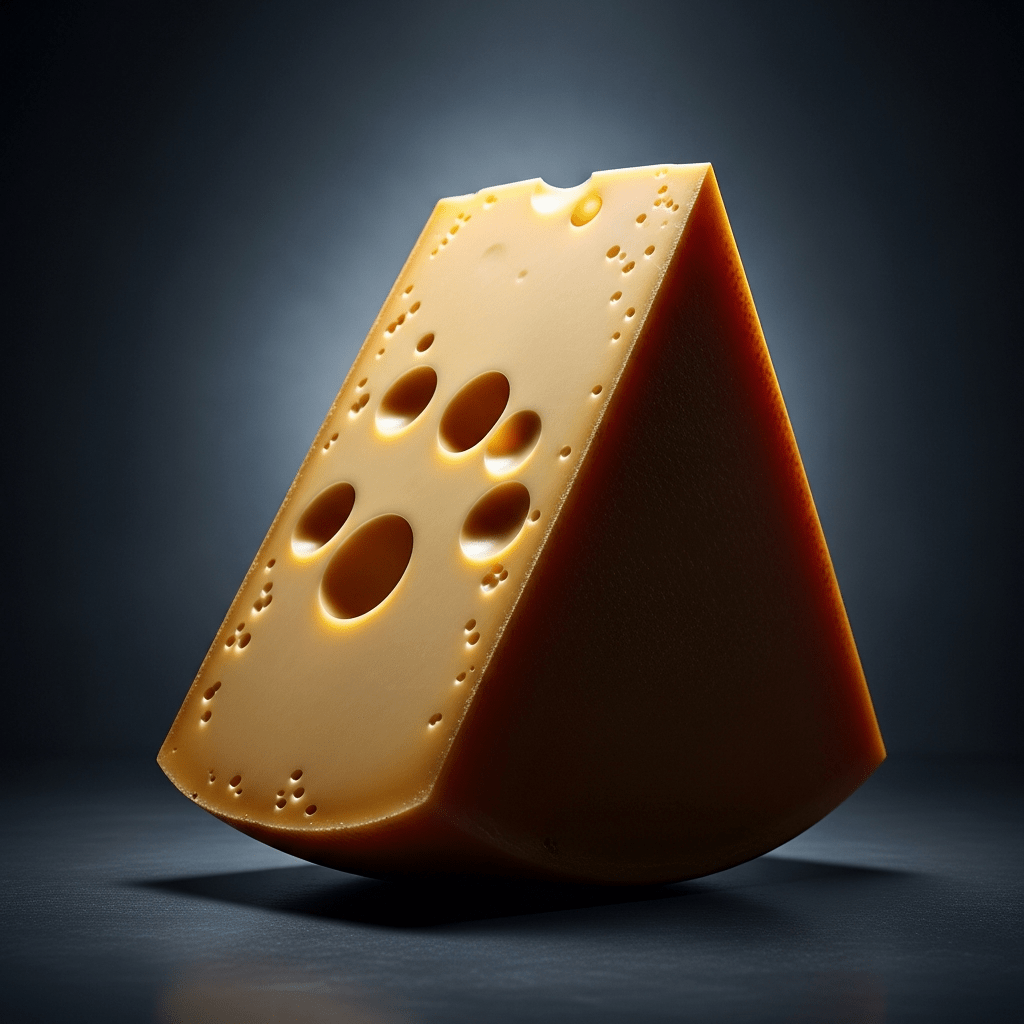
Swiss Cheese is a semi-hard, pale yellow cheese known for its signature holes and mild, nutty flavor, most commonly modeled after traditional Emmental.
Swiss Cheese is a semi-hard, pale yellow cheese known for its signature holes and mild, nutty flavor, most commonly modeled after traditional Emmental.
Swiss Cheese traces its roots to the Emmental region of Switzerland, where Emmental cheese has been crafted since the 13th century. The style gained international prominence when Swiss immigrants brought their cheesemaking traditions to the United States in the late 19th century, adapting the original methods to local milk and production practices. While "Swiss Cheese" is a generic term in many markets, the authentic Emmental remains a protected product in Switzerland and the European Union, celebrated for its historical pedigree and artisanal heritage.
Swiss Cheese belongs to the family of semi-hard cheeses made from cow's milk, characterized by pressed and cooked curds. It is most closely associated with Emmental, but the term also encompasses a variety of cheeses produced in the Emmental style. In the U.S., "Swiss Cheese" refers to a market category rather than a specific protected variety, often including domestic and international cheeses with similar traits.
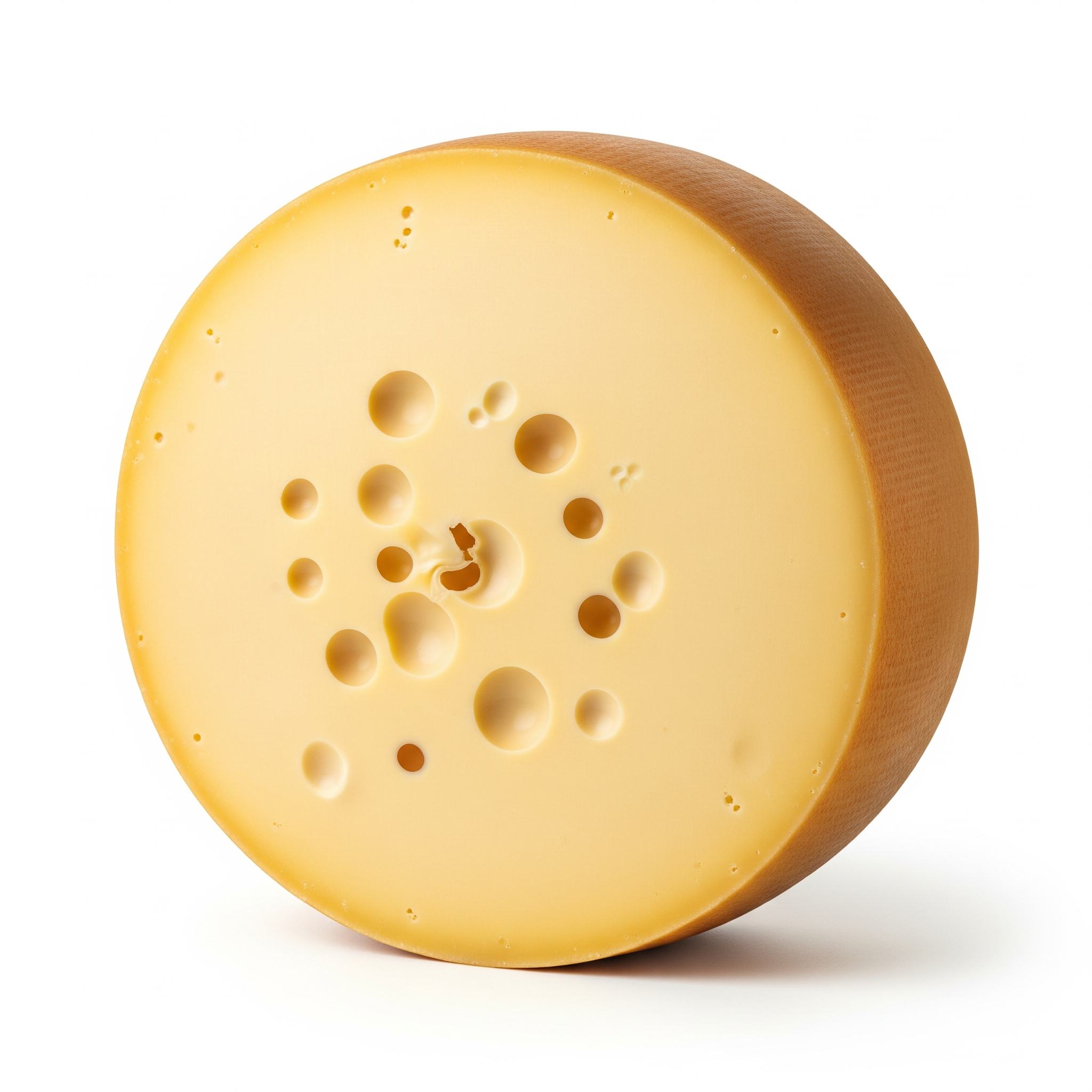
Swiss Cheese is instantly recognizable for its large, round holes—known as "eyes"—scattered throughout its pale yellow interior. The texture is smooth and pliable, ranging from semi-hard to hard. It is typically shaped into wheels or blocks, with traditional wheels weighing from 2 kg to over 100 kg. The cheese sports a natural rind, though commercial versions may have the rind removed for convenience.
Swiss Cheese is valued for its excellent melting properties, making it a staple in hot dishes like fondue, quiches, and baked casseroles. Its mild, nutty flavor and appealing texture make it popular for sandwiches, deli platters, and snacking. In industrial contexts, it is frequently used in processed cheese products due to its consistent texture and flavor.
Bring this kind into your world illustrated posters, mugs, and shirts.
Archival print, museum-grade paper
Buy Poster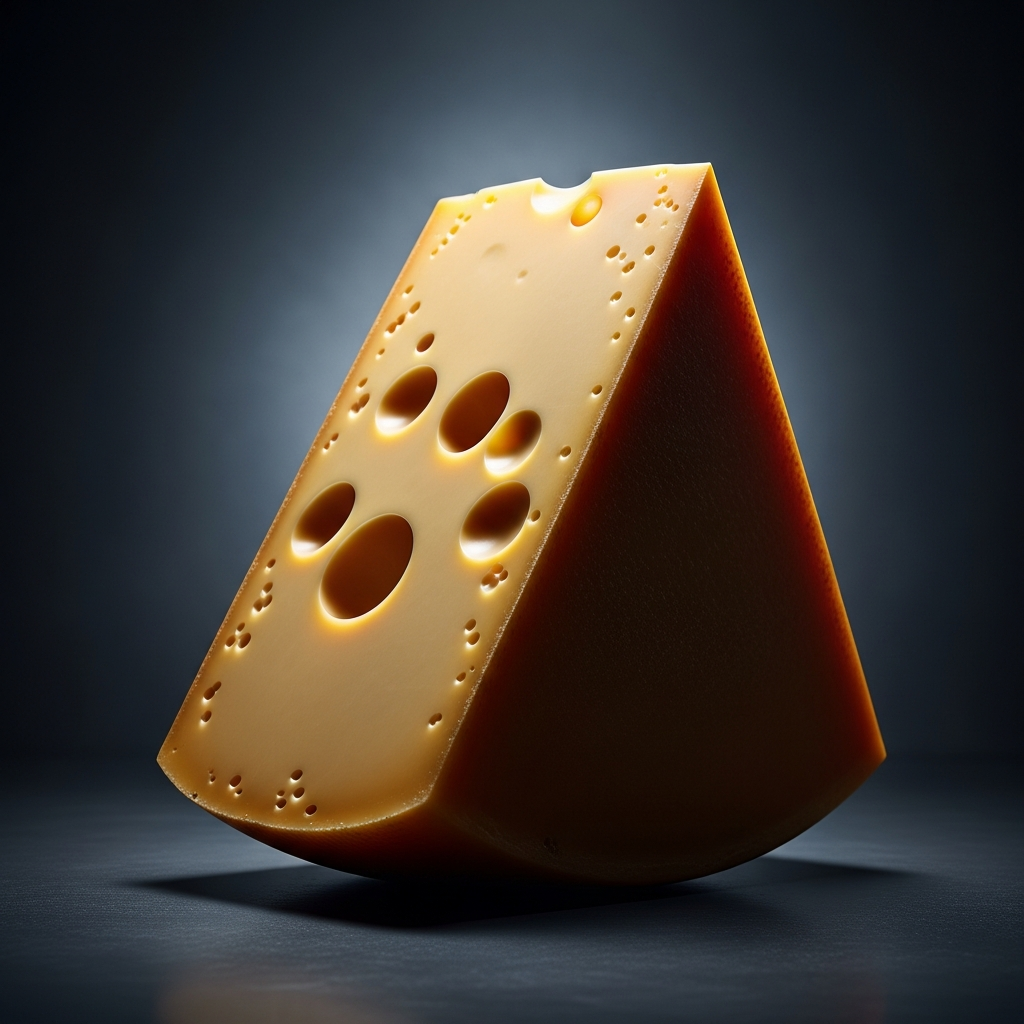
Stoneware mug, dishwasher safe
Buy Mug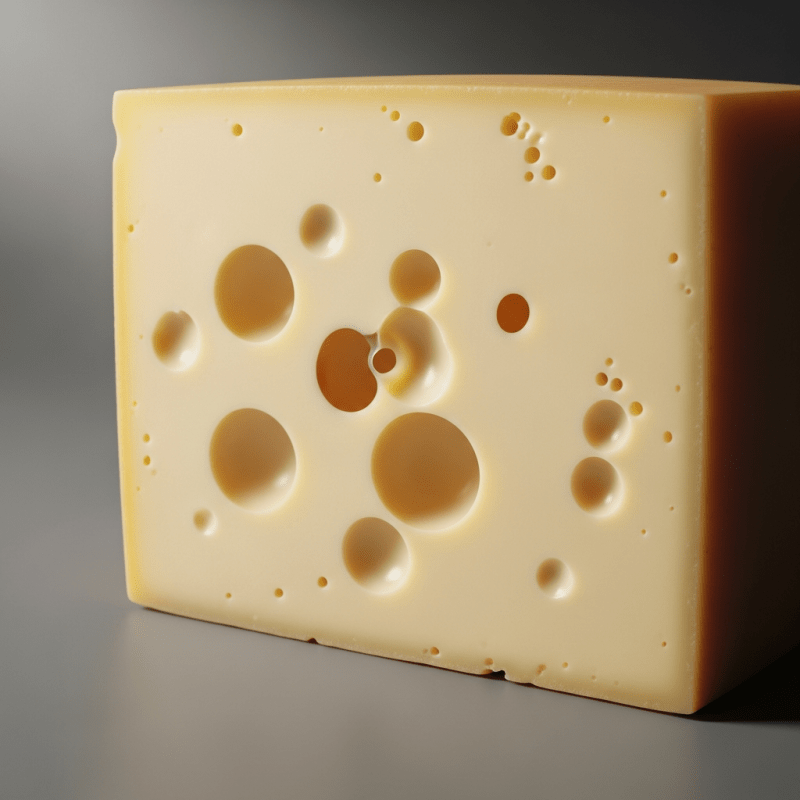
Soft cotton tee, unisex sizes
Buy ShirtSwiss Cheese is an iconic symbol of Swiss culinary tradition and has become a cultural touchstone in both Europe and North America. Its distinctive appearance is often used in art and popular media to represent cheese in general. In Switzerland, Emmental is celebrated as a national treasure, while in the U.S., "Swiss Cheese" is a ubiquitous presence in delis and supermarkets, reflecting the enduring influence of Swiss immigrant communities.
Swiss Cheese is made exclusively from cow's milk, which imparts a mild, creamy flavor and contributes to its smooth texture and pale yellow color.
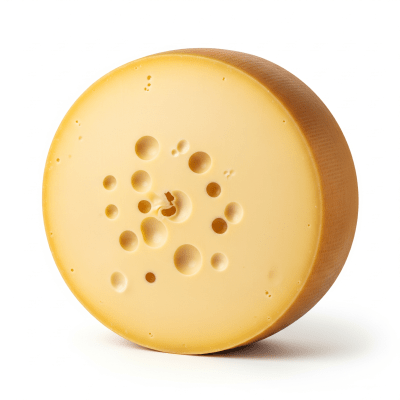
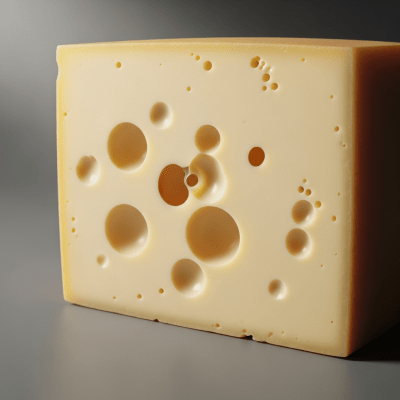


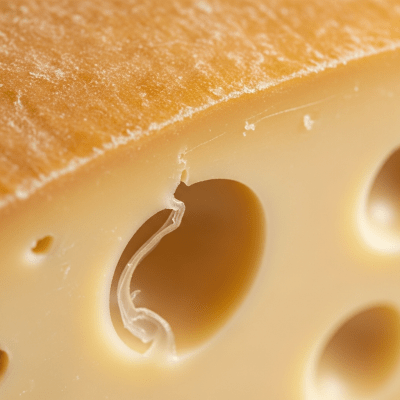
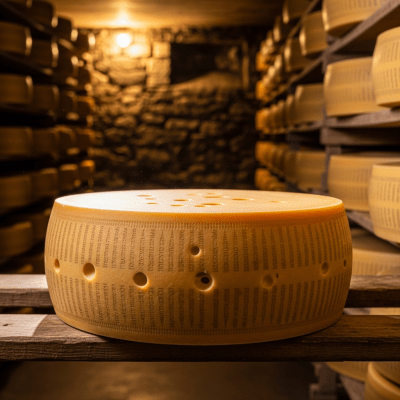
The cheese is produced by pressing and cooking the curd, followed by brining and aging for 2 to 12 months. A key step involves fermentation with Propionibacterium freudenreichii, which creates the iconic holes and develops the cheese's nutty, sweet flavor.
Swiss Cheese features a smooth, pliable texture that ranges from semi-hard to hard. Its natural rind forms during aging, though commercial varieties may have the rind removed for easier slicing and packaging.
Swiss Cheese is typically aged from 2 to 12 months. Shorter aging yields a milder, softer cheese, while longer maturation deepens the nutty, sweet flavors and firms up the texture. The aging process also influences the development and size of the characteristic holes.
"Swiss Cheese" as a generic product has no official protected status. However, Emmental—the archetype for Swiss Cheese—is protected under Swiss AOC and EU PDO regulations, ensuring strict standards for production and origin.
Swiss Cheese is sold in a variety of forms, including large wheels, blocks, and pre-sliced packages. These formats cater to both retail and foodservice markets, making the cheese accessible for slicing, melting, and snacking.
When selecting Swiss Cheese, look for a fresh, mild aroma and a firm, pliable texture with well-formed holes. Store tightly wrapped in the refrigerator to prevent drying and flavor loss. For best quality, consume within a week of opening, and avoid freezing, which can alter texture.