Roquefort
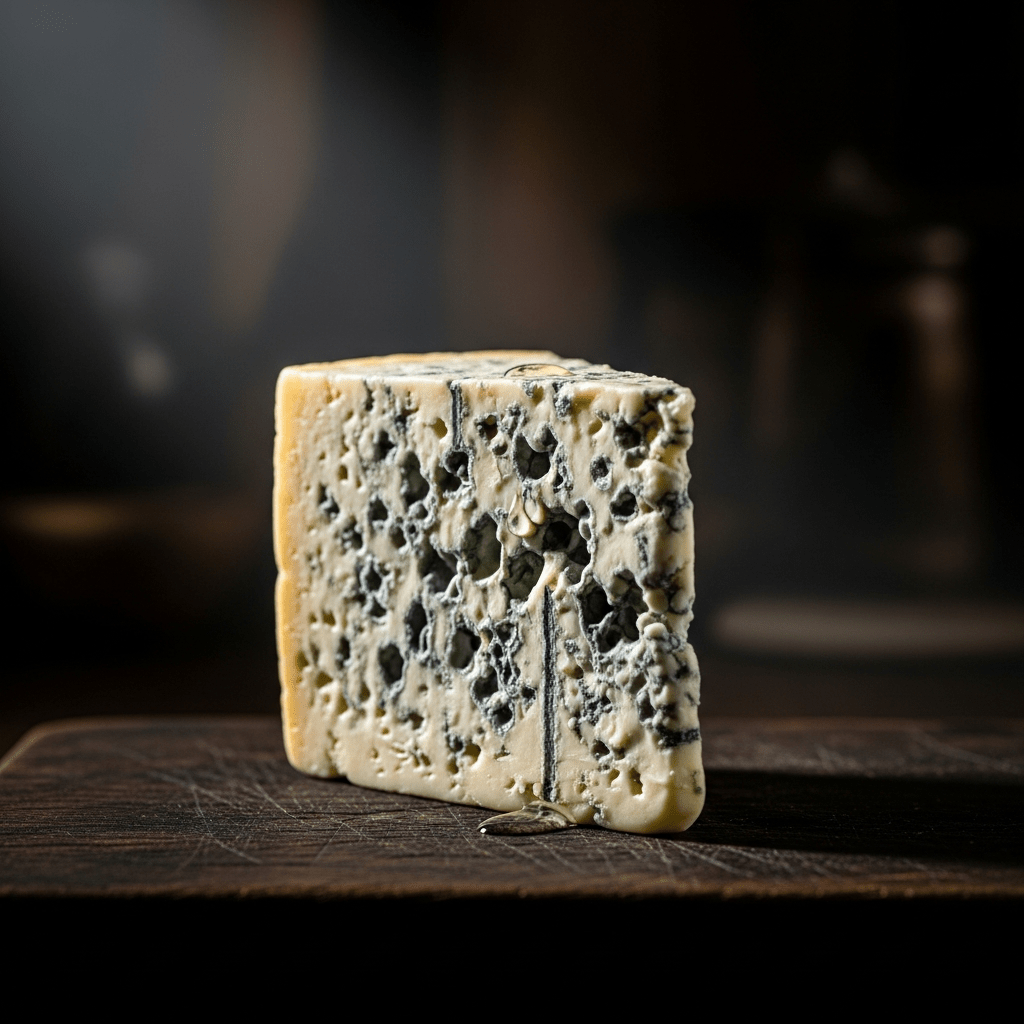
Roquefort is a legendary French blue cheese made exclusively from sheep’s milk and matured in the limestone caves of Roquefort-sur-Soulzon, renowned for its bold flavor and striking blue-green veins.
Roquefort is a legendary French blue cheese made exclusively from sheep’s milk and matured in the limestone caves of Roquefort-sur-Soulzon, renowned for its bold flavor and striking blue-green veins.
Roquefort’s roots trace back to the medieval village of Roquefort-sur-Soulzon in southern France, where cheese-making traditions date to at least the 11th century. Its fame grew through royal patronage, including Charlemagne’s court, and was cemented in 1925 when Roquefort became the first cheese to receive France’s Appellation d’Origine Contrôlée (AOC) status. Today, only cheese crafted from Lacaune sheep’s milk and aged in the region’s natural limestone caves can bear the Roquefort name, under the strict oversight of French and European authorities.
Roquefort belongs to the family of blue, mold-ripened cheeses, distinguished by the use of Penicillium roqueforti mold. It is classified as a semi-soft cheese and sits within the broader category of sheep’s milk cheeses. Its protected designation ensures that only cheese produced under specific regional and technical conditions is recognized as authentic Roquefort.
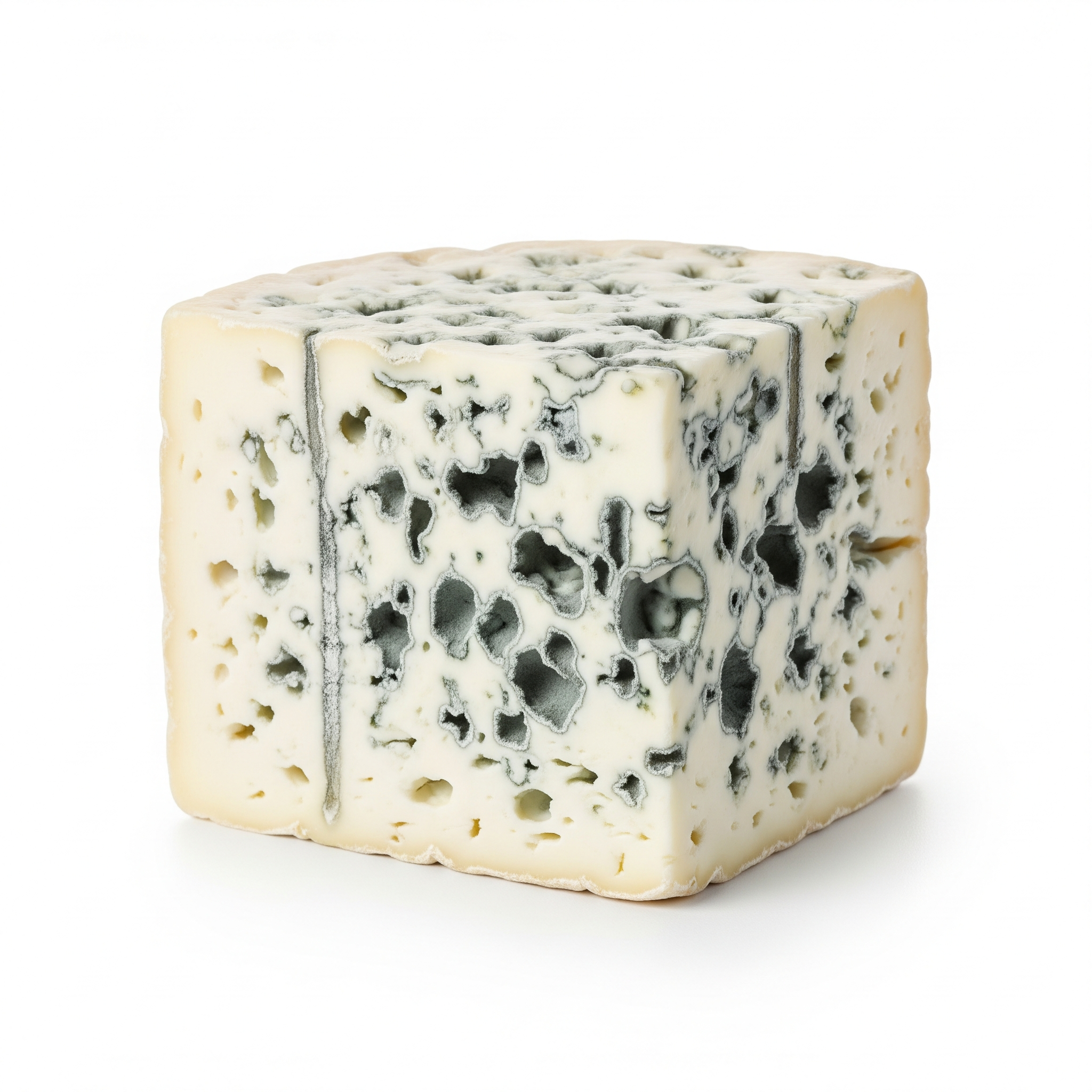
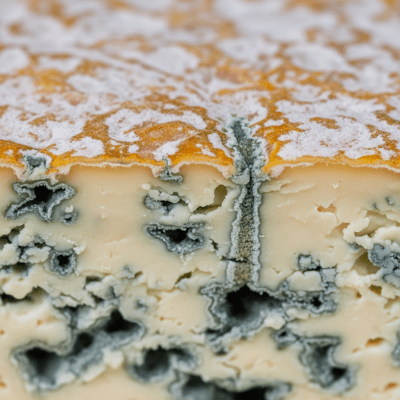
Roquefort is typically formed into cylindrical wheels weighing 2.5–3 kg, about 10 cm high and 18–20 cm in diameter. The interior paste is white to ivory, dramatically marbled with blue-green veins of mold. Its thin, edible rind is often slightly sticky, and the cheese’s moist, creamy, and crumbly texture is instantly recognizable.
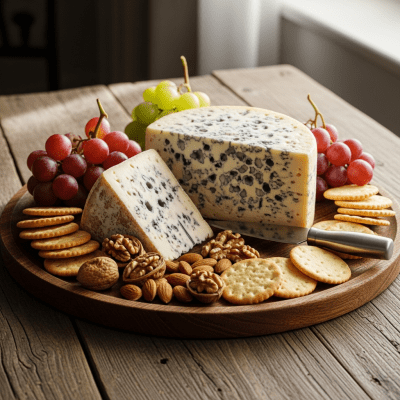
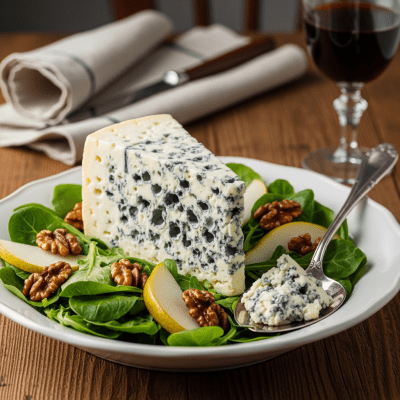
Roquefort is celebrated for its sharp, tangy, and complex flavor, making it a centerpiece on cheese boards and a prized ingredient in French cuisine. It is commonly crumbled over salads, featured in Roquefort dressing, paired with fruit and nuts, or melted into sauces for meats and vegetables. Its intense taste and aroma make it a favorite for pairing with dessert wines and robust reds.
Bring this kind into your world illustrated posters, mugs, and shirts.
Archival print, museum-grade paper
Buy Poster
Stoneware mug, dishwasher safe
Buy Mug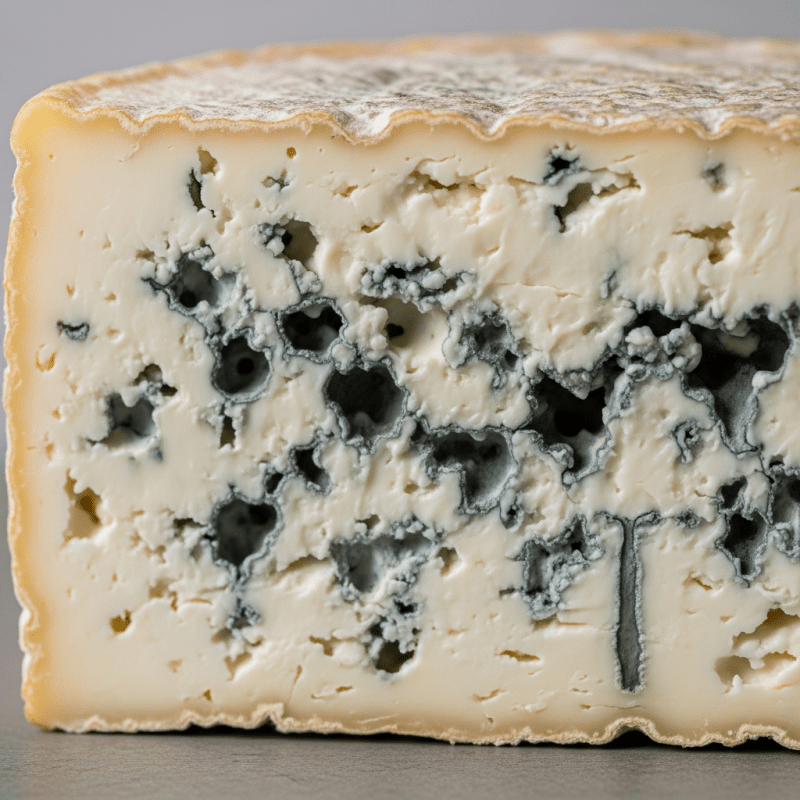
Soft cotton tee, unisex sizes
Buy ShirtRoquefort is often referred to as le roi des fromages—the king of cheeses—in French culinary tradition. Its storied history, royal associations, and strict regulatory protections have made it a symbol of French gastronomic heritage. The cheese’s unique maturation in the caves of Roquefort-sur-Soulzon is legendary, inspiring countless imitations but remaining unrivaled in authenticity and prestige.
Roquefort is crafted solely from the raw, unpasteurized milk of Lacaune sheep. This milk imparts a rich, creamy texture and a distinctively tangy, robust flavor that sets Roquefort apart from cow or goat milk cheeses.

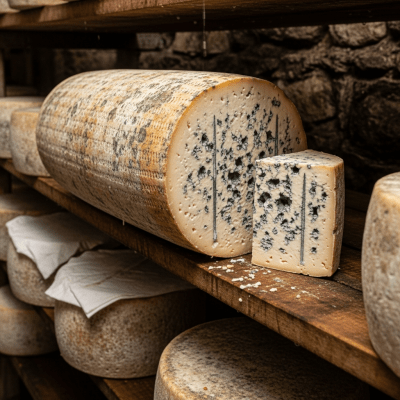
Roquefort’s production begins with curdling raw sheep’s milk using rennet. The curds are cut, drained, and salted before being inoculated with Penicillium roqueforti mold. The cheese is then aged for at least 14 days (typically 3–5 months) in the naturally humid and cool limestone caves of Roquefort-sur-Soulzon, where the unique environment fosters the development of its signature blue veins and complex flavors.
Roquefort boasts a moist, creamy, and crumbly texture, with a paste that is marbled by blue-green veins. Its rind is thin, edible, and often slightly sticky, contributing to the cheese’s overall sensory appeal.
Roquefort is aged for a minimum of 14 days, though most wheels mature for 3 to 5 months in the caves of Roquefort-sur-Soulzon. The cool, humid cave environment allows the Penicillium roqueforti mold to flourish, intensifying the cheese’s sharp, tangy, and salty flavors while developing its creamy yet crumbly texture.
Roquefort holds both Appellation d’Origine Contrôlée (AOC) and Protected Designation of Origin (PDO) status, regulated by the Institut National de l’Origine et de la Qualité (INAO) and the EU PDO Registry. Only cheese made from Lacaune sheep’s milk and aged in the caves of Roquefort-sur-Soulzon may legally bear the Roquefort name, ensuring authenticity and preserving tradition.
Roquefort is commonly sold in wedges cut from wheels, or pre-crumbled for convenience. Packaging is designed to preserve moisture and prevent drying.