
Parmigiano Reggiano
Parmigiano Reggiano, commonly known as Parmesan, is a celebrated hard, aged cheese renowned for its granular texture, robust umami flavor, and versatility in the kitchen.
Parmigiano Reggiano, commonly known as Parmesan, is a celebrated hard, aged cheese renowned for its granular texture, robust umami flavor, and versatility in the kitchen.
Parmigiano Reggiano traces its origins to the Emilia-Romagna and parts of Lombardy in northern Italy, specifically the provinces of Parma, Reggio Emilia, Modena, Bologna (west of the Reno River), and Mantua (east of the Po River). Its production dates back to at least the 13th century, with medieval records attesting to its enduring legacy. Today, only cheese crafted in these regions under strict PDO (Protected Designation of Origin) standards may bear the name Parmigiano Reggiano in Europe, preserving centuries of artisanal tradition.
Parmigiano Reggiano belongs to the family of hard, aged cheeses made from cow's milk. Within the cheese taxonomy, it is classified by its milk source (cow), texture (hard, granular), and ripening method (long-aged). It stands as the archetype of grating cheeses and is distinct from similar varieties such as Grana Padano, which follow different production standards.
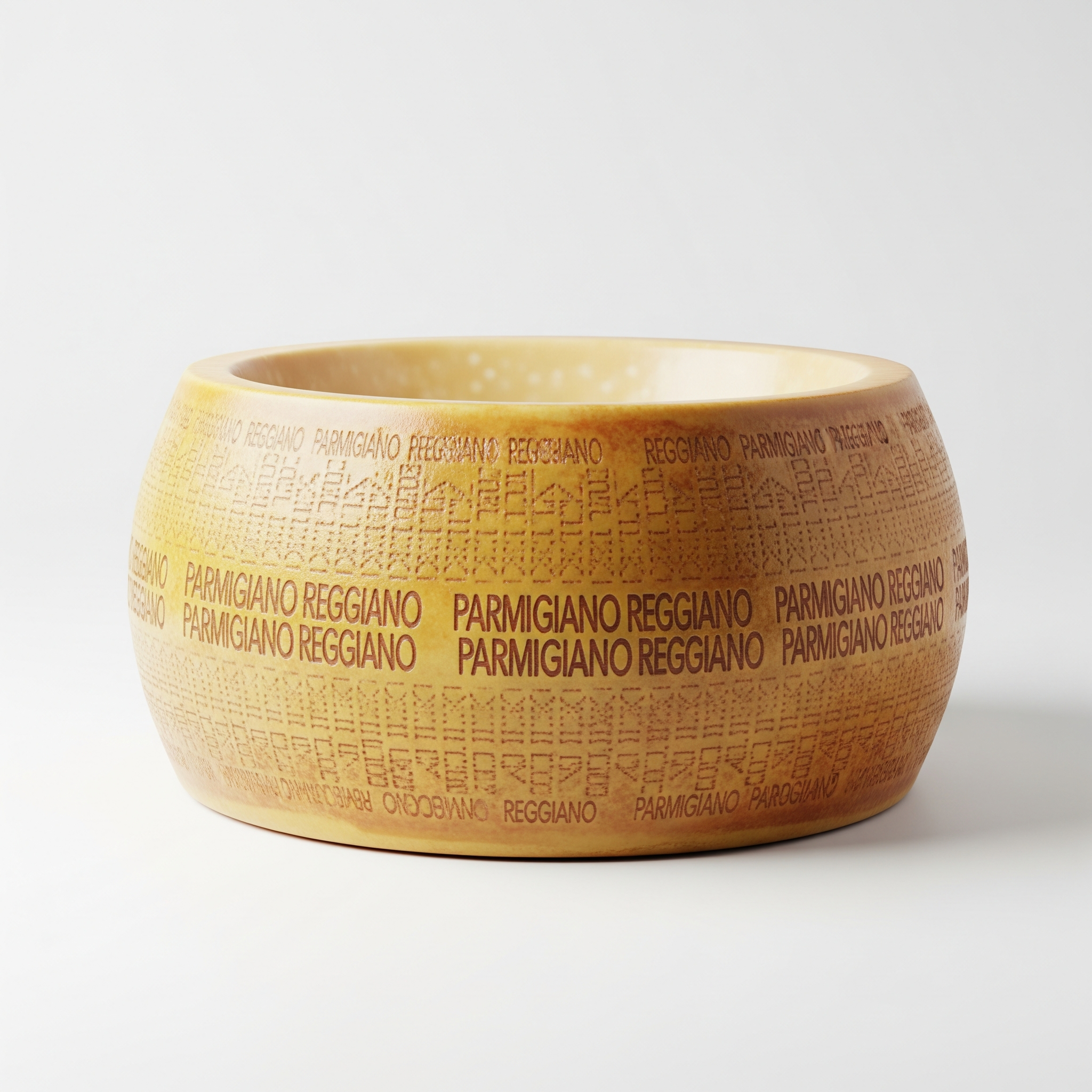
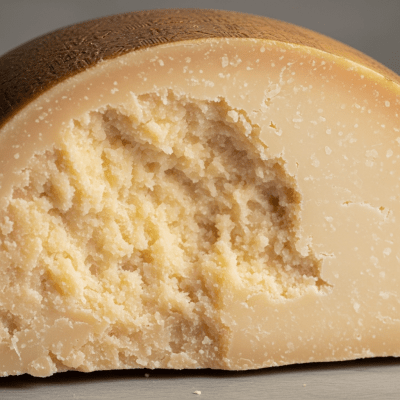
This cheese is instantly recognizable by its large, cylindrical wheels weighing 24–40 kg, with a diameter of 35–45 cm and a height of 18–25 cm. The interior is pale golden, dense, and dotted with crystalline granules, while the exterior features a hard, natural rind stamped with the PDO seal and date of production. When cut or broken, it reveals a crumbly, flaky texture that shatters into savory shards.
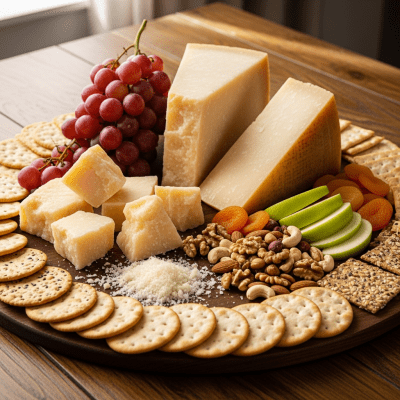
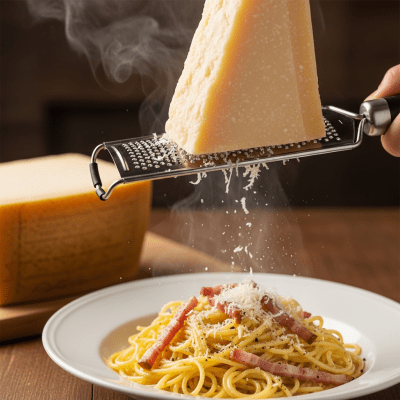
Parmesan is prized for its intense, savory flavor and crystalline crunch, making it a staple for grating over pasta, risotto, soups, and salads. It is also enjoyed shaved into slivers, eaten in chunks on cheese boards, or incorporated into sauces and fillings. Its robust taste and texture allow it to elevate dishes both as a finishing touch and as a central ingredient.
Bring this kind into your world illustrated posters, mugs, and shirts.
Archival print, museum-grade paper
Buy Poster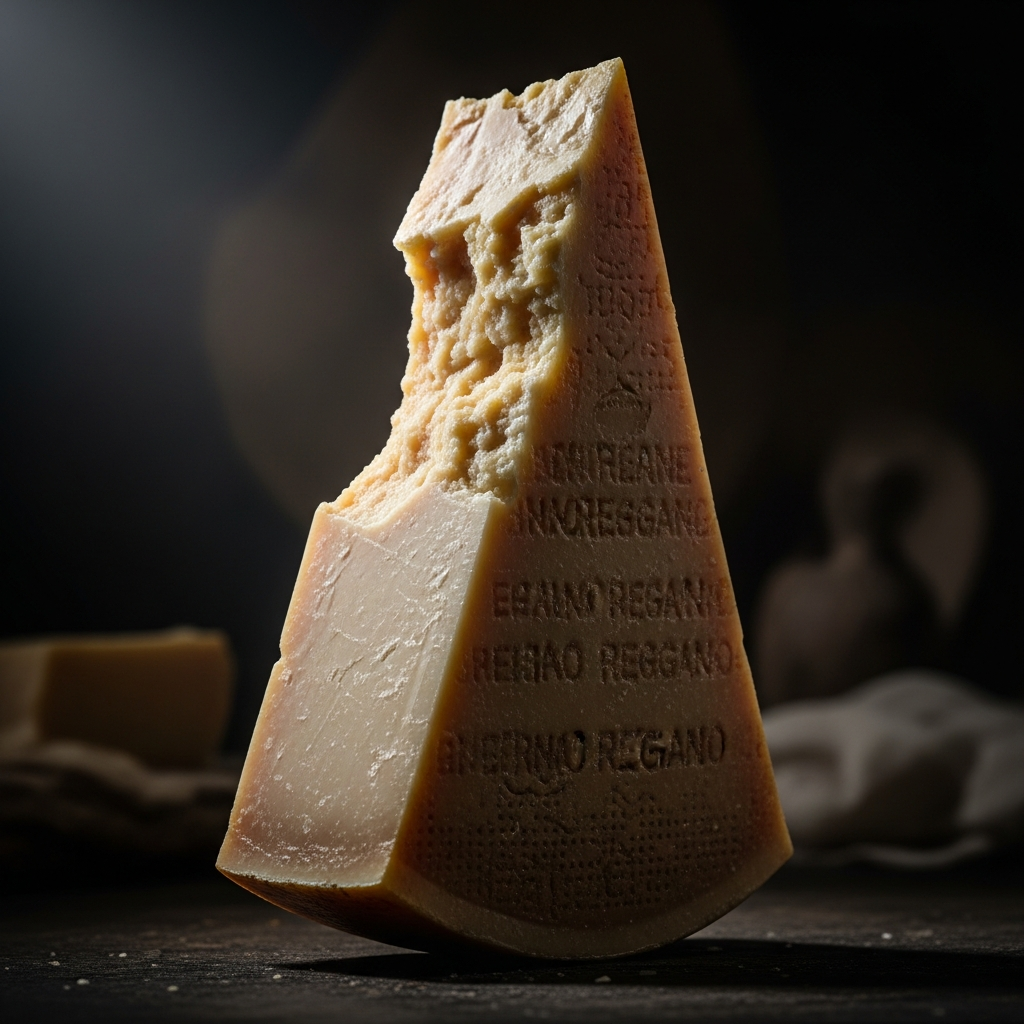
Stoneware mug, dishwasher safe
Buy Mug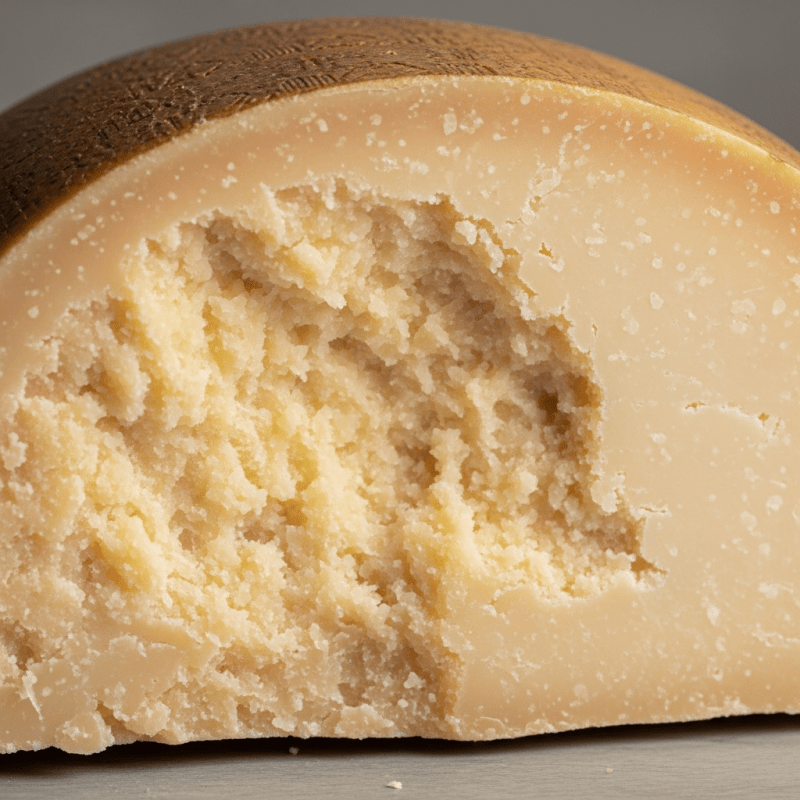
Soft cotton tee, unisex sizes
Buy ShirtParmigiano Reggiano is a symbol of Italian culinary heritage, celebrated in art, literature, and gastronomy. It is referenced in medieval texts and has inspired generations of chefs and food lovers worldwide. Its protected status and artisanal production methods are a point of pride for the regions of Emilia-Romagna and Lombardy, embodying the values of tradition, quality, and regional identity.
Parmigiano Reggiano is made exclusively from raw, partially skimmed cow's milk sourced from cows fed on locally grown forage. This milk imparts a rich, nutty flavor and contributes to the cheese's signature aroma and complexity.
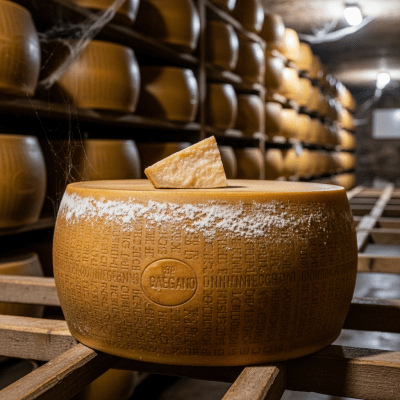
The cheese is crafted by heating raw, partially skimmed cow's milk, adding natural calf rennet, and allowing the milk to coagulate. The curd is then cut, cooked, molded, and immersed in brine before undergoing extended aging in controlled environments. No additives or preservatives are allowed, and each wheel is stamped for authenticity.
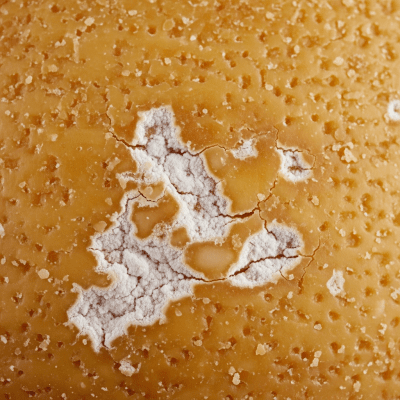
Parmigiano Reggiano boasts a hard, granular texture with a crystalline crunch, resulting from long aging and low moisture content. Its exterior is a natural, hard rind, stamped with identifying marks and the PDO seal, which protects the cheese during maturation and signals its authenticity.
Wheels are aged for a minimum of 12 months, with many reaching 24, 36, or even 48 months. As the cheese matures, its flavor intensifies, becoming more complex and nutty, while the texture grows increasingly granular and crumbly. Extended aging also enhances the development of savory tyrosine crystals.
Parmigiano Reggiano holds PDO (Protected Designation of Origin) status under European law, regulated by the Consorzio del Formaggio Parmigiano Reggiano and the EU PDO Registry. Only cheese produced in the specified regions and according to strict standards may bear the name, ensuring authenticity and preserving tradition.
Parmesan is sold in a variety of forms to suit different culinary needs, from large wheels for aging to convenient pre-grated or shaved packages.