Savannah
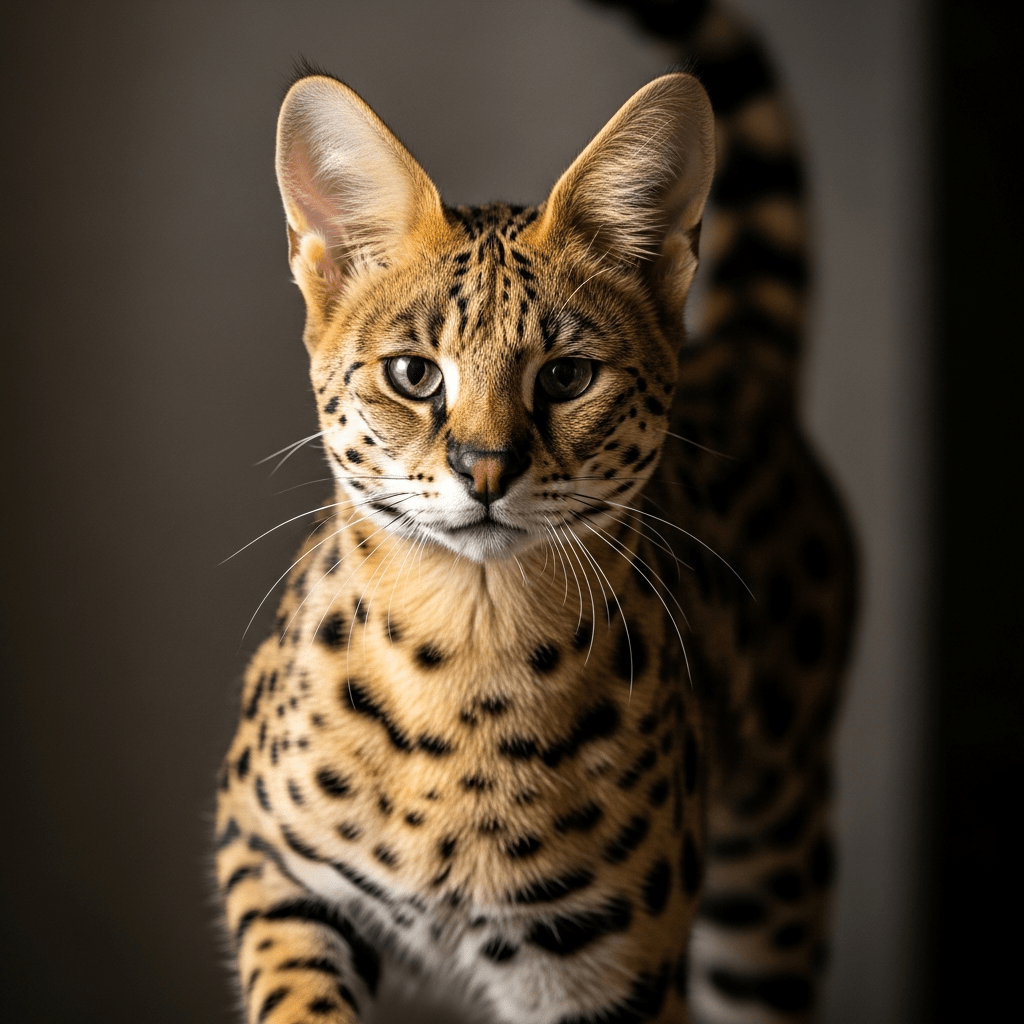
The Savannah cat is a striking hybrid breed, instantly recognizable for its tall, athletic build, bold spotted coat, and wild serval-like appearance.
The Savannah cat is a striking hybrid breed, instantly recognizable for its tall, athletic build, bold spotted coat, and wild serval-like appearance.
The Savannah breed originated in the United States in the late 1980s, with the first Savannah cat born in 1986 from a cross between a male African serval and a domestic Siamese cat. Pioneering breeders Judee Frank and Patrick Kelley played key roles in establishing the breed, refining its unique look and temperament through successive generations. The breed's lineage is marked by filial generations (F1–F5+), each indicating the degree of serval ancestry and shaping the Savannah’s distinctive characteristics.
Classified as a hybrid domestic cat breed, the Savannah is the result of crossing Felis catus (domestic cat) with Leptailurus serval (African serval). Within the broader taxonomy of cats, Savannahs occupy a unique niche as one of the few recognized hybrid breeds, with their generational classification (F1, F2, etc.) denoting the percentage of wild serval genetics present.
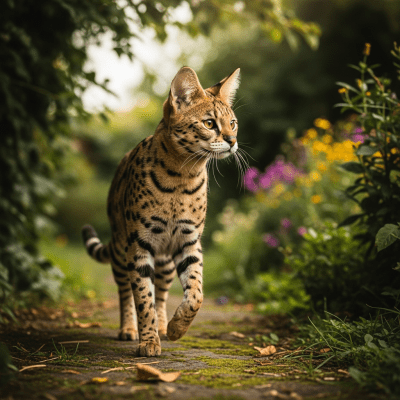
Savannah cats are medium to large, with males often weighing 12–25 lbs (5.4–11.3 kg). Their bodies are long, lean, and muscular, complemented by elongated legs and a relatively small head crowned with large, upright ears. The coat is short to medium in length, featuring bold black or dark brown spots on backgrounds of gold, silver, or smoke. Distinctive features include hooded eyes, a long neck, and pronounced ocelli—eye-like spots—on the backs of their ears, all contributing to their exotic, wild allure.
Known for their intelligence and high energy, Savannah cats thrive on mental and physical stimulation. They are highly social, often forming strong bonds with their owners, and display dog-like behaviors such as walking on a leash and playing fetch. As exotic companion animals, Savannahs are prized for their interactive nature and striking looks, though ownership may be regulated in some regions due to their hybrid status.
Bring this kind into your world illustrated posters, mugs, and shirts.

Archival print, museum-grade paper
Buy Poster
Stoneware mug, dishwasher safe
Buy Mug
Soft cotton tee, unisex sizes
Buy ShirtThe Savannah cat has become a modern symbol of exotic luxury and status, admired for its wild beauty and engaging personality. Its hybrid origins and remarkable appearance have made it a frequent subject in media, online communities, and specialty pet circles, where it is celebrated for bridging the gap between domesticity and the allure of the wild.
The Savannah breed is not recognized by the Cat Fanciers’ Association (CFA) or Fédération Internationale Féline (FIFe).
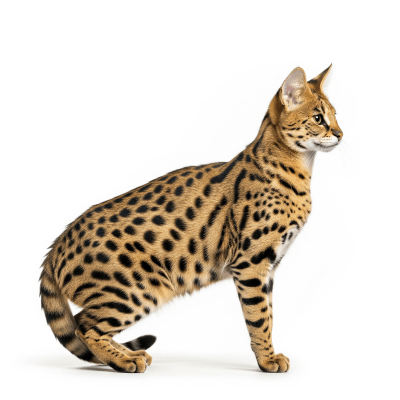
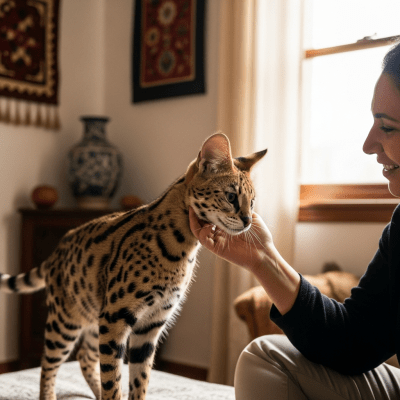


Savannah cats are highly active, intelligent, and social. They crave interaction, often following their owners from room to room, and enjoy engaging in games and activities. Their curiosity and energy require ample stimulation, and many Savannahs display dog-like traits such as loyalty, leash walking, and even playing fetch. While affectionate, they can be assertive and may not suit every household, especially those seeking a low-key companion.
Savannah cats generally enjoy robust health, with an average lifespan of 12–20 years, depending on generation and care. Early-generation Savannahs may experience hybrid-related health issues, including reproductive challenges. Regular veterinary care and attention to their unique needs help ensure a long, healthy life.
Grooming needs for Savannah cats are modest due to their short to medium-length coats. Weekly brushing helps manage shedding and keeps their coat glossy. Because of their high intelligence and energy, Savannahs require substantial mental and physical stimulation—interactive toys, climbing structures, and regular playtime are essential. Owners should also be mindful of their dietary and enrichment needs to support overall well-being.
The Savannah’s coat typically features bold black or dark brown spots set against golden, silver, or smoke backgrounds. This spotted pattern is reminiscent of their serval ancestry and is a defining trait of the breed. Eye color varies, but hooded eyes are a distinctive feature.
While individual Savannah cats have appeared in media and online as symbols of exotic pet ownership, the breed itself is renowned for its generational pioneers, such as the first Savannah born in 1986 and those bred by Judee Frank and Patrick Kelley. Early-generation Savannahs have been featured in documentaries and pet enthusiast circles for their remarkable size and wild beauty.
Regional distinctions often center on generational classification, with terms like F1, F2, or F3 Savannah indicating the degree of serval ancestry. Recognition and legality vary: Savannahs are recognized by TICA and GCCF, but not by CFA or FIFe. In some countries and states, ownership of early-generation Savannahs is restricted or prohibited due to their wild heritage.
These generational nicknames reflect the percentage of serval genetics and are commonly used in breed discussions and legal contexts.