
Peterbald
The Peterbald is a rare Russian breed of domestic cat celebrated for its elegant, hairless or fine-coated appearance and affectionate, intelligent temperament.
The Peterbald is a rare Russian breed of domestic cat celebrated for its elegant, hairless or fine-coated appearance and affectionate, intelligent temperament.
The Peterbald originated in St. Petersburg, Russia, in 1994. Developed by breeder Olga S. Mironova, the breed was created by crossing a Don Sphynx (Donskoy) male with an Oriental Shorthair female, aiming to blend the hairless gene with the refined, oriental body type. Later outcrosses to Siamese and Russian Blue helped stabilize both the breed’s physical features and its gentle, sociable nature. The Peterbald’s emergence reflects a modern approach to breed development, combining genetic innovation with aesthetic vision.
The Peterbald belongs to the domestic cat species Felis catus and is classified as a recognized breed within major cat registries. It is part of the hairless and oriental-type breed groupings, sharing ancestry with the Don Sphynx and Oriental Shorthair. Its unique combination of hairless genetics and refined morphology distinguishes it from other hairless breeds and places it among the most distinctive companion cats.
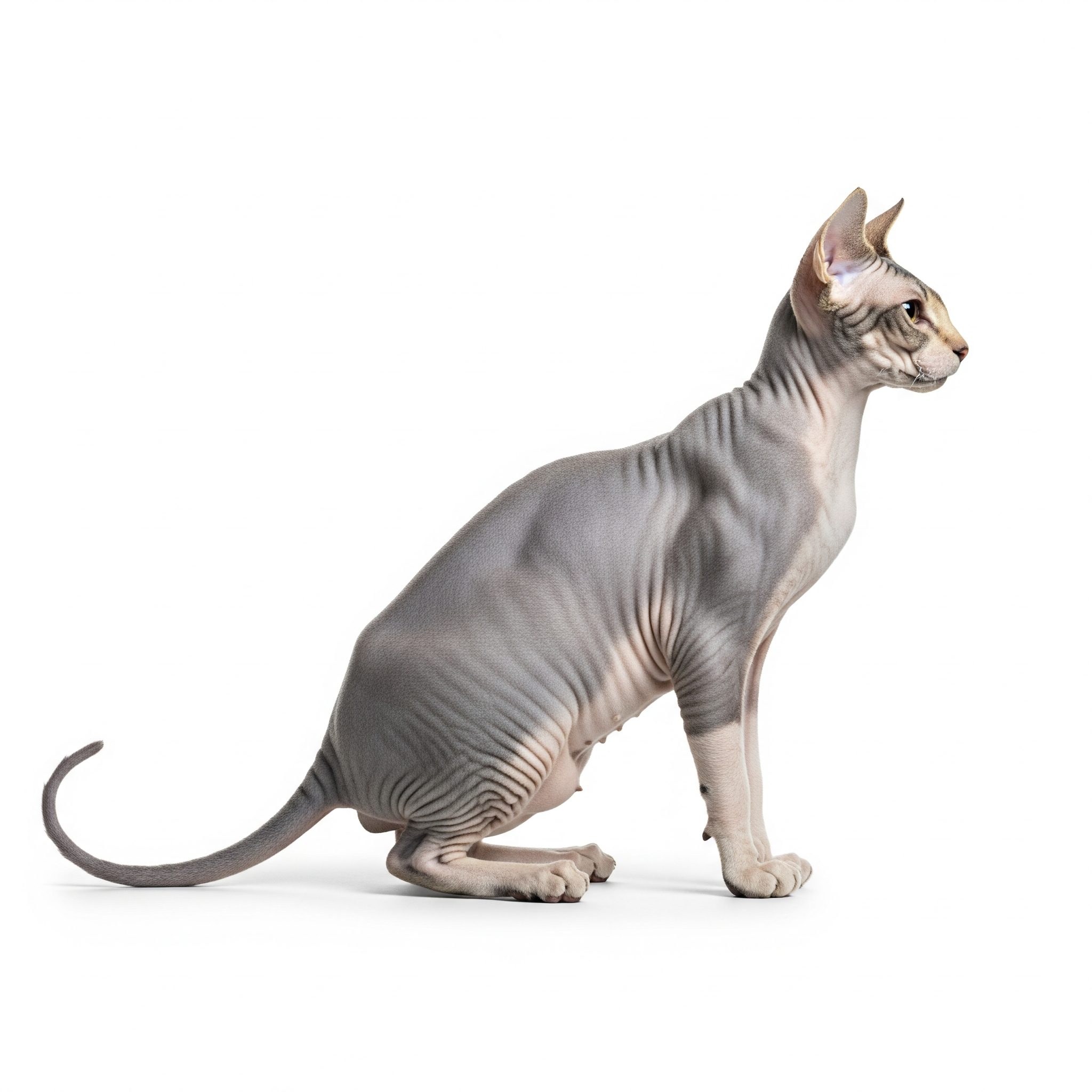
Peterbalds are medium-sized cats with a long, slender, and muscular body, wedge-shaped head, and large, expressive ears. Their almond-shaped eyes contribute to an elegant, oriental look. The coat varies dramatically: some Peterbalds are completely hairless (“ultra bald”), while others have a fine, peach-fuzz texture (“chamois”) or a short, wiry “brush” coat. The tactile sensation of their skin ranges from silky smooth to velvety, and coat type may change as the cat matures. All colors and patterns are accepted, making each Peterbald visually unique.
Peterbalds are cherished as companion animals, known for their sociable, intelligent, and gentle disposition. They often form strong bonds with their families and are described as dog-like in their loyalty and curiosity. Their playful nature and adaptability make them excellent pets for interactive households. Due to their lack of fur, Peterbalds are sensitive to temperature changes and require attentive care to maintain skin health, but their affectionate personality and rarity make them highly sought after among cat enthusiasts.
Bring this kind into your world illustrated posters, mugs, and shirts.
Archival print, museum-grade paper
Buy Poster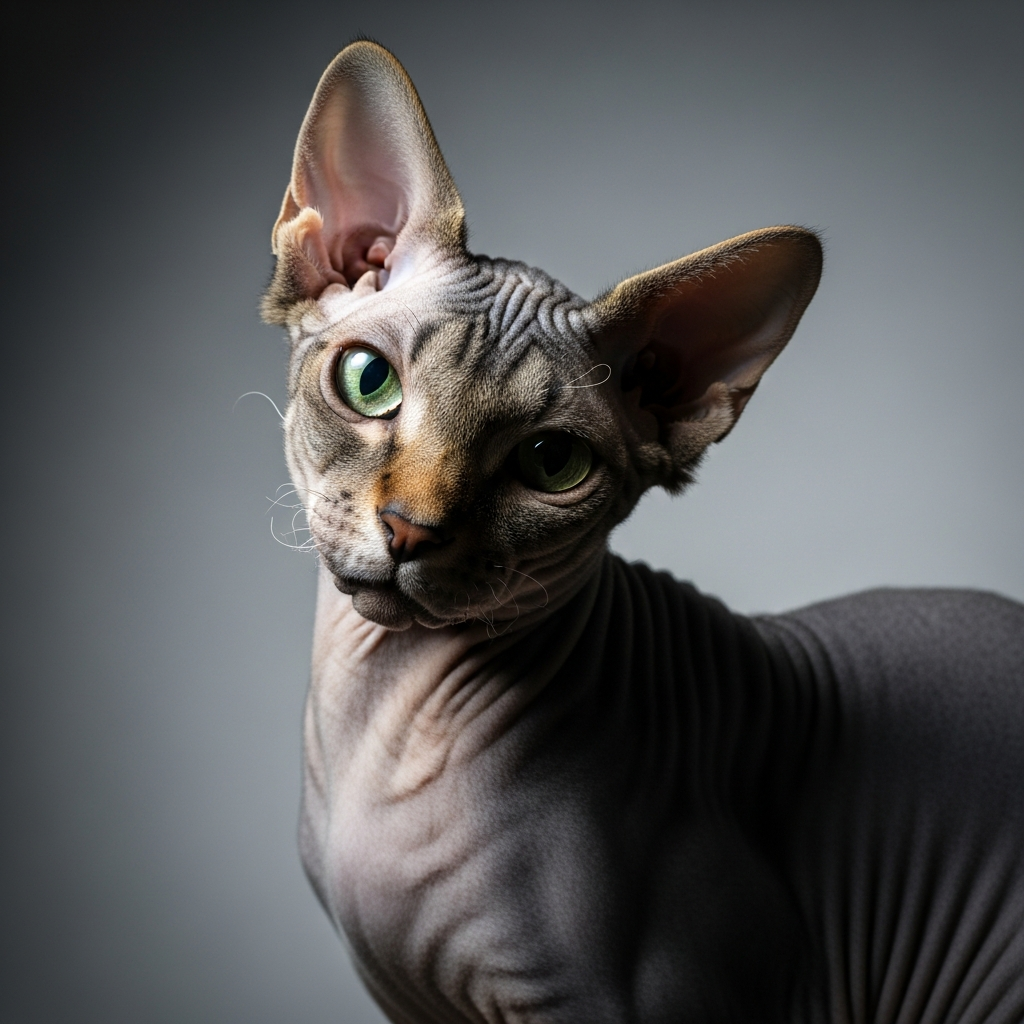
Stoneware mug, dishwasher safe
Buy Mug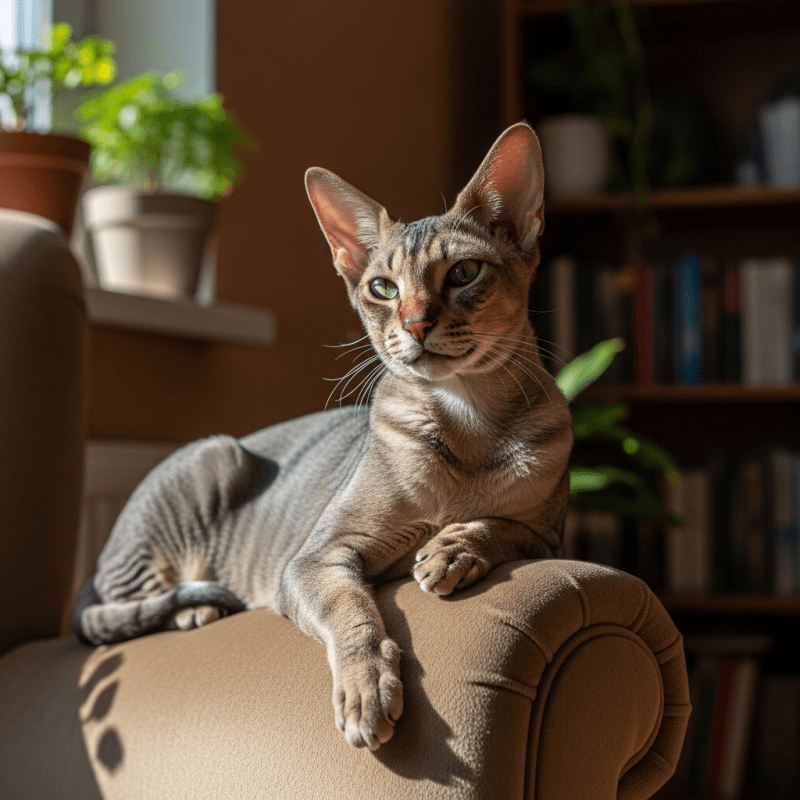
Soft cotton tee, unisex sizes
Buy ShirtAs a modern Russian breed, the Peterbald holds a special place among cat fanciers for its innovative origin and striking appearance. Its development in St. Petersburg is a testament to contemporary breeding practices and genetic exploration. While not yet widely featured in popular media or folklore, the Peterbald’s growing popularity in Europe and North America reflects its status as a symbol of elegance and rarity in the world of pedigree cats.


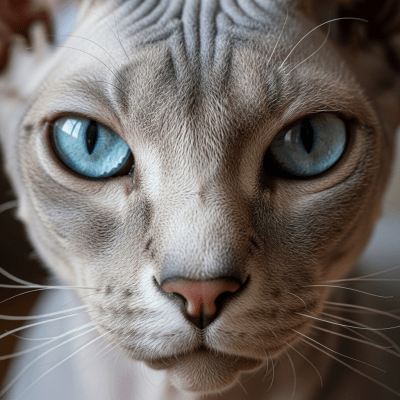
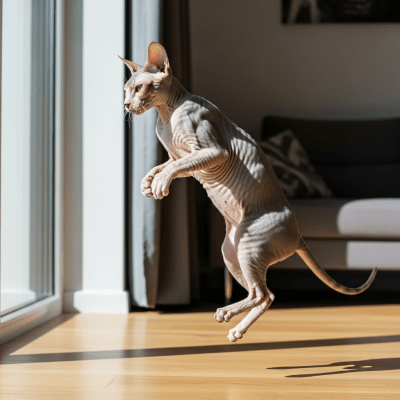
Peterbalds are renowned for their affectionate, sociable, and intelligent nature. They are gentle, loyal, and curious, often following their owners around and engaging in interactive play. Their temperament is frequently described as dog-like, making them well-suited to families and individuals seeking a devoted companion. Peterbalds thrive on attention and enjoy being involved in daily activities.
Peterbalds are generally healthy but, like other hairless breeds, are sensitive to cold and prone to skin issues such as sunburn, dryness, and irritation. Regular skin care and protection from extreme temperatures are essential. While specific lifespan data is limited, Peterbalds typically enjoy a lifespan comparable to other pedigree cats when properly cared for.
Grooming a Peterbald focuses on skin health rather than fur maintenance. Hairless individuals require gentle bathing to remove oils and prevent irritation, while those with brush or chamois coats may need occasional brushing. Owners should protect Peterbalds from sun exposure and cold, and monitor for skin dryness. Regular ear cleaning and nail trimming are also recommended.
All colors and patterns are accepted for the Peterbald breed, including solid, tabby, pointed, and bicolor varieties. Eye color is unrestricted, adding to the breed’s visual diversity. This openness allows for a wide array of appearances within the breed.
While no individual Peterbalds have reached international celebrity status, the breed itself is notable for its innovative Russian origins and growing presence in cat shows across Europe and North America. Early foundation cats bred by Olga S. Mironova are recognized within the breed’s history.
The Peterbald is most prominent in Russia and Europe, where it enjoys strong breed club support and registry recognition. Its popularity is expanding in North America, though regional recognition and naming conventions may vary. In Russian, it is sometimes called “Петерболд,” and alternate names like “Russian Hairless” and “St. Petersburg Hairless” are used in different locales.