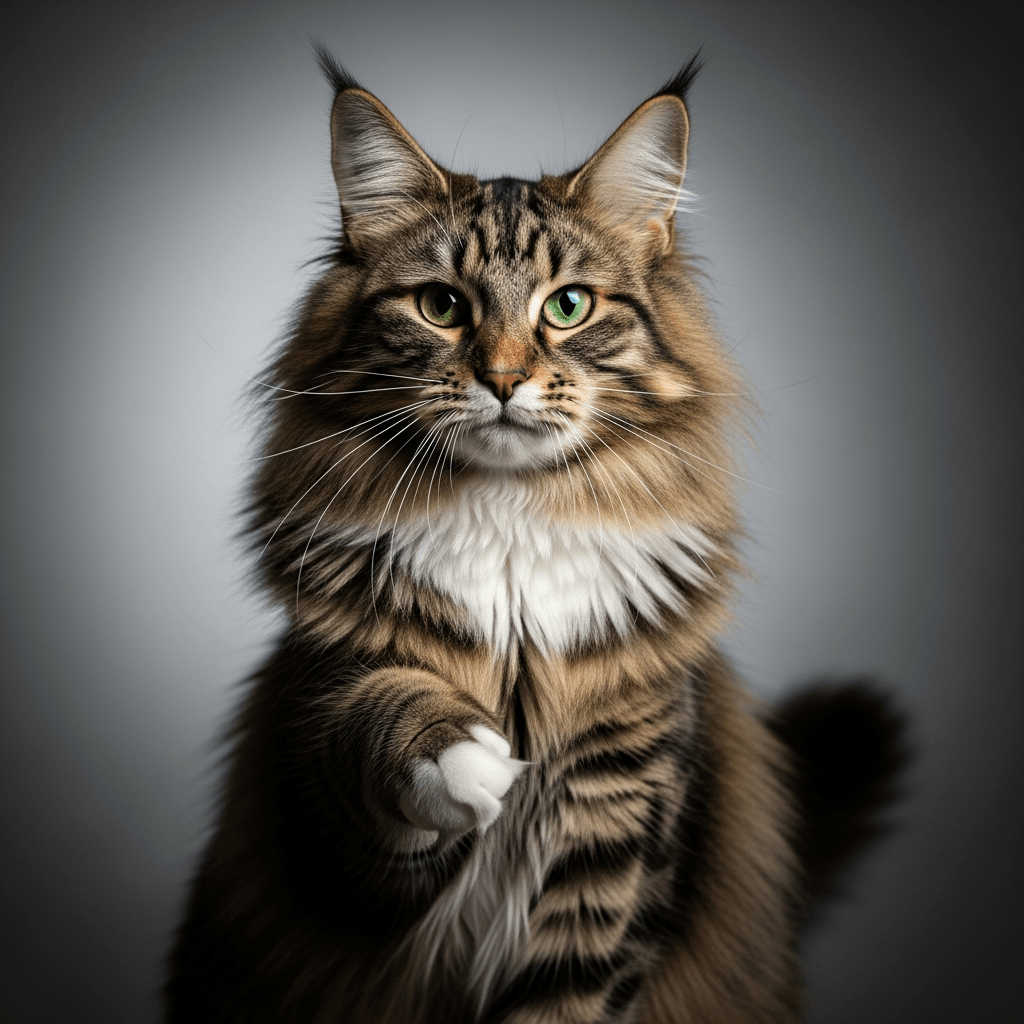
Norwegian Forest Cat
The Norwegian Forest Cat is a large, robust breed from Scandinavia, instantly recognizable by its thick, water-resistant coat, bushy tail, and gentle, friendly nature.
The Norwegian Forest Cat is a large, robust breed from Scandinavia, instantly recognizable by its thick, water-resistant coat, bushy tail, and gentle, friendly nature.
Originating in the forests of Norway, the Norwegian Forest Cat—known locally as the Norsk Skogkatt—is a natural breed that evolved over centuries to thrive in harsh northern climates. Its existence is woven into Norse mythology and folklore, with tales of majestic cats accompanying gods and heroes. Although informally cherished for generations, the breed gained formal recognition in Norway in the 1930s, with organized breeding programs emerging in the 1970s. The Fédération Internationale Féline (FIFe) officially recognized the breed in 1977, setting the stage for its global appreciation.
The Norwegian Forest Cat belongs to the species Felis catus, the domestic cat. It is classified as a natural breed, meaning its distinctive traits arose through adaptation rather than recent hybridization or crossbreeding. Within the broader taxonomy of cats, it stands out for its semi-longhair coat and robust, muscular build, and is recognized by all major cat registries as a distinct breed.
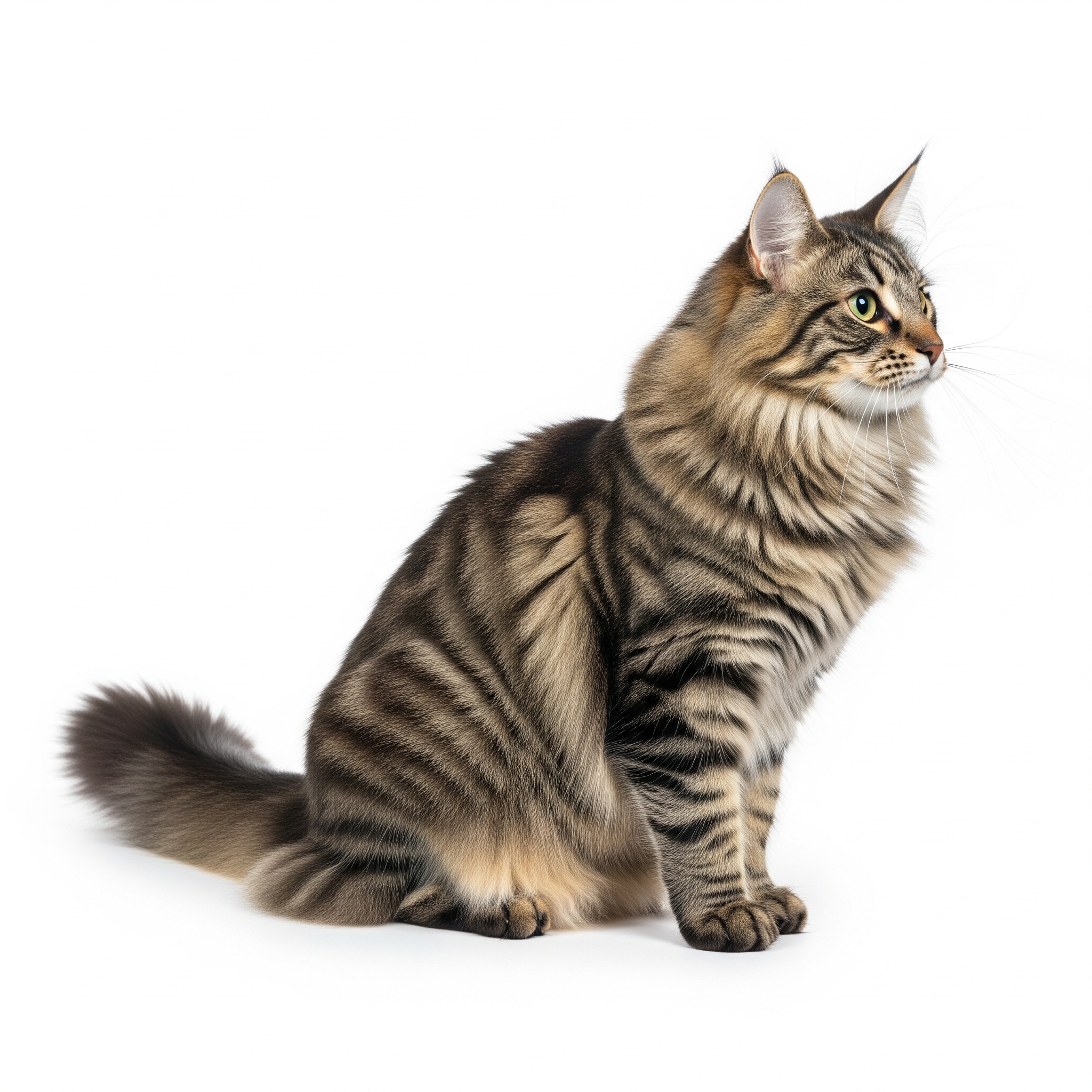
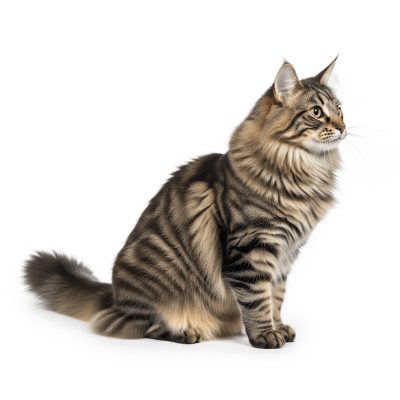
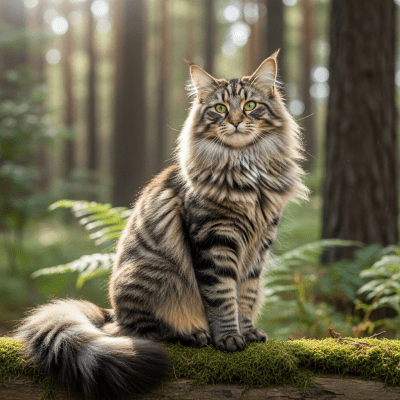
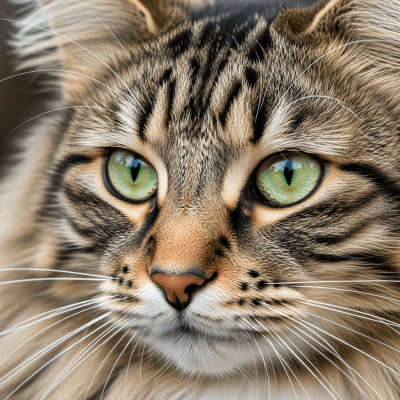
This breed is striking in both size and form: males typically weigh 5.5–9 kg (12–20 lbs), females 3.5–7 kg (8–15 lbs). The Norwegian Forest Cat sports a semi-long, double-layered coat with a dense, woolly undercoat and a glossy, water-repellent outer layer, making it perfectly suited for cold, wet climates. Its triangular head, straight profile, large almond-shaped eyes, and high-set, tufted ears give it a wild yet elegant look. A full ruff around the neck, bushy tail, and tufted paws complete its majestic, rugged appearance.
Norwegian Forest Cats are valued primarily as companion animals and show cats. They are agile climbers, resilient to cold, and known for their affectionate, gentle demeanor. Their adaptability makes them excellent family pets, and their natural beauty and robust health have made them popular in cat shows worldwide.
Bring this kind into your world illustrated posters, mugs, and shirts.
Archival print, museum-grade paper
Buy Poster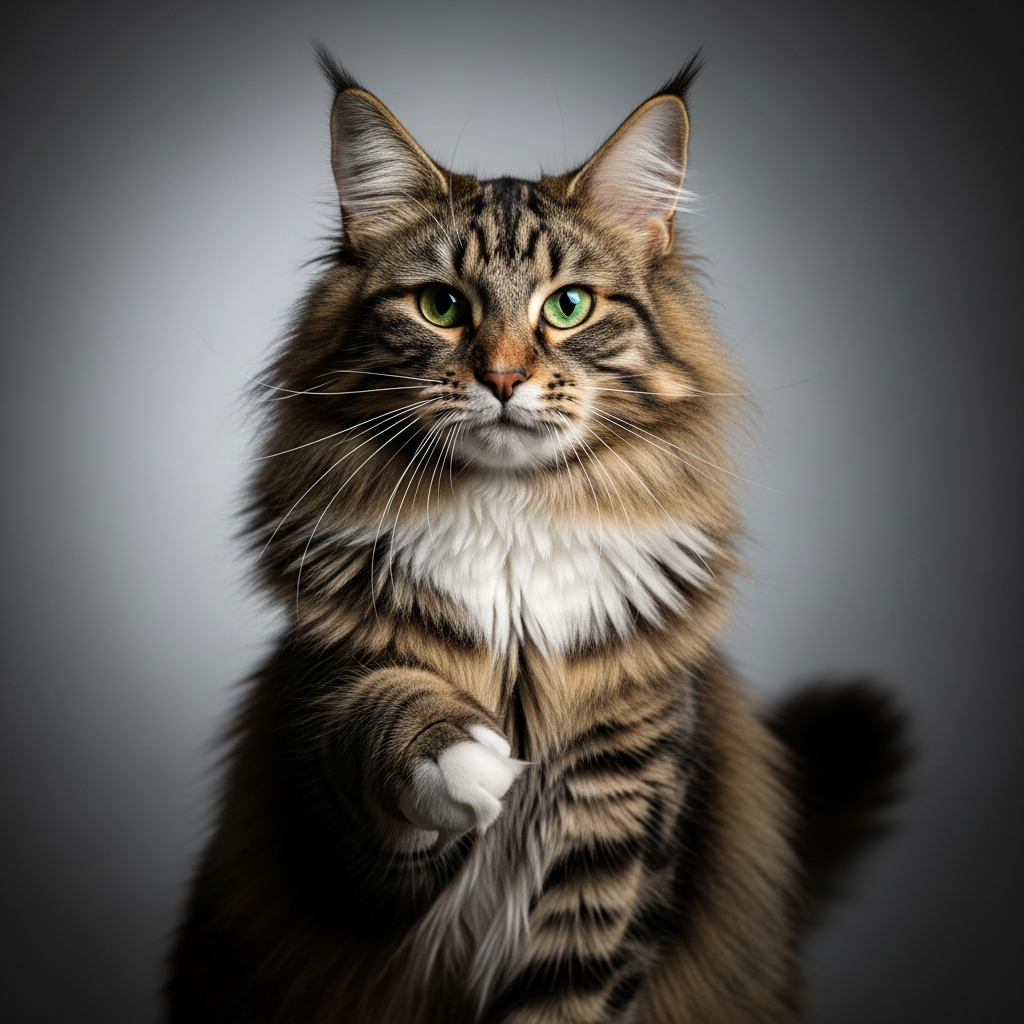
Stoneware mug, dishwasher safe
Buy Mug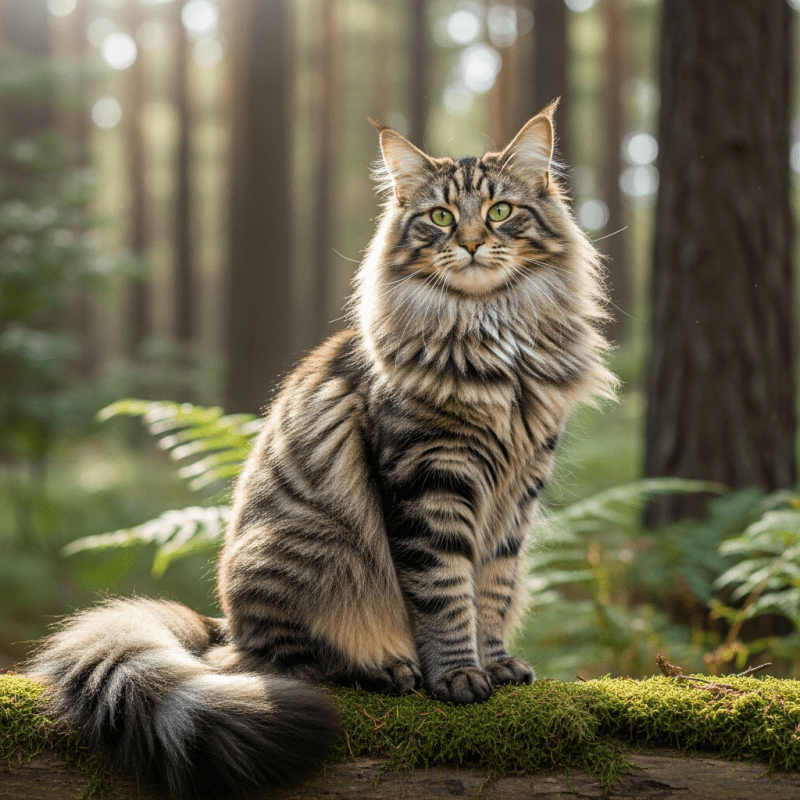
Soft cotton tee, unisex sizes
Buy ShirtDeeply embedded in Scandinavian culture, the Norwegian Forest Cat features prominently in Norse mythology, often depicted as the companion of gods or as a mystical creature in folklore. Today, it is celebrated as Norway’s national cat and is a symbol of natural beauty and resilience, admired both in its homeland and internationally.
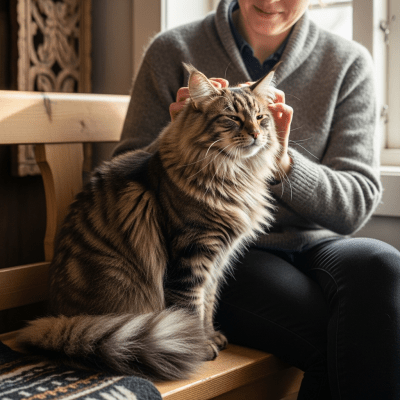

Norwegian Forest Cats are gentle, friendly, and affectionate, with a calm disposition that makes them excellent companions. They are agile and resilient, enjoy climbing, and are adaptable to various household environments. Their social nature allows them to bond well with families and other pets, while their independence and intelligence ensure they remain engaging and playful throughout their lives.
Generally robust and healthy, Norwegian Forest Cats typically live 12–16 years. While they have no major breed-specific weaknesses, they may be predisposed to glycogen storage disease type IV and hypertrophic cardiomyopathy. Routine veterinary care and attention to heart health are recommended to ensure their well-being.
The breed’s semi-long, double-layered coat requires regular brushing, especially during seasonal shedding, to prevent matting and maintain its water-repellent quality. Occasional bathing may help, but their coat is naturally low-maintenance. Regular ear and paw checks, dental care, and a balanced diet are essential for overall health.
Norwegian Forest Cats are seen in a wide array of coat colors and patterns, with all natural colors accepted except those indicating hybridization—such as chocolate, lilac, cinnamon, fawn, and pointed patterns. Their striking looks are enhanced by a full ruff, bushy tail, and large almond-shaped eyes, which may be any color.
While individual Norwegian Forest Cats may not be widely known by name, the breed itself enjoys iconic status in Norway, often featured in national celebrations, folklore, and as a symbol of Scandinavian heritage. The breed’s presence in international cat shows and its role as Norway’s national cat further cement its fame.
The Norwegian Forest Cat is recognized globally as a single breed, with no formally acknowledged subtypes or varieties. However, its popularity is greatest in Scandinavia, and the colloquial nickname “Wegie” is commonly used in English-speaking countries.