Donskoy
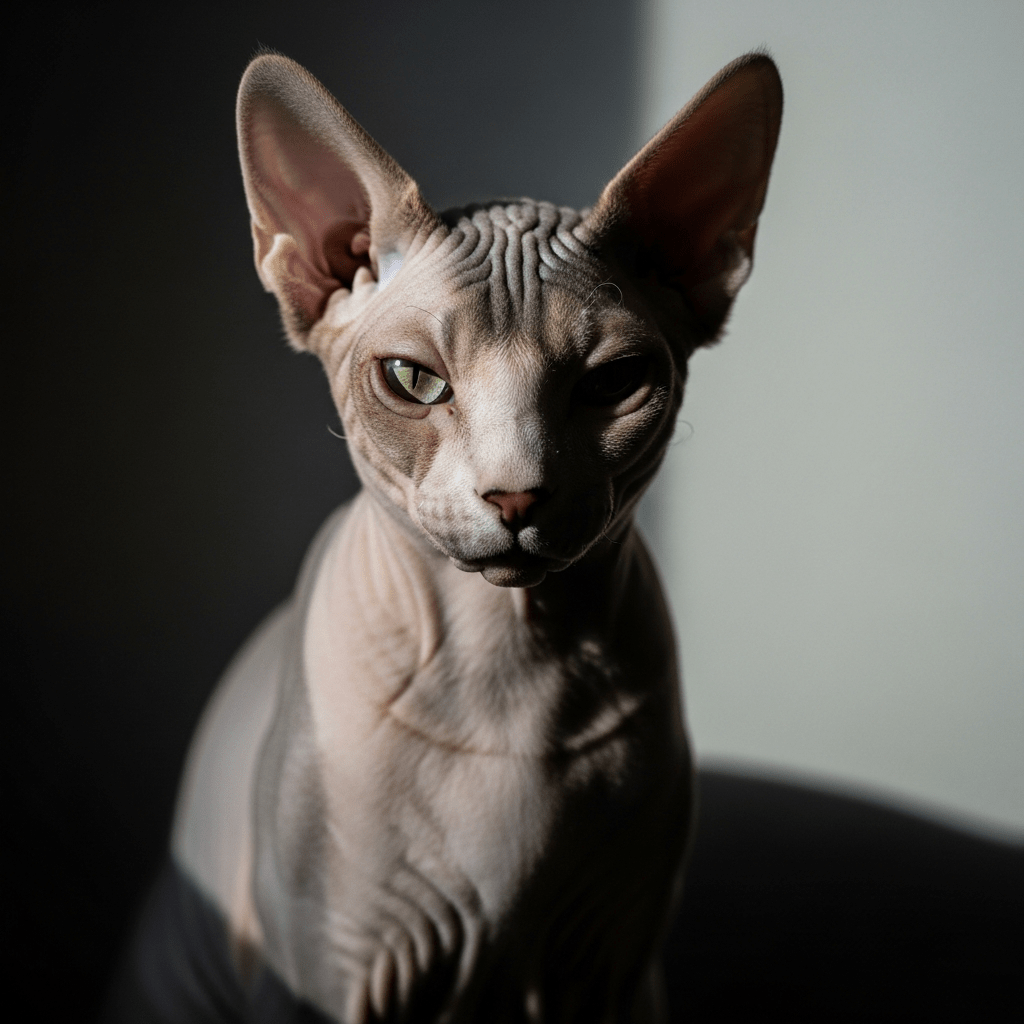
The Donskoy is a Russian hairless cat breed, instantly recognizable by its wrinkled skin and lack of fur, resulting from a dominant genetic mutation.
The Donskoy is a Russian hairless cat breed, instantly recognizable by its wrinkled skin and lack of fur, resulting from a dominant genetic mutation.
The Donskoy originated in Russia in 1987, when breeder Elena Kovaleva rescued a hairless cat in Rostov-on-Don. This foundation cat became the progenitor of the breed, with further breeding establishing the unique dominant gene responsible for hairlessness. Unlike the Sphynx, which is defined by a recessive gene, the Donskoy's lineage is purely Russian and does not involve hybridization with wild species.
The Donskoy belongs to the domestic cat species Felis catus and is classified as a distinct breed within the hairless cat group. Its genetic hairlessness sets it apart from other breeds, notably the Sphynx, due to the dominant nature of its mutation. Recognized by major registries, the Donskoy is part of the broader taxonomy of domestic cats, specifically among rare and unusual breeds.
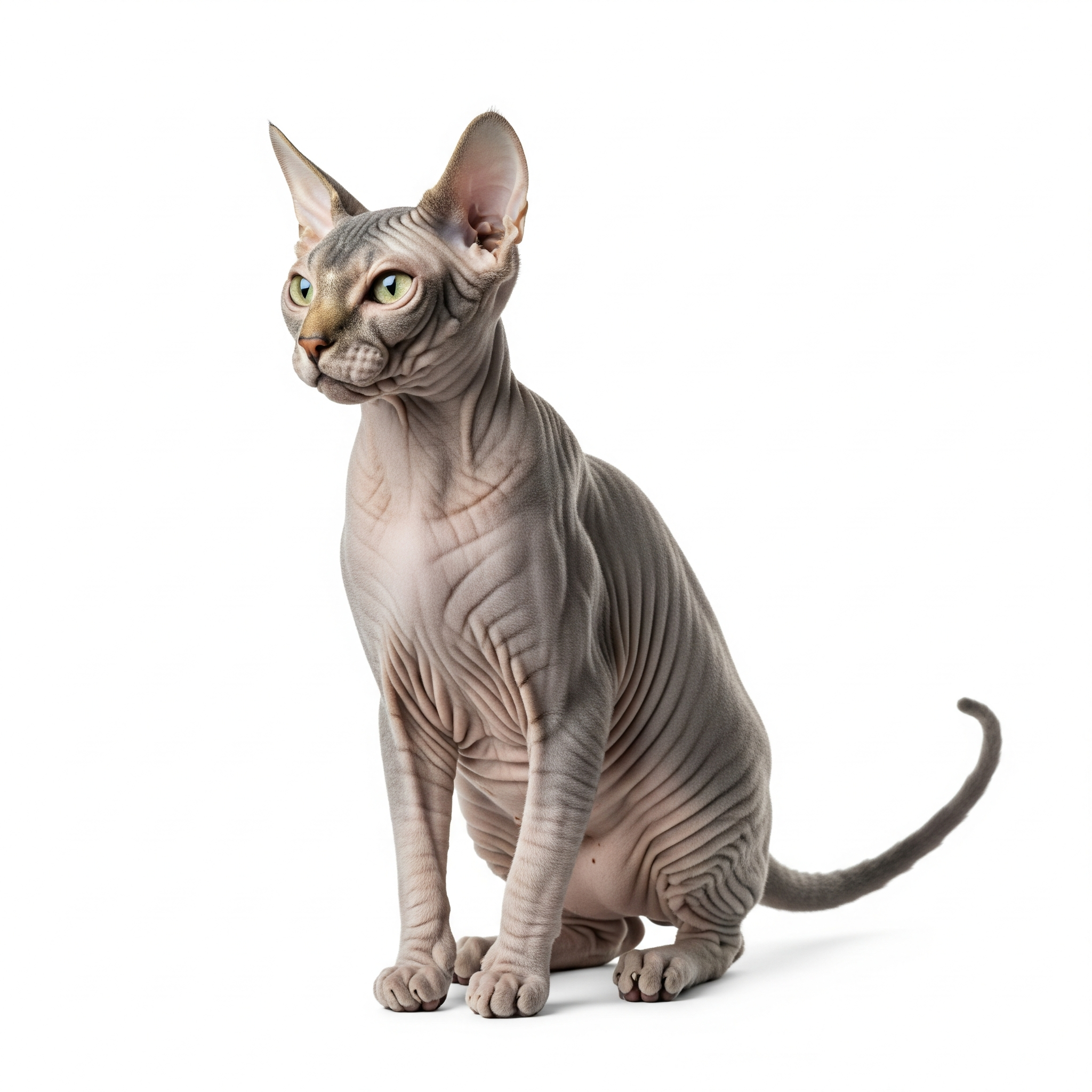
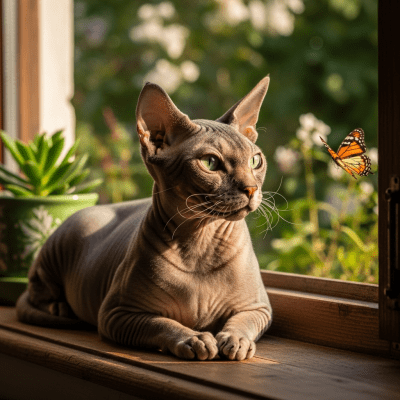
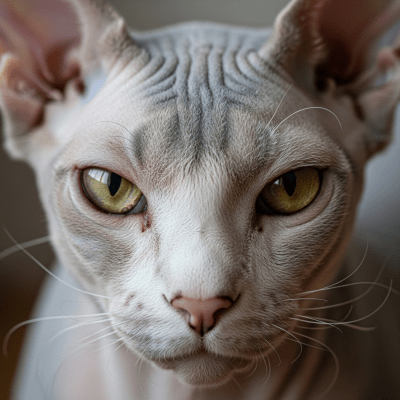
Donskoys are medium-sized cats with muscular, elegant bodies and striking wrinkling, especially around the head, neck, and limbs. Their skin can display a variety of colors and patterns, including solid, tabby, and tortoiseshell. Almond-shaped eyes and large, upright ears give them a distinctive, expressive look. There are four recognized coat types: Rubber Bald (completely hairless), Flock (velvety), Velour (short, soft hair that may disappear), and Brush (wavy or bristly patches). Some individuals may have a fine, peach-fuzz-like coat or lose their hair over time, but all exhibit the breed's signature tactile softness and warmth.
Donskoys are cherished as companion animals, renowned for their affectionate, social, and intelligent nature. They thrive on human interaction, forming strong bonds with their owners and adapting well to family life. Their playful curiosity and gentle demeanor make them ideal pets for those seeking an engaging and loving feline. Due to their lack of fur, they require attentive skin care, including regular bathing to manage oil buildup and maintain skin health.
Bring this kind into your world illustrated posters, mugs, and shirts.
Archival print, museum-grade paper
Buy Poster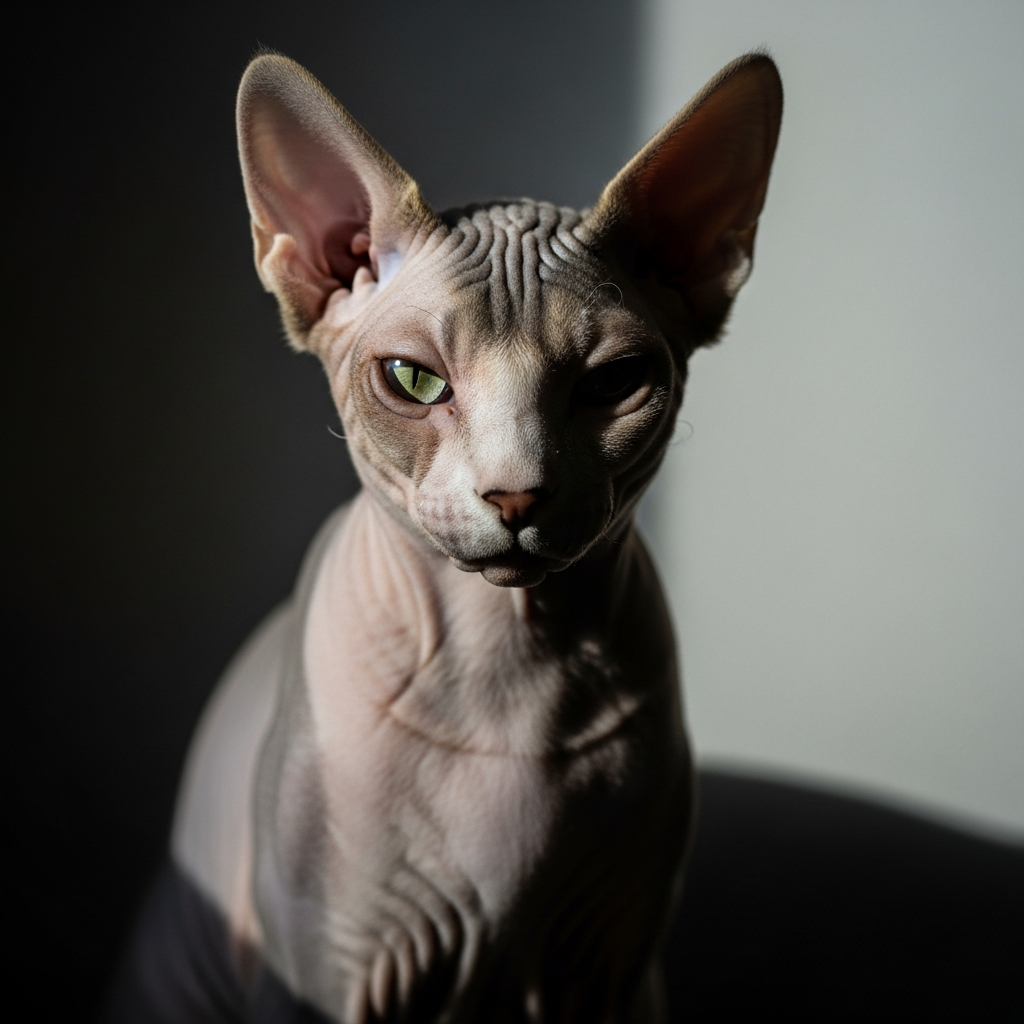
Stoneware mug, dishwasher safe
Buy Mug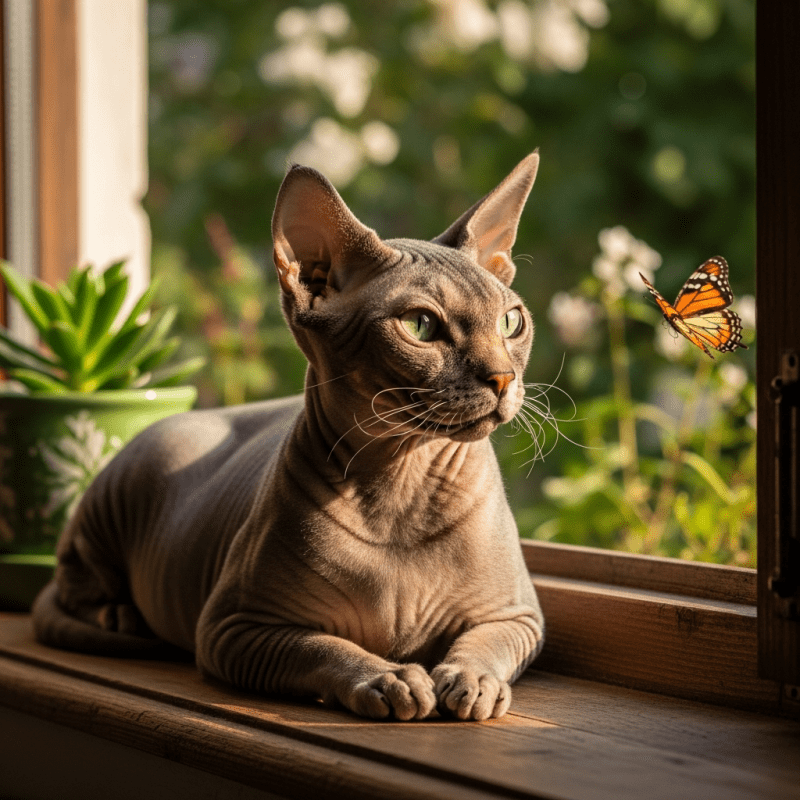
Soft cotton tee, unisex sizes
Buy ShirtThe Donskoy stands out in the world of cat breeds for its unique Russian heritage and striking appearance. It is celebrated among enthusiasts of rare and unusual cats and often featured in breed showcases and exhibitions. The breed's development is a testament to Russian feline breeding innovation, and its presence adds diversity to the global cat fancy. While not as widely depicted in art or media as some breeds, the Donskoy's distinct look and story have earned it a devoted following.

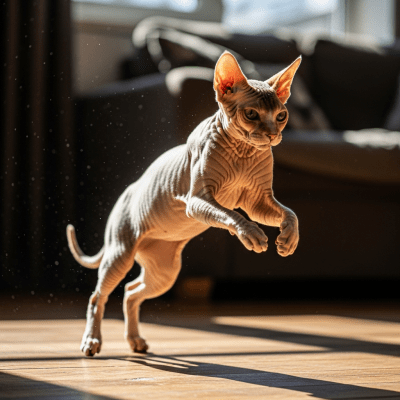
Donskoys are friendly, highly social, and intelligent cats. They are known for their affectionate nature, often seeking out human companionship and thriving on interaction. Their playful curiosity and gentle temperament make them excellent family pets, and they typically get along well with other animals.
The Donskoy is generally a healthy breed, though it may be prone to dental issues and sensitivity to temperature extremes due to its lack of fur. Owners should be mindful of skin care and protection from cold or sun. While a typical lifespan is not specified, Donskoys are expected to live comparably to other medium-sized domestic cats when properly cared for.
Donskoys require regular skin care, including bathing to remove oil buildup and prevent skin problems. Their hairlessness means they do not need traditional brushing, but owners should monitor for dryness or irritation and protect them from harsh temperatures. Routine dental care and regular veterinary checkups are recommended to maintain overall health.
Donskoy skin can display a wide array of colors and patterns, including solid, tabby, and tortoiseshell. The breed standard allows for significant variety, making each Donskoy visually unique.
While the breed does not have widely known celebrity representatives, its foundation cat rescued by Elena Kovaleva in Rostov-on-Don is notable for establishing the breed. Donskoys are often featured in international cat shows and breed exhibitions, celebrated for their rare and unusual appearance.
The Donskoy is most closely associated with Russia, where it originated. There are no formally recognized regional variants, though alternate names such as "Don Hairless" may be used in some registries.