Birman
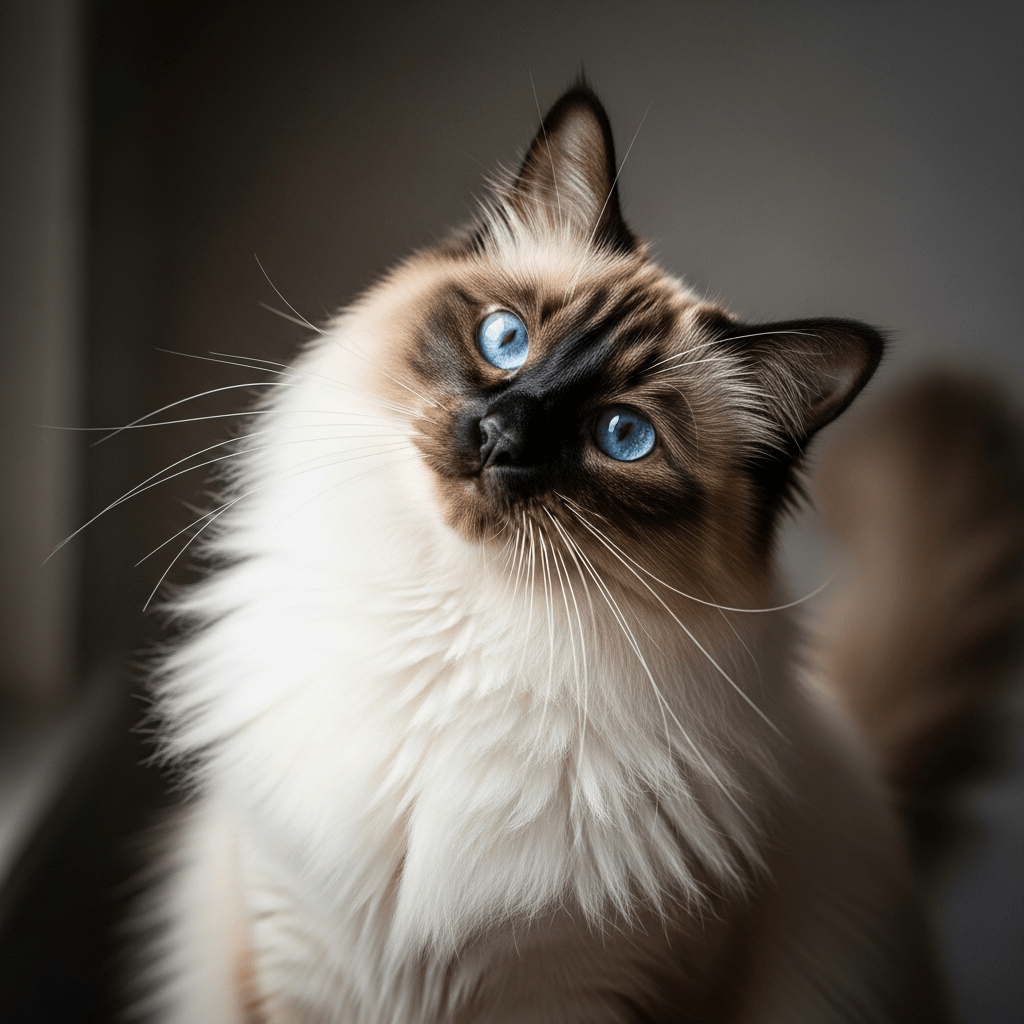
The Birman is a longhaired, colorpointed domestic cat breed instantly recognizable by its deep blue eyes, silky coat, and signature pure white "gloves" on each paw.
The Birman is a longhaired, colorpointed domestic cat breed instantly recognizable by its deep blue eyes, silky coat, and signature pure white "gloves" on each paw.
Legend traces the Birman's mystical beginnings to temple cats in Burma (now Myanmar), where they were revered companions of priests. However, the documented history of the breed unfolds in France during the early 20th century. Officially recognized in France in 1925, the Birman was carefully restored after World War II through selective breeding with Siamese, Persian, and other longhaired cats, resulting in the elegant and affectionate breed known today.
The Birman belongs to the species Felis catus, the domestic cat, and is classified as a distinct breed within all major cat registries. Its unique combination of colorpoint markings and white-gloved paws sets it apart from other longhaired and colorpointed breeds, such as the Himalayan and Ragdoll, while its ancestry includes contributions from Siamese and Persian lines.
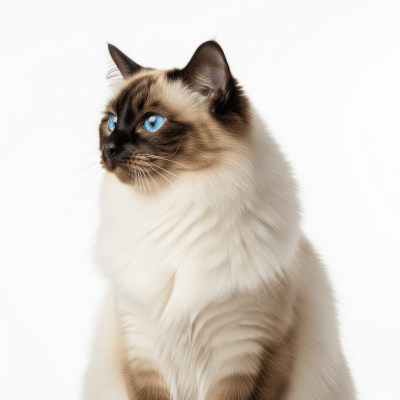
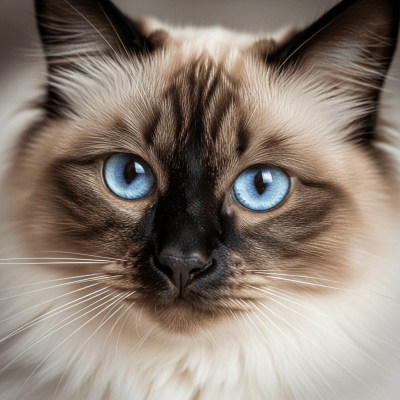
Birmans are medium to large cats with a sturdy, semi-cobby body and a broad, expressive face. Their coat is long, silky, and notably lacks an undercoat, making it less prone to matting. The breed's hallmark features are its deep sapphire blue eyes and pure white "gloves" on all four paws, which contrast beautifully with the darker colorpointed ears, face, legs, and tail. Accepted point colors include seal, blue, chocolate, lilac, red, cream, and tortie, all set against a creamy, golden-toned body.
Birmans are cherished as companion animals and show cats, celebrated for their gentle, affectionate nature. They thrive in family environments, forming close bonds with their people and often seeking out attention and companionship. Their calm demeanor and adaptability make them ideal for households with children or other pets. The breed has no agricultural or culinary uses; its value lies entirely in its companionship and show qualities.
Bring this kind into your world illustrated posters, mugs, and shirts.
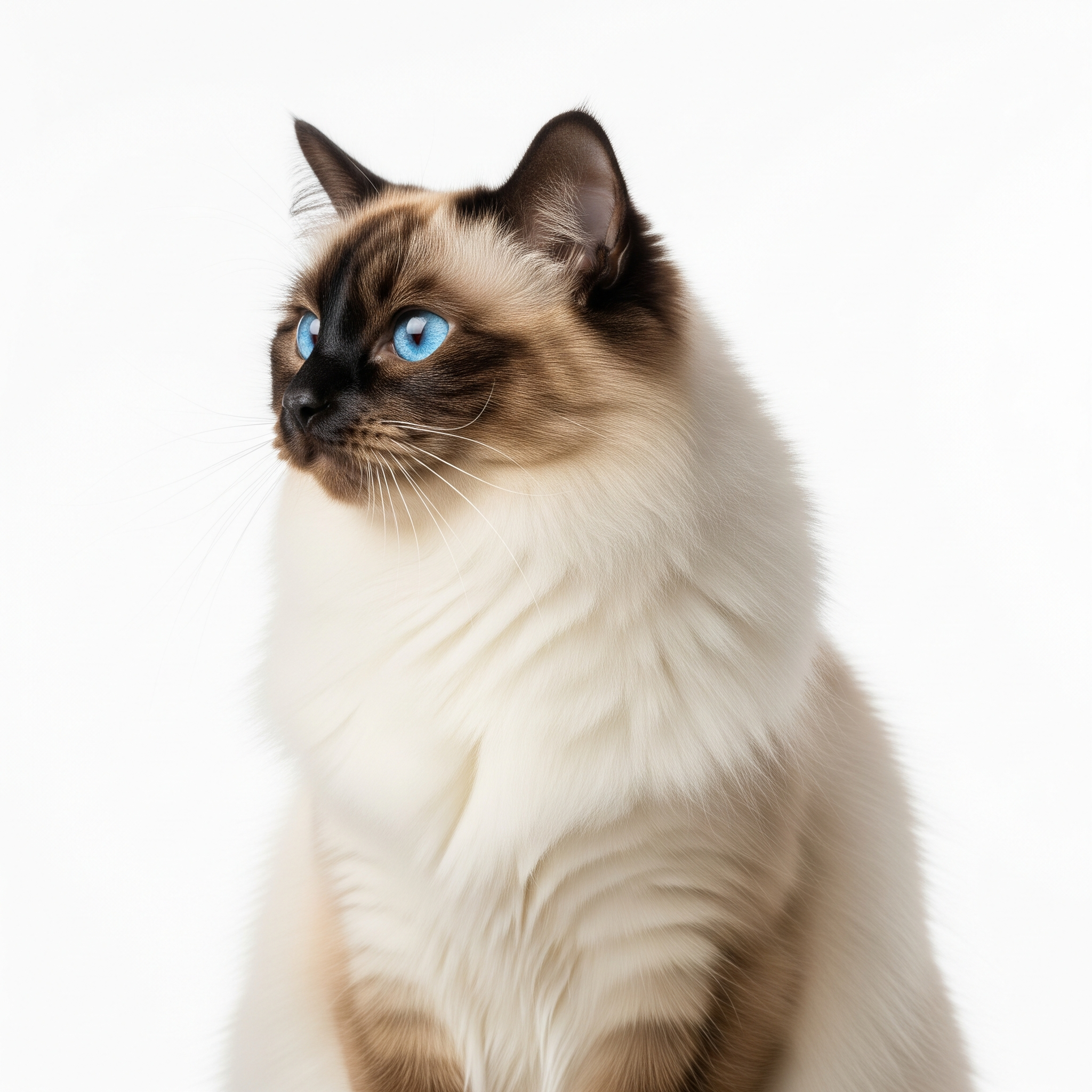
Archival print, museum-grade paper
Buy Poster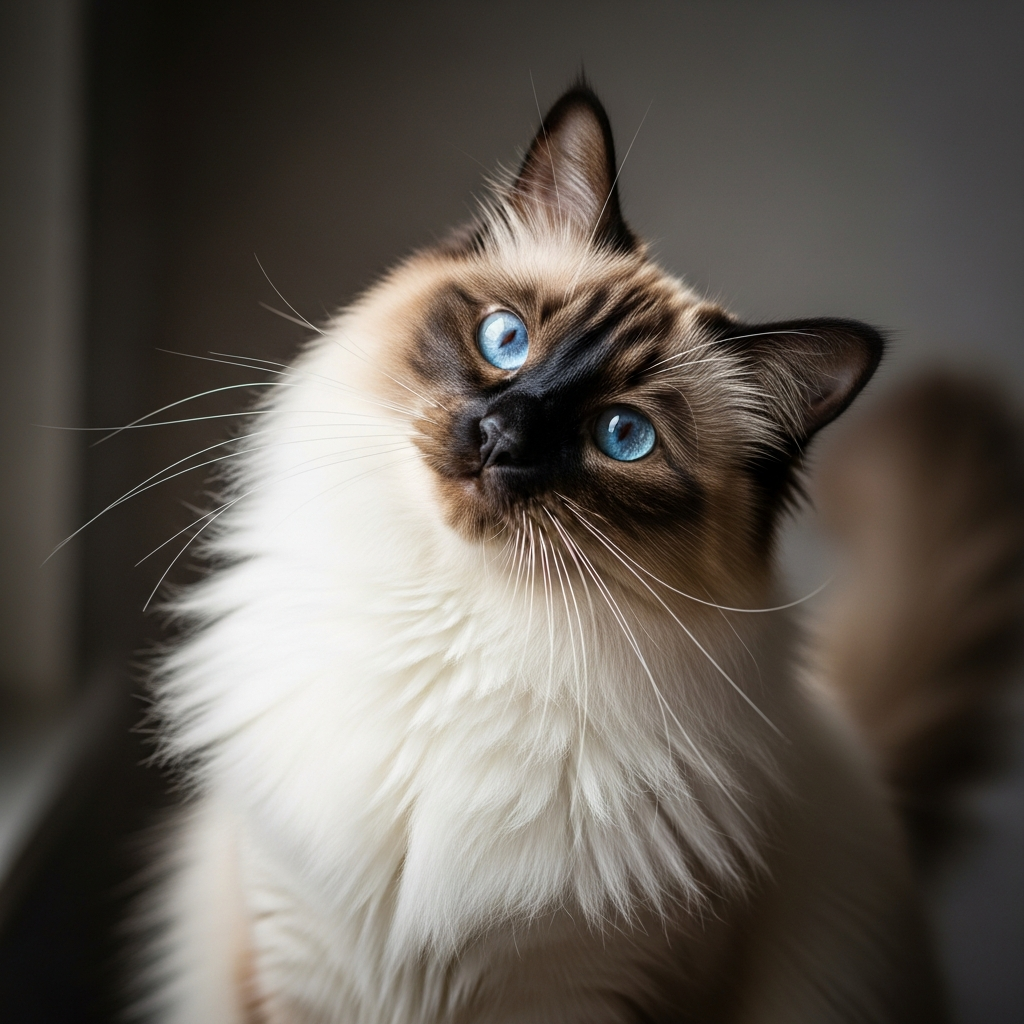
Stoneware mug, dishwasher safe
Buy Mug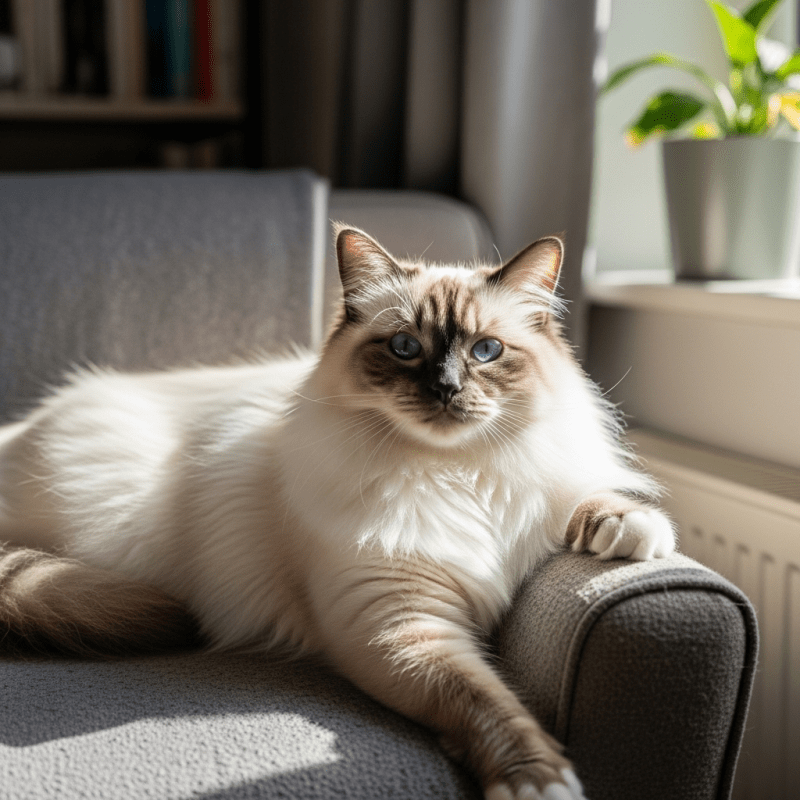
Soft cotton tee, unisex sizes
Buy ShirtThe Birman is steeped in legend, often referred to as the "Sacred Cat of Burma" due to its mythical association with temple priests and spiritual guardianship. This mystique has contributed to its popularity in literature and cat fancier circles, where its elegant appearance and gentle temperament are celebrated. The breed is a frequent participant in international cat shows, admired for its beauty and poise.


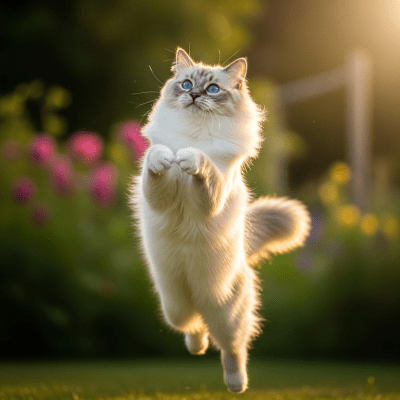
Birmans are renowned for their gentle, affectionate, and people-oriented nature. They are social cats who enjoy the company of humans and other pets, often following their owners from room to room. Calm, adaptable, and intelligent, Birmans are rarely aggressive and are known for their loyalty and playful curiosity, making them ideal family companions.
Birmans are generally robust and healthy, with a typical lifespan of 12–16 years. Some lines may be predisposed to hypertrophic cardiomyopathy (a heart condition) and feline infectious peritonitis, so regular veterinary checkups are important. Their lack of an undercoat reduces the risk of skin issues and matting, contributing to their overall hardiness.
Thanks to their long, silky coat without an undercoat, Birmans require only moderate grooming—usually a weekly brush to keep their fur smooth and free of tangles. Regular nail trimming, dental care, and annual health checks are recommended. Birmans thrive on companionship and benefit from interactive play and affection.
Birmans are always colorpointed, with darker coloring on the ears, face, legs, and tail, and a lighter, creamy body. Accepted point colors include seal, blue, chocolate, lilac, red, cream, and tortie. The breed's signature pure white "gloves" on all four paws are required by the breed standard, and their eyes are always a vivid sapphire blue.
While individual Birmans may not have widespread fame in popular media, the breed itself is celebrated in cat shows and breed literature worldwide. The "Sacred Cat of Burma" legend has inspired stories and artwork, and champion Birmans frequently appear in international competitions, admired for their elegance and gentle demeanor.
The Birman is recognized globally under the same breed standard, though it may be referred to as the "Sacred Cat of Burma" or "Chat Sacré de Birmanie" in French-speaking regions. No notable subtypes or varieties are officially recognized, but colorpoint variations exist within the breed standard.