
Small-Eared Dog
The Small-eared Dog (Atelocynus microtis) is a rare, solitary canid native to the Amazon basin, instantly recognized by its short, rounded ears and secretive nature.
The Small-eared Dog (Atelocynus microtis) is a rare, solitary canid native to the Amazon basin, instantly recognized by its short, rounded ears and secretive nature.
First described by Sclater in 1883, the Small-eared Dog’s origin traces to the dense rainforests of the Amazon. Its lineage is considered basal among South American canids, and it stands alone as the only species in its genus. Unlike many other canines, it has no recognized subspecies or domesticated variants, with evolutionary relationships inferred from genetic and morphological studies rather than direct observation.
The Small-eared Dog belongs to the family Canidae, within the genus Atelocynus and species Atelocynus microtis. As a monotypic genus, it represents a unique evolutionary branch among South American canids, distinct from wolves, foxes, and jackals. Its classification is supported by major zoological authorities and highlights its singular place in the canid family tree.
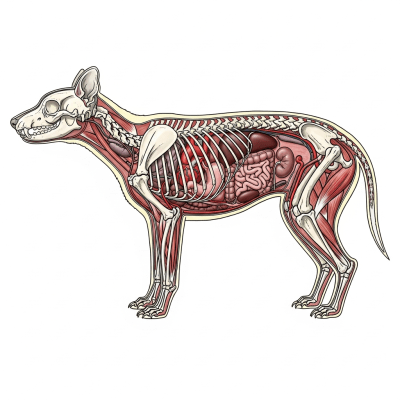
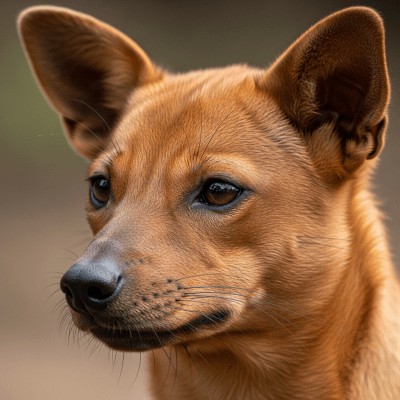
Medium-sized and lithe, the Small-eared Dog measures 36–45 cm at the shoulder, with a body length of 72–100 cm and a tail spanning 30–35 cm. Adults weigh around 9–10 kg. Its dense fur ranges from dark brown to reddish, and its short legs and notably small, rounded ears set it apart visually from other South American wild dogs. Adapted for life in humid, dense forests, its form is built for stealth and solitude.
Primarily solitary and crepuscular, the Small-eared Dog moves quietly through the Amazon’s undergrowth, avoiding human contact. Its diet is varied, including fish, small mammals, birds, and fruit, reflecting its adaptability within a complex ecosystem. Unlike many canids, it is rarely seen near settlements and is highly sensitive to habitat disturbance. There is no known use of this species in trade, food, or fur markets.
Bring this kind into your world illustrated posters, mugs, and shirts.

Archival print, museum-grade paper
Buy Poster
Stoneware mug, dishwasher safe
Buy Mug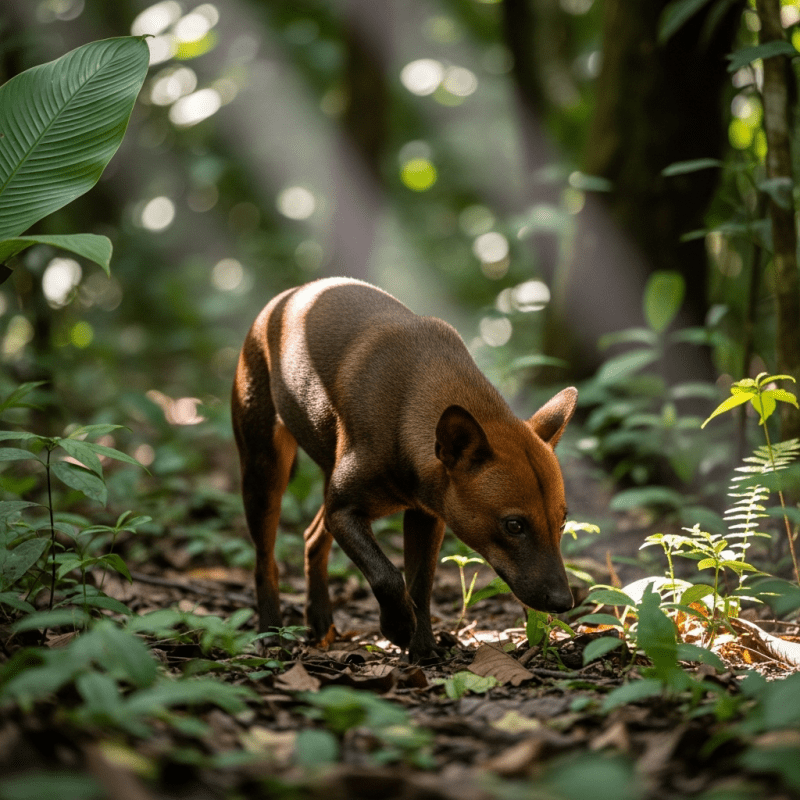
Soft cotton tee, unisex sizes
Buy ShirtWhile the Small-eared Dog is not a figure in mainstream art or mythology, it occasionally appears in indigenous Amazonian folklore as a forest spirit or omen. Its elusive nature and rare sightings have contributed to its mystique, though documented cultural references remain sparse due to its secretive habits and limited interaction with humans.
The Small-eared Dog has never been domesticated and remains a wild species. Its evolutionary history is considered basal among South American canids, with genetic and morphological studies suggesting a long period of isolation in the Amazon. Unlike domestic dogs, its lineage has not been shaped by human intervention, and it exhibits traits finely tuned to its forest environment.





Unlike domesticated dogs, which thrive alongside humans and display a wide range of behaviors and appearances, the Small-eared Dog is strictly wild, solitary, and highly sensitive to disturbance. Its lifestyle is adapted to dense rainforest, with crepuscular activity and a varied diet, contrasting sharply with the social, adaptable nature of domestic canines. It has no recognized breeds or subspecies and avoids areas of human habitation.
The Small-eared Dog (Atelocynus microtis) stands alone as the sole species in its genus, with no subspecies or breeds. This distinguishes it from other South American canids, such as the maned wolf, bush dog, and various foxes, which often have multiple subspecies or regional variants. Its unique combination of physical and behavioral traits sets it apart within the rich diversity of the canid family.
The Small-eared Dog plays a subtle yet important role in the Amazon ecosystem. As an omnivorous predator, it helps regulate populations of small mammals, birds, and fish, and contributes to seed dispersal through its consumption of fruit. Its presence is an indicator of healthy, undisturbed forest, and its sensitivity to habitat change makes it a valuable species for monitoring environmental integrity.
Little is known about the health issues affecting the Small-eared Dog due to its rarity and elusive nature. Its welfare is closely tied to the preservation of undisturbed rainforest habitat, as it is highly sensitive to deforestation and human encroachment. Conservation efforts focus on habitat protection rather than direct intervention, and there are no known domesticated populations requiring veterinary care.
Unlike domestic dogs or wolves, the Small-eared Dog has not achieved fame through individual stories or cultural icons. Its reputation rests on its rarity and scientific intrigue, as researchers continue to uncover details about its life in the Amazon. Its elusive status makes every confirmed sighting noteworthy among wildlife biologists.
The Small-eared Dog is listed by the IUCN Red List as a species of conservation concern due to its limited range and sensitivity to habitat disturbance. Ongoing deforestation and fragmentation of the Amazon threaten its survival, and conservation efforts prioritize the protection of primary rainforest. Its rarity and secretive habits make population assessments challenging, underscoring the need for further research and habitat preservation.
Across the Amazon basin, the Small-eared Dog is known by various local names, such as "zorro de oreja corta" in Spanish and "cachorro-do-mato-de-orelha-curta" in Portuguese. However, there are no recognized subspecies or regional breeds. Local distinctions are mostly linguistic, and indigenous knowledge about the species remains largely undocumented due to its elusive nature.