
Japanese Wolf
The Japanese Wolf (Canis lupus hodophilax) was a small, extinct subspecies of gray wolf native to Japan, renowned for its unique adaptations and enduring cultural legacy.
The Japanese Wolf (Canis lupus hodophilax) was a small, extinct subspecies of gray wolf native to Japan, renowned for its unique adaptations and enduring cultural legacy.
First described by Temminck in 1839, the Japanese Wolf evolved as an insular subspecies of the gray wolf, likely diverging after the last glacial period due to geographic isolation on the islands of Honshu, Shikoku, and Kyushu. Its wild population persisted until the early 20th century, with the last confirmed specimen collected in Nara Prefecture in 1905. Today, preserved specimens remain in Japanese museums, serving as a testament to its vanished lineage.
Taxonomically, the Japanese Wolf belongs to the family Canidae, genus Canis, species lupus, and subspecies hodophilax. It is recognized as a distinct subspecies of the gray wolf, with its scientific name Canis lupus hodophilax. Alternate scientific synonyms include Canis hodophilax Temminck, 1839, though the trinomial is preferred in modern zoology.
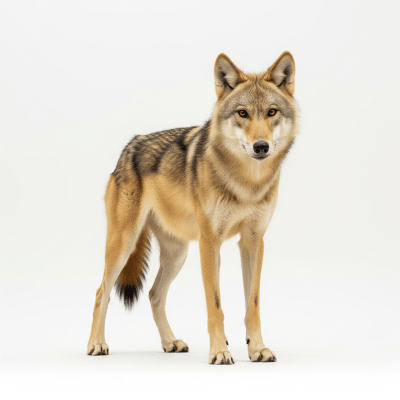
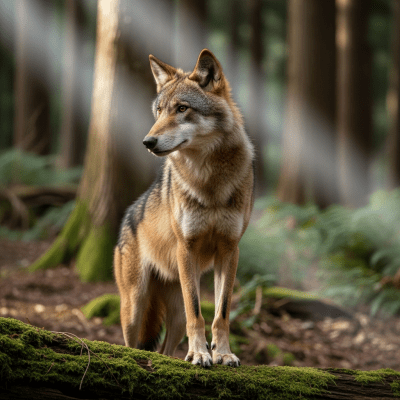
Smaller than its continental relatives, the Japanese Wolf stood just 55–60 cm at the shoulder and weighed 18–20 kg. Its compact body, short legs, and bushy tail suited its mountainous habitat. The fur was coarse, grayish-brown with lighter underparts, and its overall form was agile and robust—built for swift movement through rugged terrain.
As a wild predator, the Japanese Wolf was an adept hunter of small mammals and deer, relying on agility and stealth. It was never domesticated or bred by humans, and there is no record of its use in agriculture or industry. In folklore, however, it was revered as a protector of crops and villages, believed to ward off pests and evil spirits.
Bring this kind into your world illustrated posters, mugs, and shirts.

Archival print, museum-grade paper
Buy Poster
Stoneware mug, dishwasher safe
Buy Mug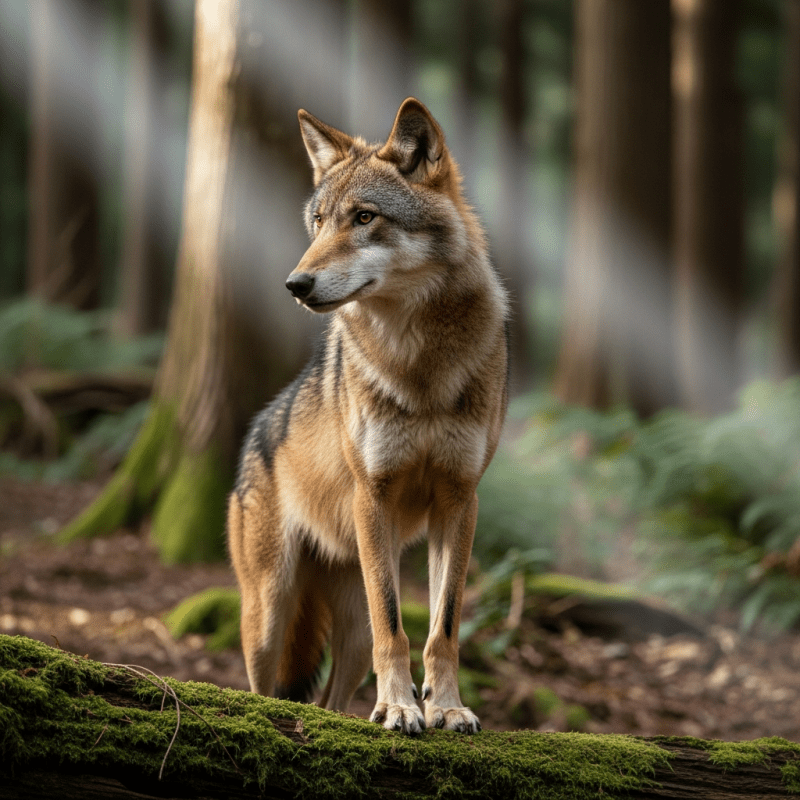
Soft cotton tee, unisex sizes
Buy ShirtThe Japanese Wolf occupies a prominent place in local mythology and spiritual practice. Known as Ōkami, it is celebrated in shrines and folk tales as a guardian spirit. Legends often depict the wolf as a benevolent force, and its image persists in regional rituals and festivals. Even after extinction, its symbolic power endures in Japanese culture.
The Japanese Wolf was never domesticated. It diverged from the gray wolf lineage, likely after the last glacial period, adapting to Japan's mountainous environments. Unlike domestic dogs, which evolved alongside humans through selective breeding, the Japanese Wolf remained a wild, insular subspecies until its extinction.
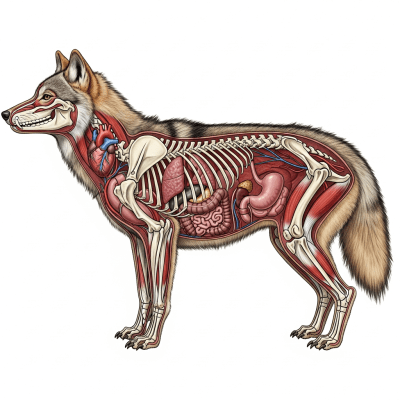

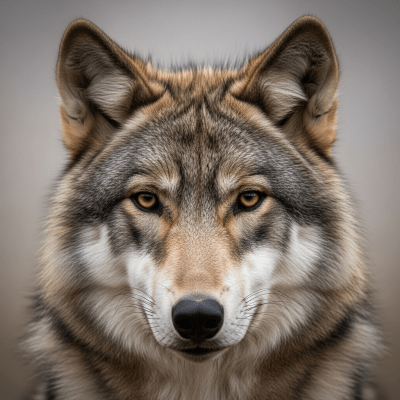

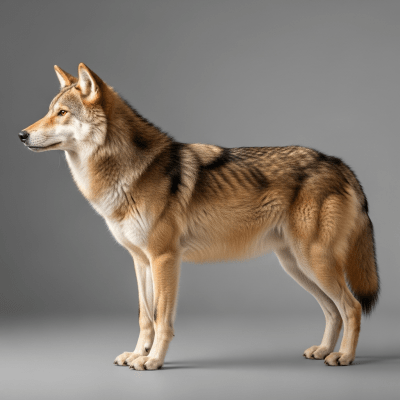

Wild canines like the Japanese Wolf are shaped by natural selection and environmental pressures, resulting in traits such as agility, stealth, and independence. In contrast, domestic dogs have been bred for companionship, utility, and diverse physical forms. The Japanese Wolf's solitary, elusive nature and lack of domestication highlight the stark differences between wild and domestic canines.
The Japanese Wolf was one of several subspecies within the gray wolf species (Canis lupus). Other notable canines include domestic dogs (Canis lupus familiaris), Arctic wolves, and various foxes and jackals. The Japanese Wolf's small stature and insular adaptations made it distinct among its relatives, while its extinction underscores the diversity and vulnerability of canid species.
As a top predator, the Japanese Wolf played a crucial role in regulating populations of deer and small mammals in Japan's forests and mountains. Its presence helped maintain ecological balance, preventing overgrazing and supporting biodiversity. The loss of the wolf likely altered local ecosystems, demonstrating the importance of canines in natural habitats.
Little is known about the health issues faced by the Japanese Wolf, but as a wild animal, it would have contended with disease, injury, and competition for food. Human encroachment and habitat loss contributed to its decline. Today, the welfare of wild canines depends on conservation, habitat protection, and minimizing human-wildlife conflict.
While individual Japanese Wolves are not widely named in history, their collective legacy is celebrated in folklore and shrines. Stories of the Ōkami as village guardians and spiritual protectors endure, making the subspecies itself a famous figure in Japanese cultural memory.
The Japanese Wolf is classified as extinct, with the last verified specimen collected in 1905. Its disappearance highlights the vulnerability of insular species to habitat loss, disease, and human persecution. Conservation efforts for other wild canines focus on habitat preservation, population monitoring, and public awareness to prevent similar extinctions.
Known locally as Honshu Wolf, Yamainu, or Ōkami, the Japanese Wolf was unique to the islands of Honshu, Shikoku, and Kyushu. Regional folklore often blends the real animal with mythological wolf spirits, and shrines dedicated to the wolf can still be found in various parts of Japan, reflecting its lasting regional significance.