Island Fox
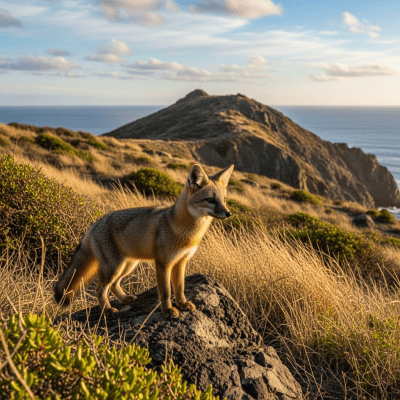
The Island Fox (Urocyon littoralis) is a uniquely small canid found only on six of California’s Channel Islands, celebrated for its rapid evolutionary divergence and vital role in local conservation.
The Island Fox (Urocyon littoralis) is a uniquely small canid found only on six of California’s Channel Islands, celebrated for its rapid evolutionary divergence and vital role in local conservation.
The Island Fox originated from the mainland Gray Fox (Urocyon cinereoargenteus), arriving on the Channel Islands at least 6,000 years ago. Its journey may have involved natural rafting or early human introduction. Over millennia, isolation and founder effects led each island population to evolve into a distinct subspecies, with no formal breeding or domestication—its lineage is entirely wild and shaped by the unique environment of the islands.
Belonging to the family Canidae, the Island Fox is classified within the genus Urocyon and species Urocyon littoralis. It is closely related to the gray fox (Urocyon cinereoargenteus), but stands apart as an island endemic with distinct subspecies on each Channel Island. This places it among the true foxes, yet its evolutionary path is a textbook example of rapid speciation and adaptation within canids.
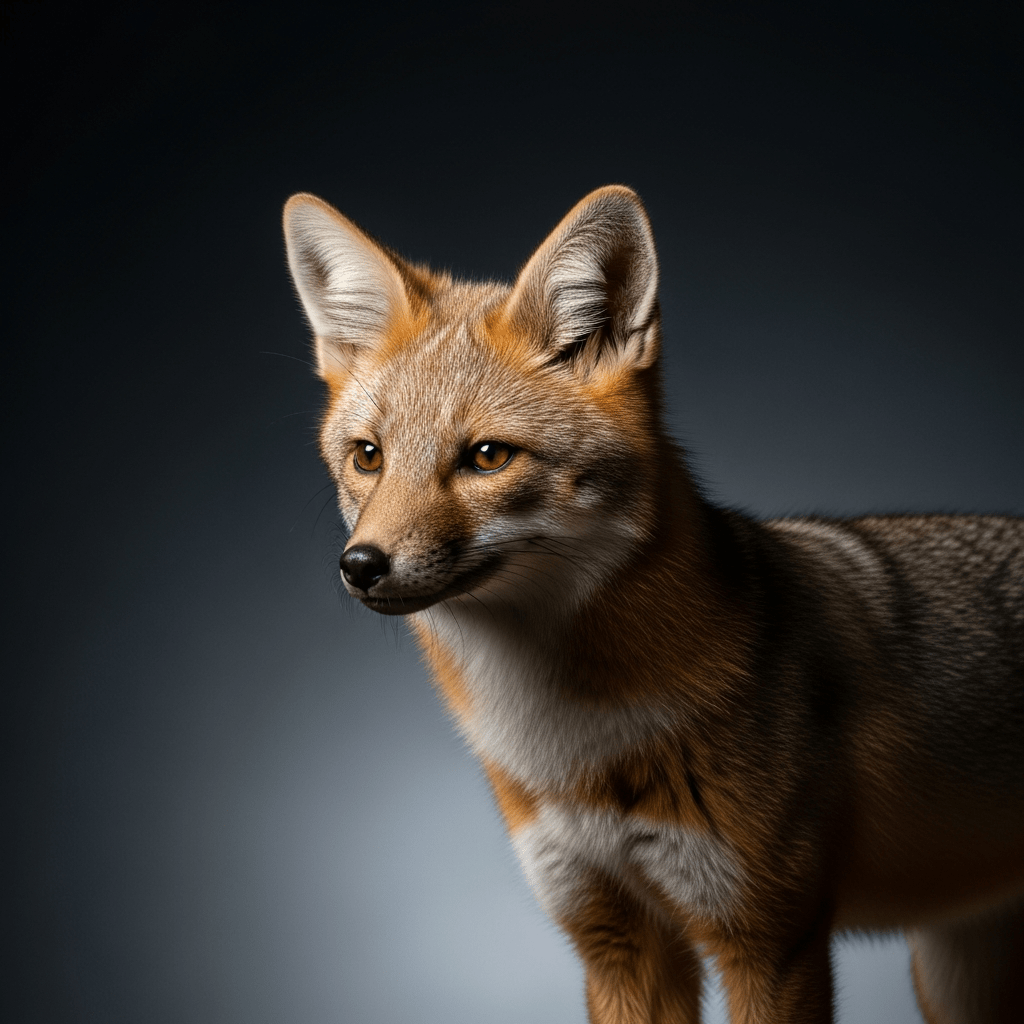
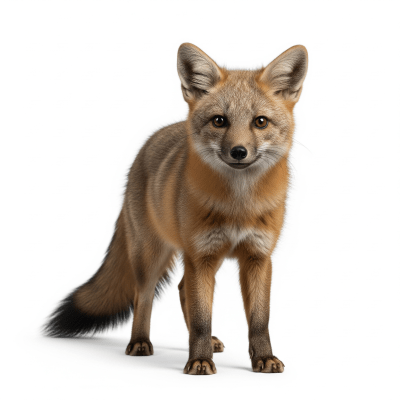
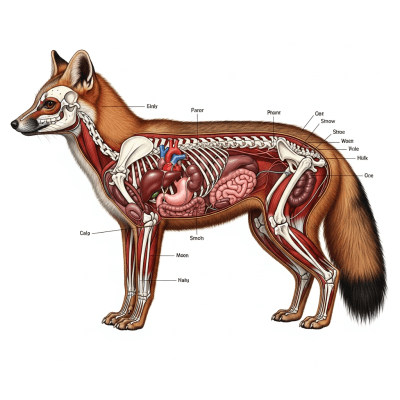
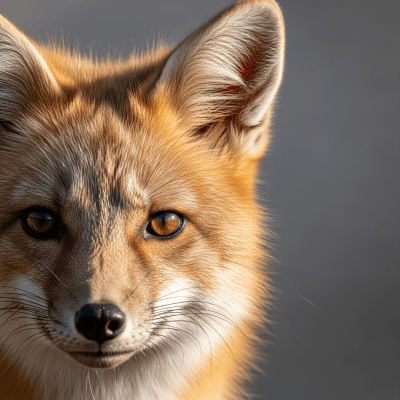
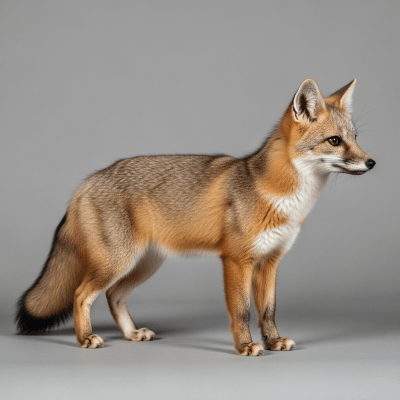
The Island Fox is one of the smallest canids, typically weighing between 1 and 2.8 kilograms and measuring 48–50 centimeters in body length. Its bushy tail ranges from 11 to 29 centimeters. The fox’s fur is grayish along the back, reddish on the sides, and white on the belly, with subtle color and size variations unique to each island population. Its compact frame, alert ears, and expressive face give it a charming, almost diminutive presence compared to mainland foxes.
Island Foxes are omnivorous, feeding on insects, fruits, small vertebrates, and occasionally marine resources. They exhibit high site fidelity, tending to remain within their home ranges, and have limited dispersal between islands. Their reproductive rates are low, with litters of 1–5 pups. While they have no direct utility for humans, their ecological role is critical—helping regulate populations of prey species and serving as indicators of island ecosystem health.
Bring this kind into your world illustrated posters, mugs, and shirts.
Archival print, museum-grade paper
Buy Poster
Stoneware mug, dishwasher safe
Buy Mug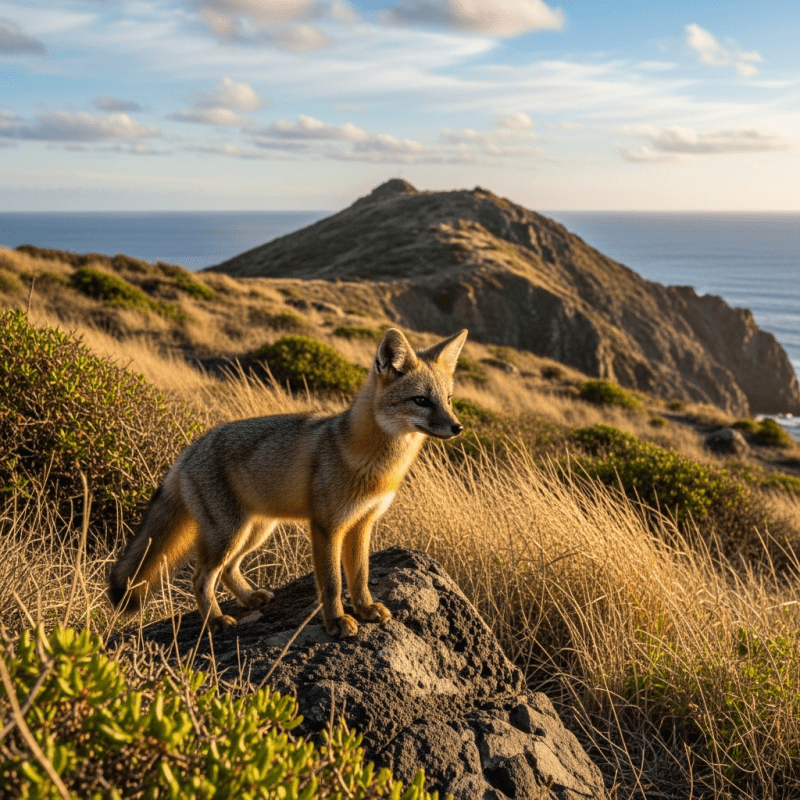
Soft cotton tee, unisex sizes
Buy ShirtAs a symbol of the Channel Islands, the Island Fox features prominently in local conservation narratives and educational programs. Its dramatic recovery from near-extinction in the early 2000s is celebrated as a triumph of collaborative conservation, and the fox is often used to foster public awareness about the fragility and uniqueness of island ecosystems. Its image appears in regional art, ecotourism, and environmental campaigns, making it a cultural ambassador for the islands.
Unlike domestic dogs, the Island Fox’s evolution is entirely natural, shaped by isolation and environmental pressures on the Channel Islands. Canines as a whole have a long history of domestication, with dogs diverging from wolves thousands of years ago. The Island Fox, however, exemplifies rapid wild evolution, with each island population forming a distinct subspecies in just a few thousand years—a rare case of speciation within canids.
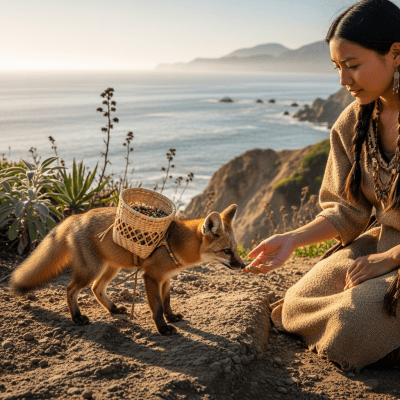
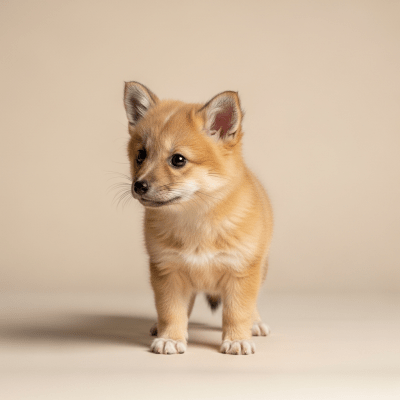
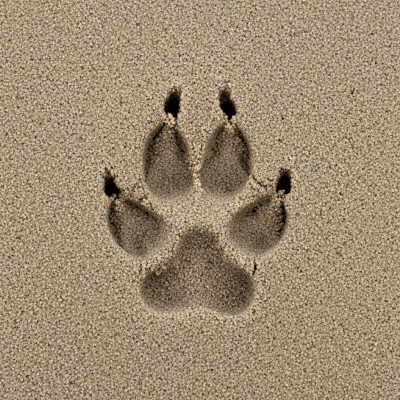
Wild canines like the Island Fox live independently of humans, relying on natural instincts, varied diets, and adaptation to local environments. In contrast, domesticated dogs have been selectively bred for companionship, utility, and specific traits, resulting in diverse breeds and close human relationships. The Island Fox’s life is shaped by the challenges of island ecosystems, while domestic dogs thrive in human-managed settings.
Within canines, diversity abounds—from wolves and coyotes to the many species of foxes. The Island Fox stands out as a unique species (Urocyon littoralis) with six recognized subspecies, each confined to a specific Channel Island. Unlike domestic dogs, which are classified by breeds, Island Foxes are distinguished by their island-specific genetic and physical traits.
Island Foxes play a vital role in their island ecosystems, helping control populations of insects, small mammals, and fruit-bearing plants. As top native predators, they maintain ecological balance and serve as indicators of environmental health. Their decline and recovery have had ripple effects on other species, underscoring the interconnectedness of island habitats and the importance of native canines in population control and nutrient cycling.
Island Foxes face several health challenges, including susceptibility to diseases like canine distemper and threats from non-native predators. Their welfare depends on active conservation management, disease monitoring, and habitat protection. Unlike domestic dogs, they do not receive routine veterinary care, making population health a community-wide concern for conservationists and island managers.
While individual Island Foxes are not widely known by name, the species as a whole has become famous through its dramatic recovery story. The Channel Islands’ fox populations are often highlighted in documentaries and conservation literature as examples of successful wildlife rescue, inspiring efforts to protect other endangered canids worldwide.
The Island Fox was once listed as critically endangered, with populations plummeting due to disease and predation. Intensive recovery programs—including captive breeding, vaccination, and removal of invasive predators—have restored numbers, and most subspecies are now classified as near threatened or stable. Ongoing monitoring and habitat protection remain essential to safeguard their future.
Each Channel Island hosts its own subspecies of Island Fox, with subtle differences in size, coloration, and behavior reflecting local adaptation. These regional variants are named after their respective islands—such as the San Miguel, Santa Rosa, Santa Cruz, Santa Catalina, San Nicolas, and San Clemente Island Foxes. No formal breeds exist, but these subspecies highlight the remarkable diversity that can arise even within a single species when isolated by geography.