Florida Black Wolf
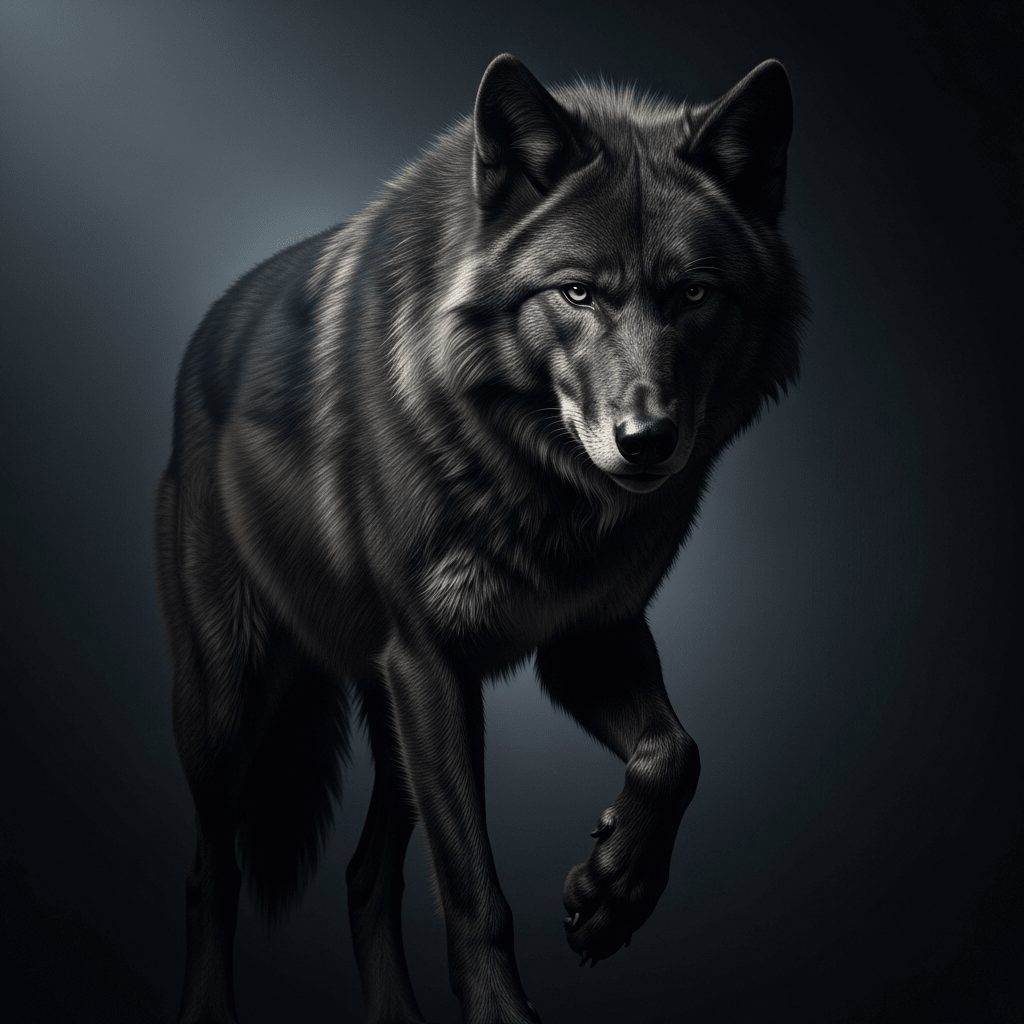
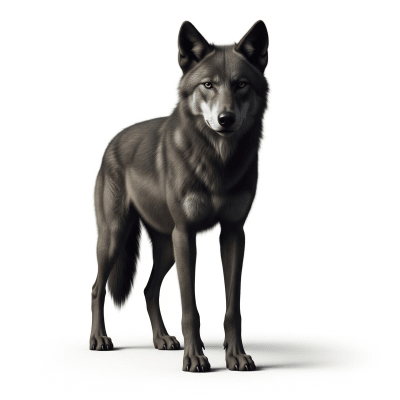
The Florida Black Wolf (Canis lupus floridanus) was an extinct subspecies of gray wolf, uniquely adapted to Florida’s subtropical landscapes and recognized for its striking dark coat.
The Florida Black Wolf (Canis lupus floridanus) was an extinct subspecies of gray wolf, uniquely adapted to Florida’s subtropical landscapes and recognized for its striking dark coat.
First formally described in 1912, the Florida Black Wolf emerged as a distinct lineage among southeastern wolves, likely shaped by isolation within Florida’s forests and wetlands. Specimens were collected from central and northern Florida, and its divergence is attributed to adaptation to local ecosystems. The subspecies’ extinction is closely tied to human expansion and habitat alteration in the region.
The Florida Black Wolf belonged to the family Canidae, within the genus Canis and species Canis lupus (gray wolf). Its trinomial name, Canis lupus floridanus, reflects its status as a subspecies. Some authorities have disputed its classification, occasionally merging it with the Red Wolf (Canis rufus) or Southeastern Wolf (Canis lupus lycaon), but it is most commonly recognized as a unique Floridian variant.
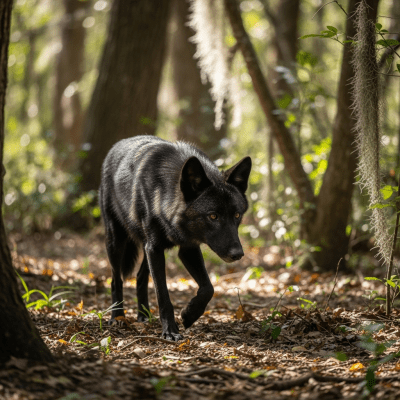
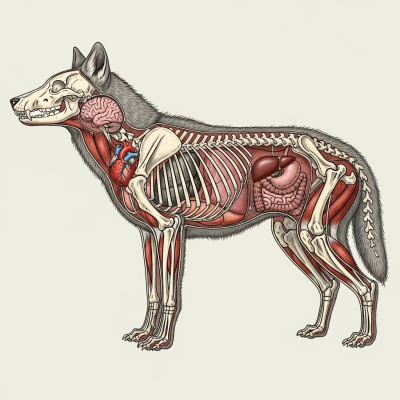
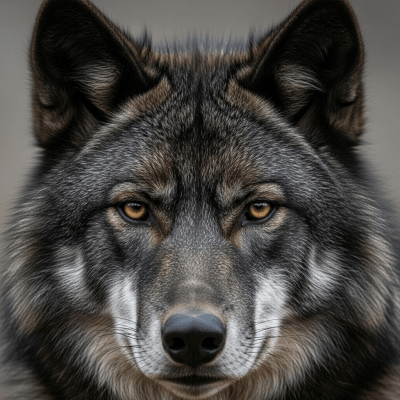
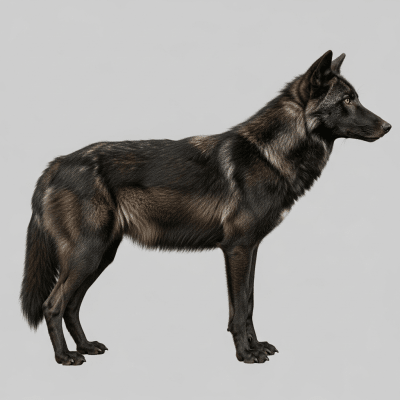
Distinguished by a predominantly black pelage, the Florida Black Wolf was robust yet slightly smaller than its northern relatives. Adults weighed between 60–80 lbs (27–36 kg) and measured 1.2–1.5 meters in length. Its coat provided camouflage in shaded forests, and its physique was well-suited for navigating dense vegetation and wetlands.
The Florida Black Wolf was a top predator, hunting in packs and relying on keen senses to pursue prey in Florida’s forests and swamps. There is no evidence of domestication or commercial use; its role was primarily ecological, helping to regulate prey populations and maintain ecosystem balance.
Bring this kind into your world illustrated posters, mugs, and shirts.
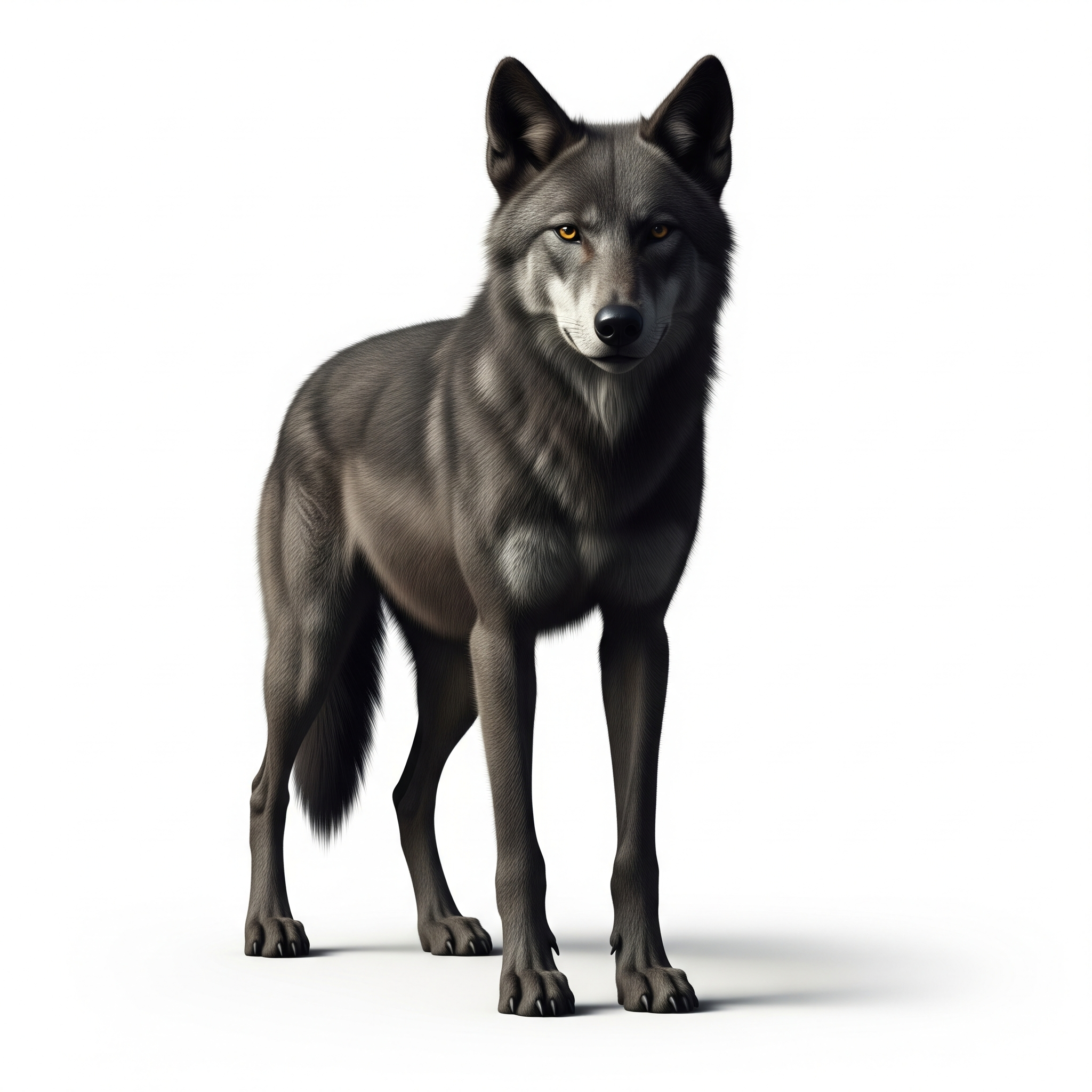
Archival print, museum-grade paper
Buy Poster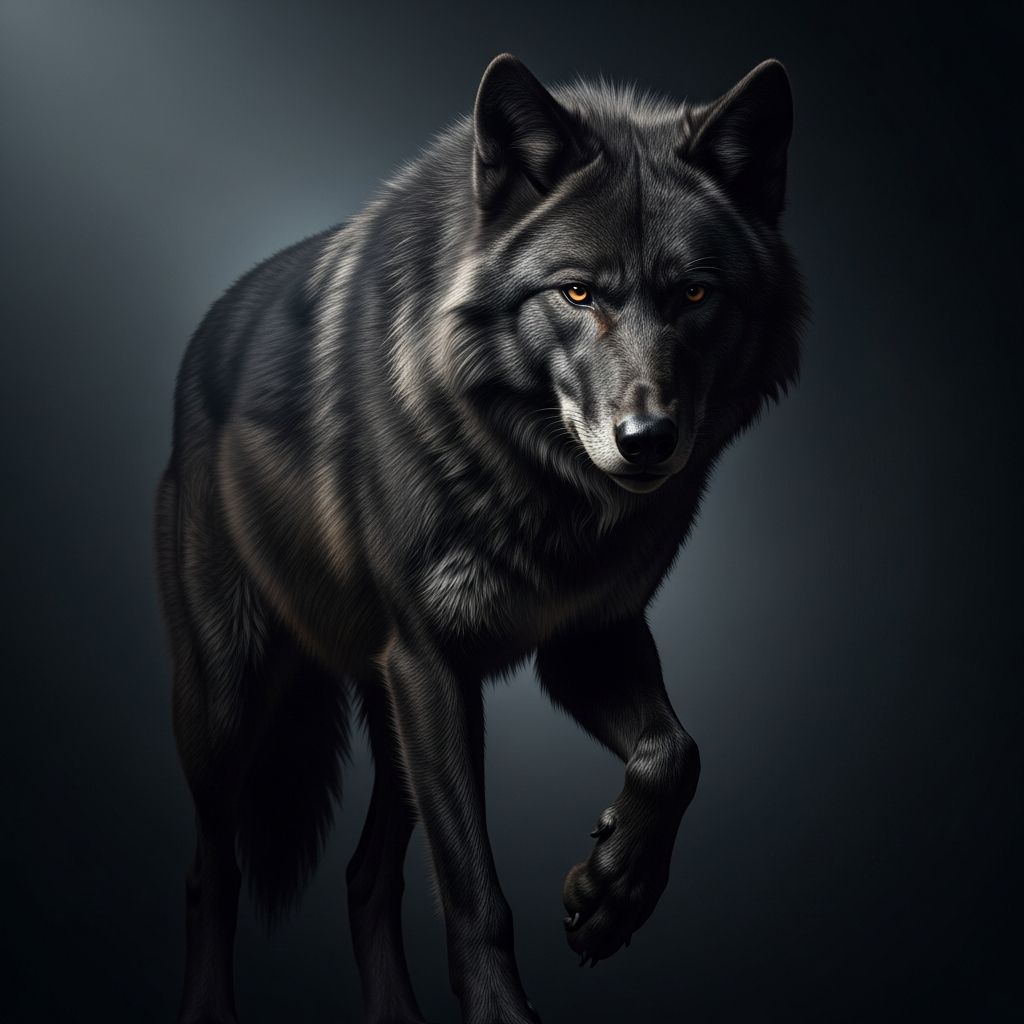
Stoneware mug, dishwasher safe
Buy Mug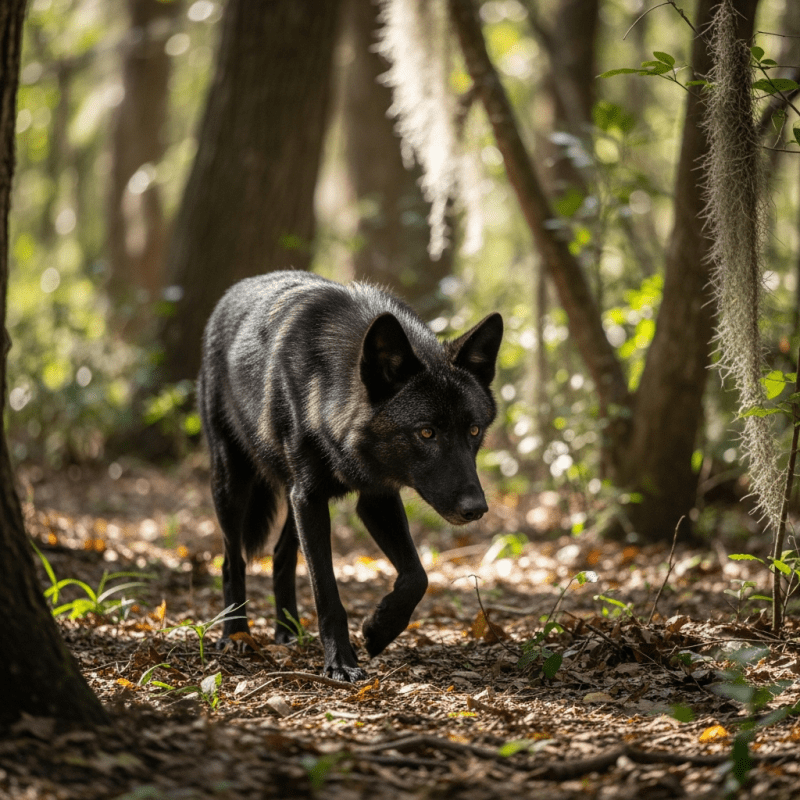
Soft cotton tee, unisex sizes
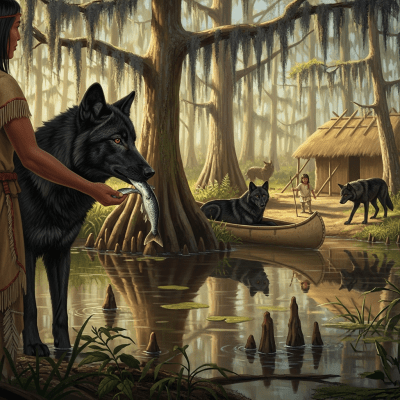
Buy ShirtWhile not prominent in folklore or art, the Florida Black Wolf holds symbolic value as a lost component of Florida’s natural heritage. Its extinction reflects broader themes of human impact on wildlife and the fragility of unique regional subspecies. Occasional references in local history and naturalist writings highlight its mysterious presence and eventual disappearance.
Canines have a complex evolutionary history, with the domestication of dogs stemming from ancient gray wolves. The Florida Black Wolf, however, remained wild and was shaped by natural selection within Florida’s unique environment. Its divergence from other southeastern wolves illustrates how isolation and local adaptation can produce distinct subspecies, though its extinction precluded further evolutionary study.
Unlike domesticated dogs, the Florida Black Wolf was a wild canid, relying on instinctual behaviors and pack dynamics for survival. Wild canines, such as wolves and foxes, exhibit greater independence, specialized hunting strategies, and adaptation to natural habitats, while domestic dogs have been bred for companionship and utility, resulting in diverse forms and temperaments.
The family Canidae encompasses a wide array of species, from the familiar domestic dog (Canis lupus familiaris) to wolves, foxes, and jackals. The Florida Black Wolf represented a unique subspecies within the gray wolf lineage, notable for its adaptation to the southeastern United States. Its dark coloration and regional restriction distinguished it from other North American wolves.
As an apex predator, the Florida Black Wolf played a crucial role in maintaining ecosystem health by controlling populations of deer, small mammals, and other prey. Its presence influenced the structure of Florida’s forests and wetlands, contributing to biodiversity and ecological balance. The loss of this predator likely altered local food webs and allowed prey populations to increase unchecked.
Little is known about the health and welfare of the Florida Black Wolf due to its extinction and limited specimen records. Like other wild canines, it would have faced threats from disease, competition, and habitat loss. Human persecution and environmental change were the primary factors leading to its disappearance.
While individual Florida Black Wolves are not documented in historical records, the subspecies itself is notable as a symbol of Florida’s lost wildlife. More broadly, famous canines include legendary wolves such as the Yellowstone wolf and the Red Wolf, each representing unique conservation stories and cultural legacies.
The Florida Black Wolf is classified as extinct, with no surviving individuals. Its disappearance highlights the vulnerability of localized subspecies to habitat destruction and human encroachment. Conservation efforts for other canines now focus on preventing similar losses, protecting habitats, and restoring populations where possible.
Canines display remarkable regional diversity, with subspecies and breeds adapted to local climates and ecosystems. The Florida Black Wolf was restricted to Florida, with possible overlap into southern Georgia, and exhibited traits suited to subtropical forests and wetlands. Its existence underscores the importance of regional adaptation in shaping the diversity of the Canidae family.