Ethiopian Wolf
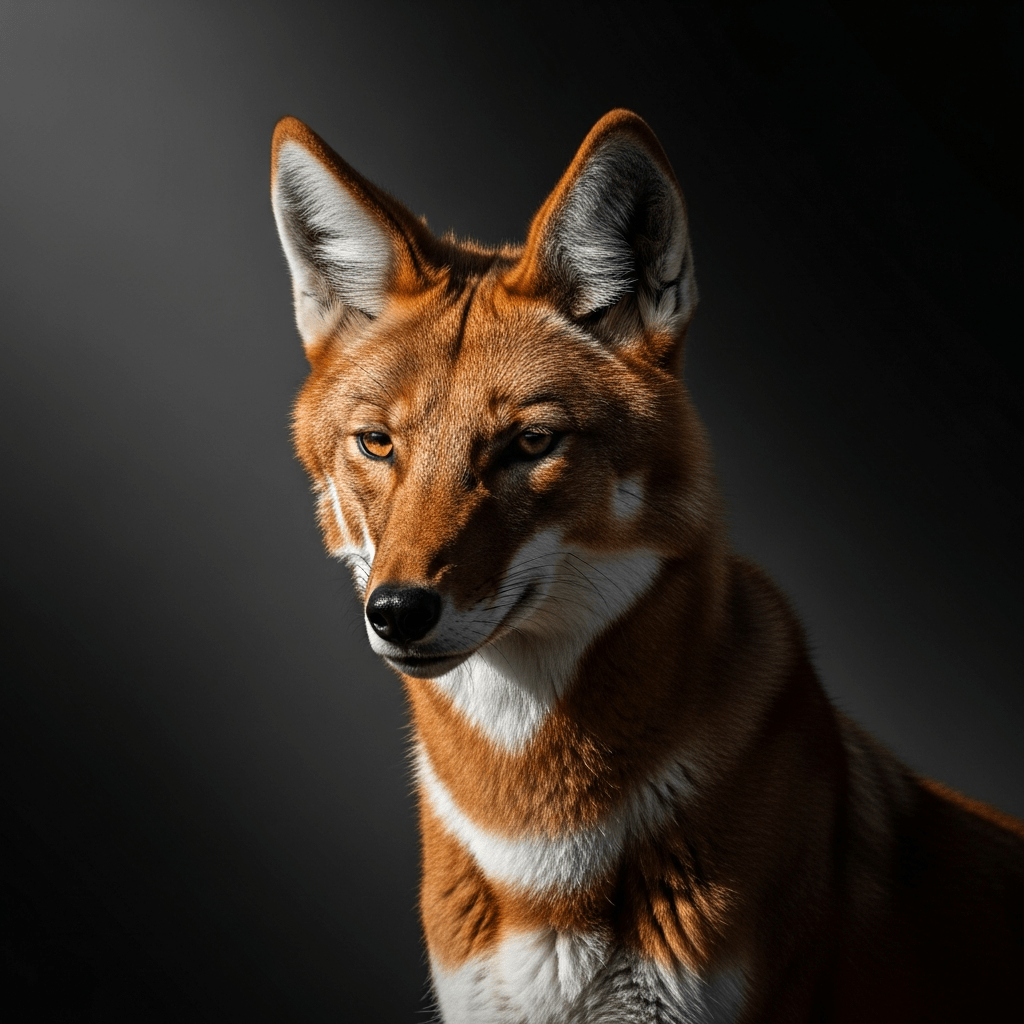
The Ethiopian wolf (Canis simensis) is Africa’s most endangered canid and the world’s rarest wolf species, recognized for its slender build, striking reddish coat, and unique adaptation to high-altitude Afroalpine ecosystems.
The Ethiopian wolf (Canis simensis) is Africa’s most endangered canid and the world’s rarest wolf species, recognized for its slender build, striking reddish coat, and unique adaptation to high-altitude Afroalpine ecosystems.
First scientifically described by Eduard Rüppell in 1835, the Ethiopian wolf’s lineage diverged from a Eurasian ancestor during the Pleistocene epoch. This species has remained wild and endemic to Ethiopia, with no domesticated breeds or subspecies developed.
The Ethiopian wolf belongs to the family Canidae, genus Canis, and species Canis simensis. It is a distinct member of the wolf group, set apart by its evolutionary history and specialized ecological niche.
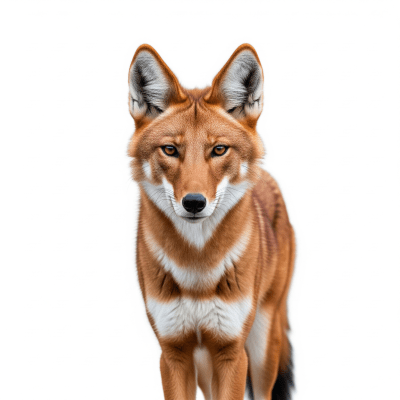
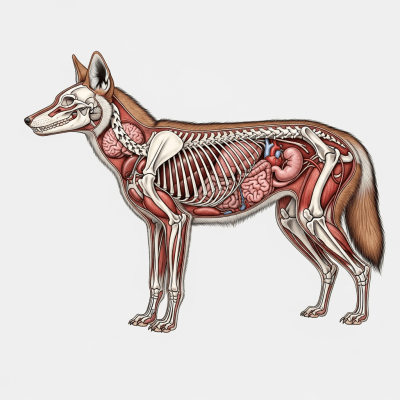
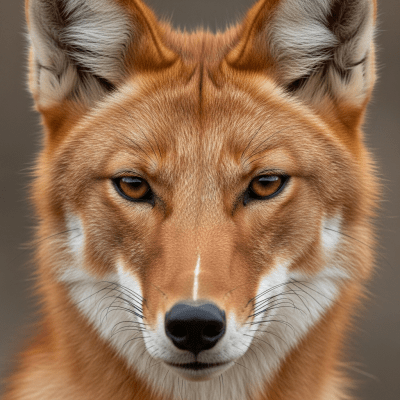
This medium-sized canid weighs between 14 and 20 kilograms, with males generally larger than females. It features a slender, long-legged frame, a narrow muzzle, and a bushy tail tipped with black. Its coat is predominantly reddish-orange, complemented by white underparts, throat, and facial markings, perfectly suited for its montane grassland and heathland habitat above 3,000 meters.
The Ethiopian wolf is a specialized rodent hunter, primarily foraging alone but living within cohesive social packs. Its behavior reflects adaptation to the high-altitude Afroalpine environment, relying on solitary hunting techniques to capture prey while maintaining social bonds within its group.
Bring this kind into your world illustrated posters, mugs, and shirts.
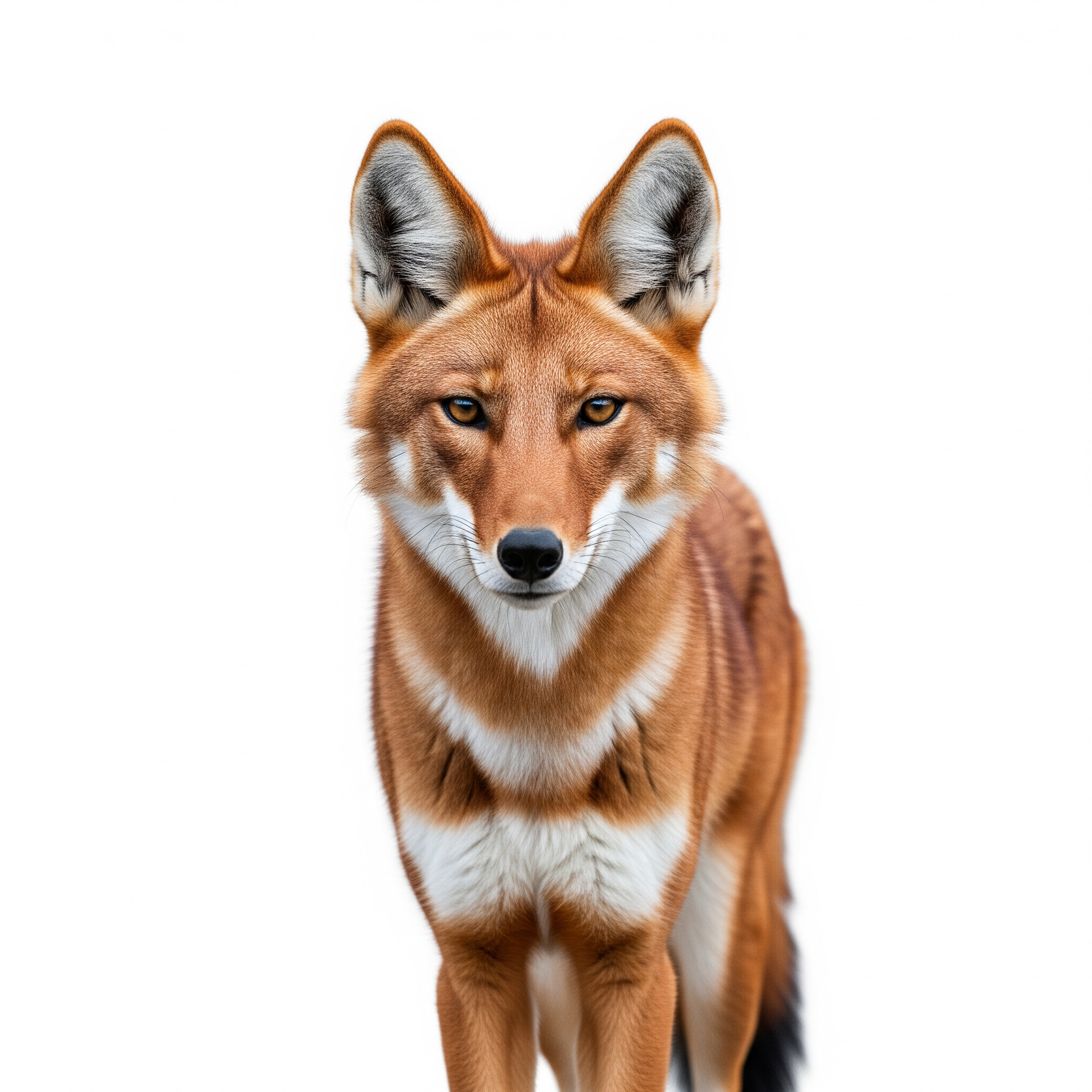
Archival print, museum-grade paper
Buy Poster
Stoneware mug, dishwasher safe
Buy Mug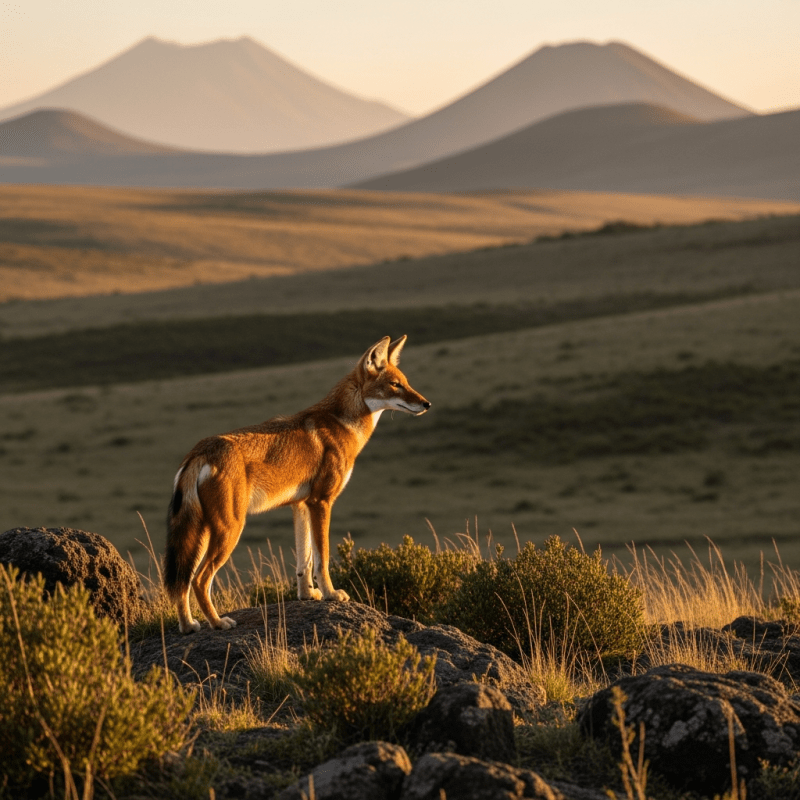
Soft cotton tee, unisex sizes
Buy ShirtWhile not utilized for food or trade, the Ethiopian wolf holds significant ecological and cultural value. It symbolizes Ethiopia’s unique natural heritage and serves as a flagship species for conservation and ecotourism efforts, inspiring awareness and protection of the country’s fragile highland ecosystems.
The Ethiopian wolf has no recognized breeds or subspecies; all individuals belong to a single wild species without domesticated varieties.
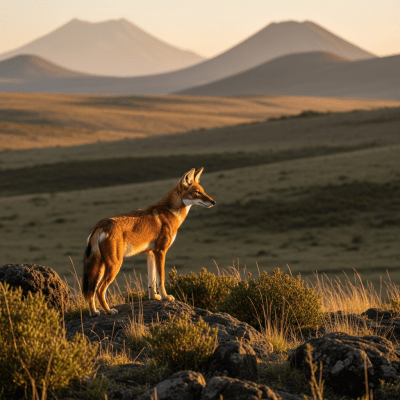

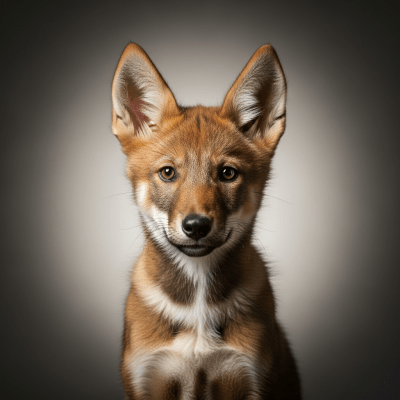
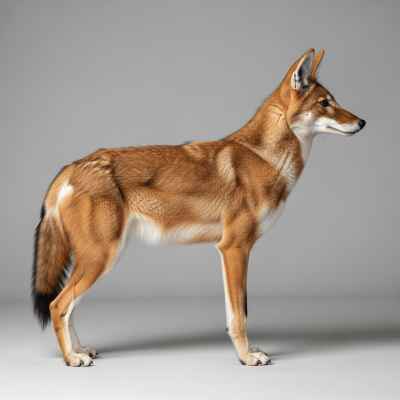
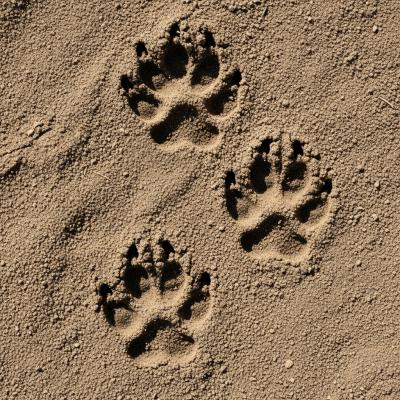
Endemic to Ethiopia, the Ethiopian wolf inhabits isolated high-altitude Afroalpine zones above 3,000 meters, primarily in the Bale Mountains, Simien Mountains, and a few other fragmented highland regions. Its distribution is highly restricted and fragmented, reflecting its specialized habitat needs.
In the wild, Ethiopian wolves are vulnerable to diseases like rabies and canine distemper, often contracted from domestic dogs encroaching on their habitat. Conservation efforts focus on disease management and minimizing contact with domestic animals to protect these fragile populations.
The Ethiopian wolf is not trained by humans and remains a wild species. Behaviorally, it forages mostly alone but maintains social structures within packs. Its hunting strategy is highly specialized for capturing rodents in montane grasslands.
Classified as Africa’s most endangered canid, the Ethiopian wolf faces critical threats from habitat fragmentation and disease. Conservation initiatives prioritize habitat protection, disease control, and community engagement to safeguard its remaining populations and ensure the survival of this unique species.