
Crab-Eating Fox
The Crab-eating Fox (Cerdocyon thous) is a medium-sized South American wild canid, renowned for its adaptability, omnivorous diet, and ecological importance in diverse habitats.
The Crab-eating Fox (Cerdocyon thous) is a medium-sized South American wild canid, renowned for its adaptability, omnivorous diet, and ecological importance in diverse habitats.
First described by Carl Linnaeus in 1766, the Crab-eating Fox is considered basal among South American canids. Unlike domestic dogs or selectively bred foxes, this species has remained wild, evolving naturally across the continent. Its populations stretch from savannas and forests to agricultural areas, with regional variation but no universally recognized subspecies. The Crab-eating Fox’s lineage reflects millions of years of adaptation to South America’s changing landscapes.
The Crab-eating Fox belongs to the family Canidae, within the genus Cerdocyon, and is scientifically named Cerdocyon thous. This places it among the broader group of canines, which includes wolves, jackals, and true foxes. Unlike its North American and Eurasian relatives, it occupies a unique evolutionary branch within South American canids, distinguished by its genetic and morphological traits.
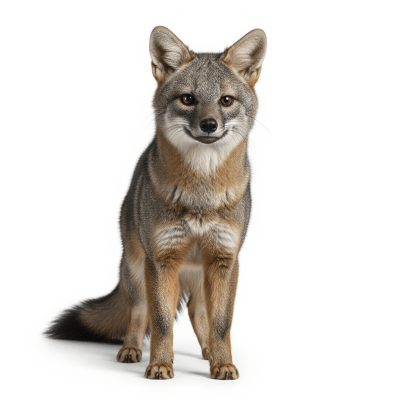
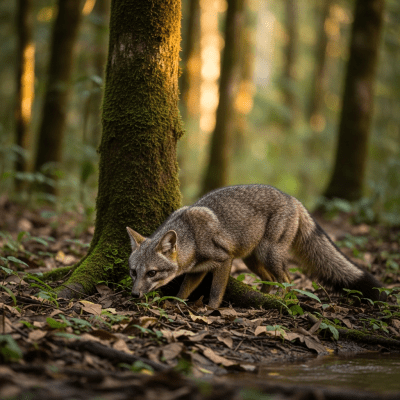
With a body length of 60–70 cm and a bushy tail measuring 25–40 cm, the Crab-eating Fox presents a sturdy, agile silhouette. Its coarse fur is predominantly gray, accented by reddish or brown hues on the limbs and ears, and a dark-tipped tail. The fox’s expressive face, upright ears, and keen eyes reflect its alert, nocturnal lifestyle. Its grizzled coat blends seamlessly into the undergrowth, offering camouflage in both forest and savanna environments.
The Crab-eating Fox is primarily nocturnal and crepuscular, leading a solitary life or forming pairs. Its omnivorous diet includes crabs, insects, small vertebrates, fruit, and carrion, making it a versatile forager. This adaptability allows it to thrive in disturbed habitats, including farmlands, where it helps control pest populations and disperses seeds. Unlike domestic canines, it has no history of utility for humans beyond occasional hunting for fur or pest control in some regions.
Bring this kind into your world illustrated posters, mugs, and shirts.

Archival print, museum-grade paper
Buy Poster
Stoneware mug, dishwasher safe
Buy Mug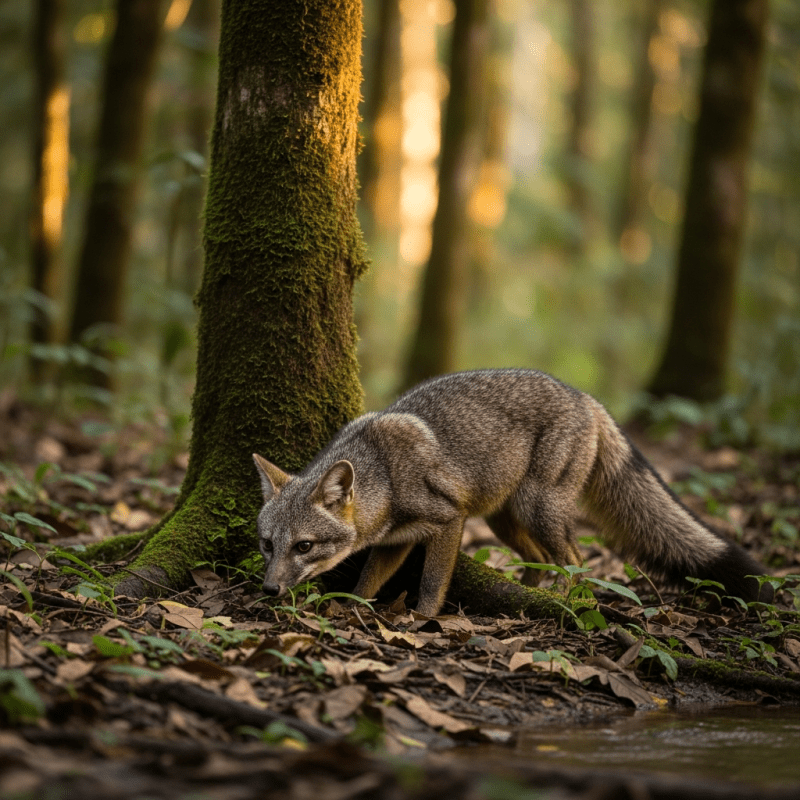
Soft cotton tee, unisex sizes
Buy ShirtWhile not as prominent in global folklore as wolves or domestic dogs, the Crab-eating Fox features in local South American culture under names like “Maikong” and “Zorro de crin.” Its elusive nature and adaptability have inspired regional stories and nicknames, reflecting respect for its role in the landscape. In some areas, it is regarded as a symbol of cleverness and survival, though it is less mythologized than other canids.
The Crab-eating Fox has never been domesticated; its evolutionary path is distinct from that of domestic dogs. As a basal South American canid, it diverged from other canines millions of years ago, adapting to a range of habitats and food sources. Its evolutionary success is marked by versatility rather than human intervention, and it remains a purely wild species.
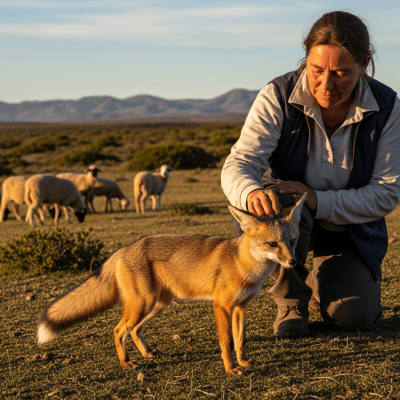


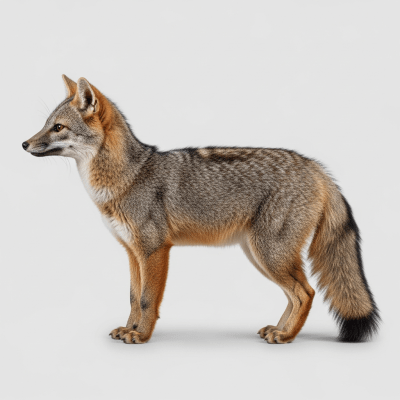

Unlike domesticated dogs, which have been shaped by millennia of selective breeding for companionship and utility, the Crab-eating Fox is entirely wild. It exhibits solitary or paired living, nocturnal habits, and a broad omnivorous diet. Domestic dogs rely on humans for food and shelter, while the Crab-eating Fox thrives independently, adapting to both pristine and disturbed environments.
The Crab-eating Fox is a single species, Cerdocyon thous, with no universally recognized subspecies, though some authorities list up to six regional variants. Its diversity is expressed through local adaptations and a range of common names, such as “Maikong” and “Savanna Fox.” Within the broader canine family, it stands apart from other South American canids by its unique ecological and morphological traits.
As an omnivorous forager, the Crab-eating Fox is vital for seed dispersal and pest control in its ecosystem. By consuming fruits and excreting seeds, it supports plant regeneration, while its predation on insects and small vertebrates helps balance populations. Its adaptability to human-modified landscapes enhances its ecological impact, making it a key species in both natural and agricultural settings.
Wild Crab-eating Foxes face threats from habitat loss, hunting, and disease transmission from domestic animals. Their health is generally robust due to dietary flexibility and adaptability, but populations can be affected by environmental changes and human encroachment. Welfare concerns focus on conservation and minimizing conflict with humans, rather than captive care.
While the Crab-eating Fox itself is not associated with famous individual stories, its presence in South American folklore and its ecological prominence make it notable within its range. Regional tales and nicknames, such as “Maikong,” reflect its cultural footprint, though it lacks the celebrity status of wolves or domestic dogs.
The Crab-eating Fox is currently listed as Least Concern by the IUCN, owing to its wide distribution and adaptability. However, localized threats such as habitat destruction, hunting, and disease can impact populations. Conservation efforts focus on habitat protection and monitoring, ensuring the species continues to fulfill its ecological roles across South America.
Regional variation in the Crab-eating Fox is reflected in its many local names—“Maikong” in Brazil, “Zorro de crin” in Spanish-speaking countries, and “Raposa do campo” in Portuguese. While some authorities recognize up to six subspecies, consensus is lacking. Its adaptability allows it to inhabit a range of environments from dry savannas to humid forests, with subtle differences in size and coloration across its range.