Arctic Fox
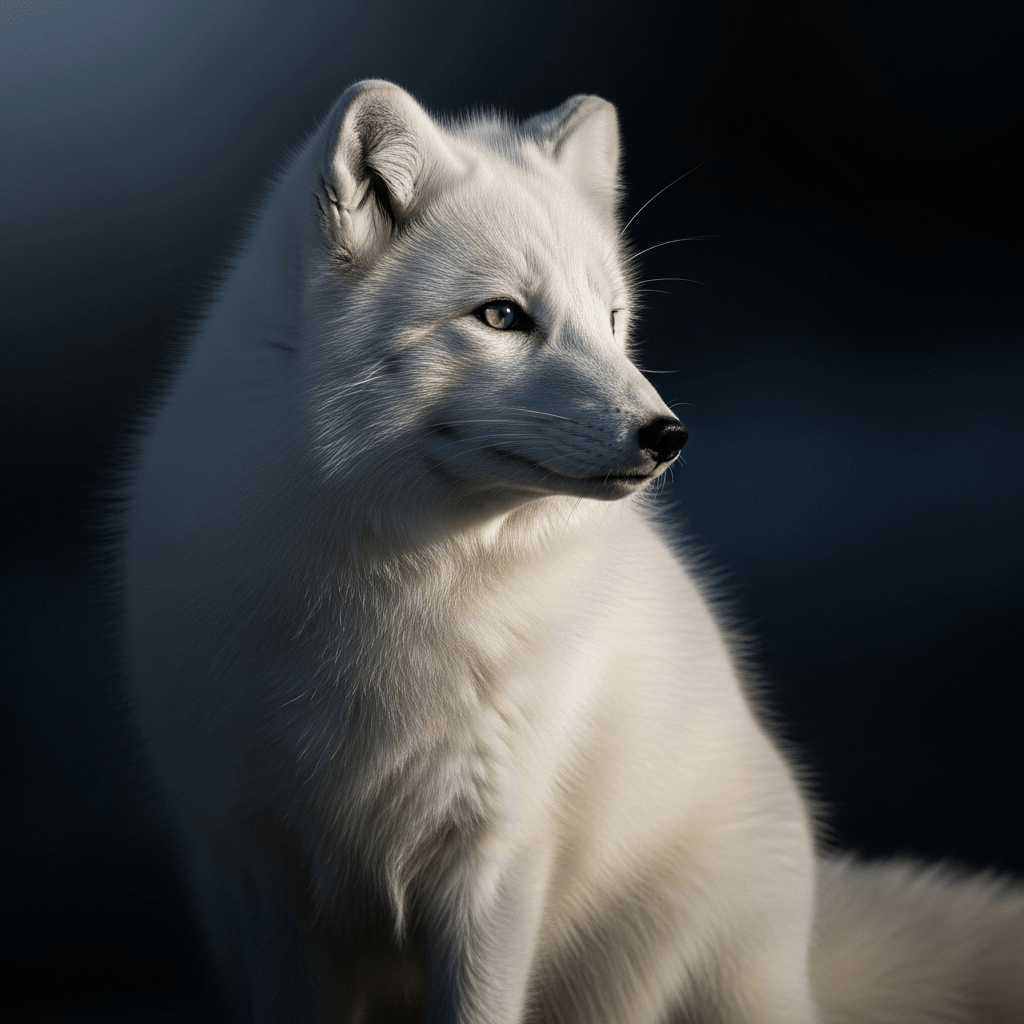
The Arctic Fox (Vulpes lagopus) is a small, highly specialized canid native to the Arctic tundra and polar regions of the Northern Hemisphere, known for its thick, seasonally changing fur and exceptional adaptations to extreme cold.
The Arctic Fox (Vulpes lagopus) is a small, highly specialized canid native to the Arctic tundra and polar regions of the Northern Hemisphere, known for its thick, seasonally changing fur and exceptional adaptations to extreme cold.
First scientifically described by Carl Linnaeus in 1758, the Arctic Fox belongs to the genus Vulpes with fossil evidence dating back to the Pleistocene epoch. As a wild species, its evolutionary history is well documented through genetic and paleontological research, with specimens preserved in major natural history museums worldwide.
The Arctic Fox is a member of the family Canidae, genus Vulpes, species Vulpes lagopus. It is part of the broader canine family that includes wolves, domestic dogs, jackals, and other foxes, all sharing common carnivorous ancestry within the dog family.
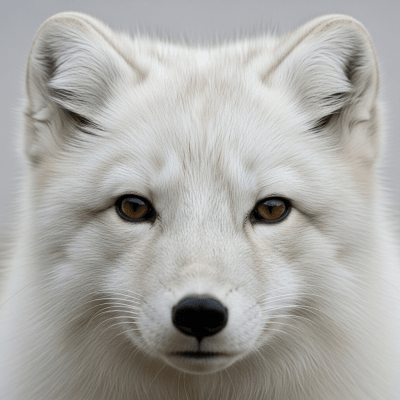
Compact and well-insulated, adult Arctic Foxes measure between 46 and 68 centimeters in length and weigh from 1.5 to 9 kilograms. Their dense, multi-layered fur shifts color seasonally—from white or bluish-gray in winter to brown or gray in summer—providing effective camouflage. Morphological adaptations such as short ears, a rounded body, and a bushy tail help conserve heat in freezing environments.
The Arctic Fox is an omnivorous predator and scavenger, feeding on lemmings, voles, birds, eggs, carrion, and occasionally berries or seaweed. It plays a critical ecological role in Arctic ecosystems, enduring temperatures as low as −50°C. Historically, humans have utilized its fur for clothing and ceremonial purposes, though it is not widely used for culinary reasons.
Bring this kind into your world illustrated posters, mugs, and shirts.
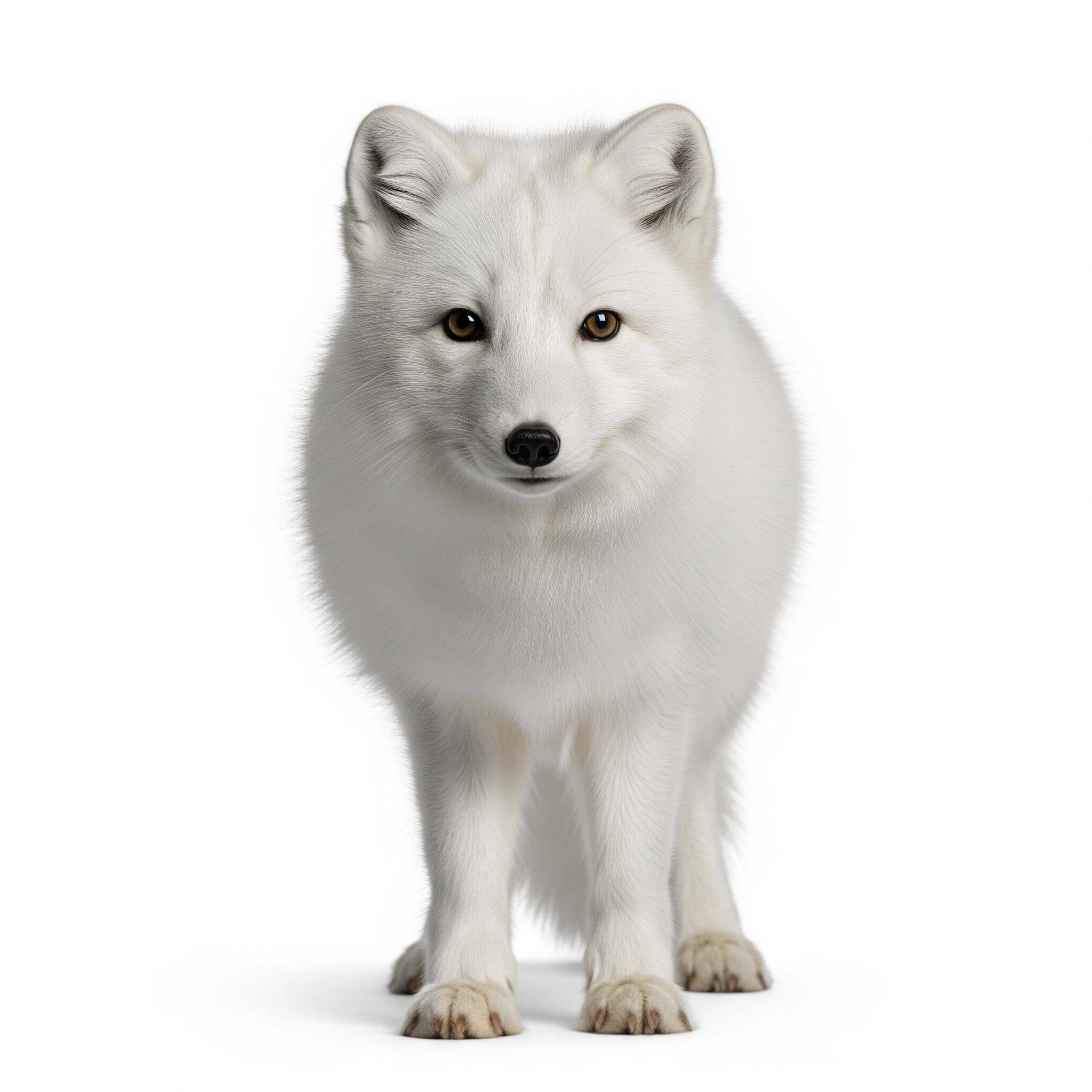
Archival print, museum-grade paper
Buy Poster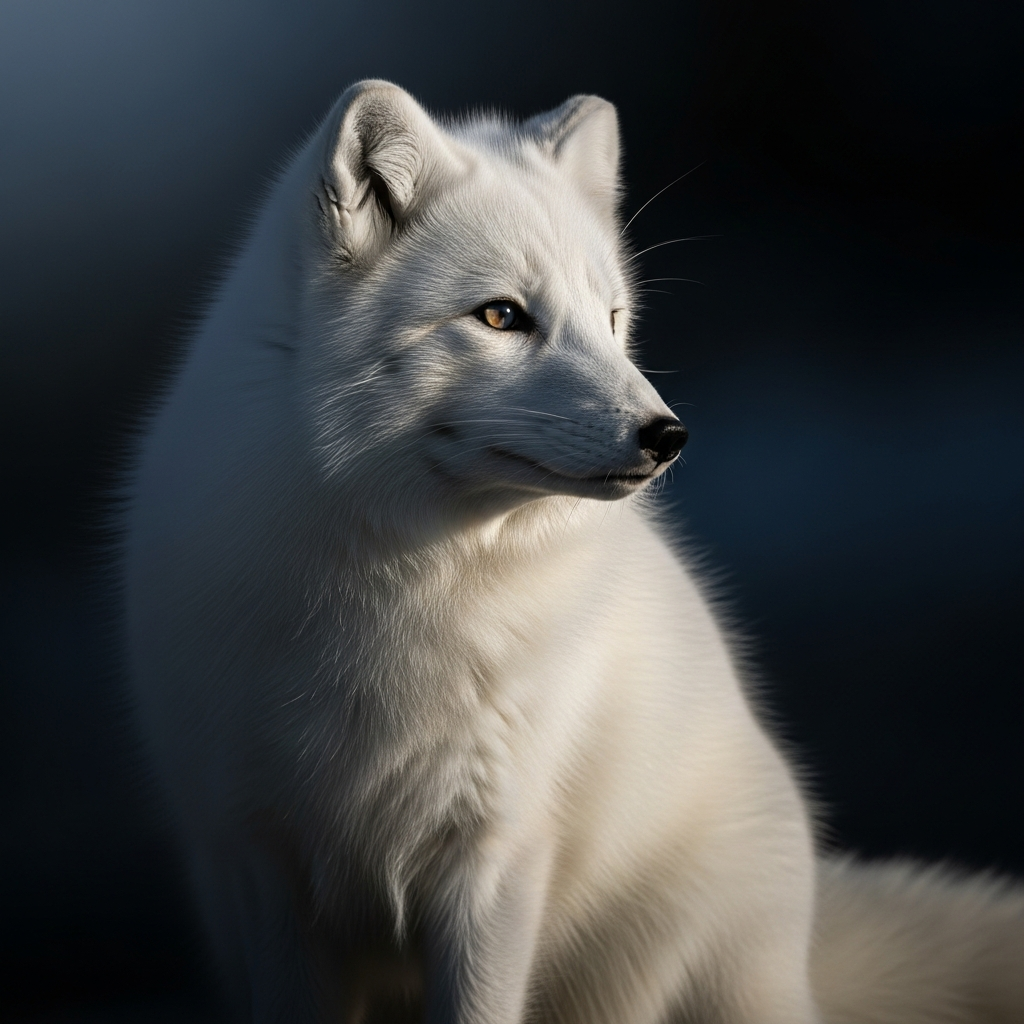
Stoneware mug, dishwasher safe
Buy Mug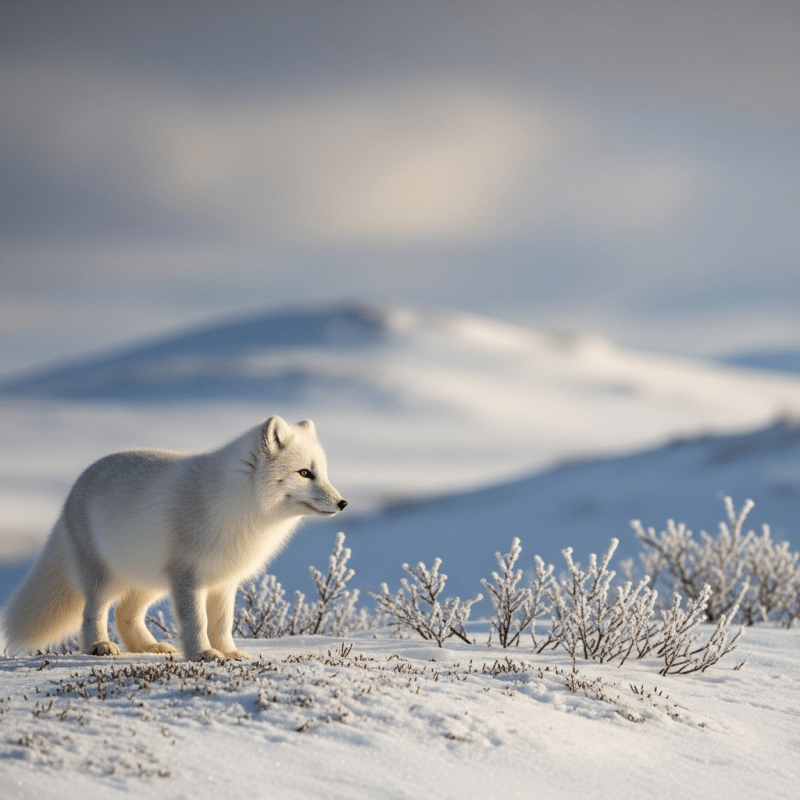
Soft cotton tee, unisex sizes
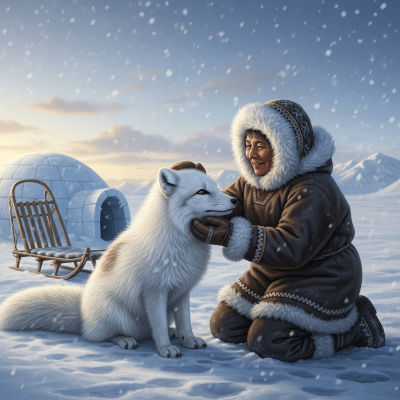
Buy ShirtIn indigenous Arctic cultures, the Arctic Fox holds importance for its warm fur, often used in traditional clothing and ceremonial attire. Known by various regional names such as “песец” in Russian and “fjellrev” or “polarrev” in Scandinavian languages, it also appears in local folklore and symbolizes resilience in harsh climates.
The Arctic Fox does not have formal breeds but exhibits notable color morphs. The most common are the white morph, which turns white in winter and brownish in summer, and the blue morph, or “blue fox,” which has a darker bluish-gray coat year-round, especially prevalent in coastal regions.
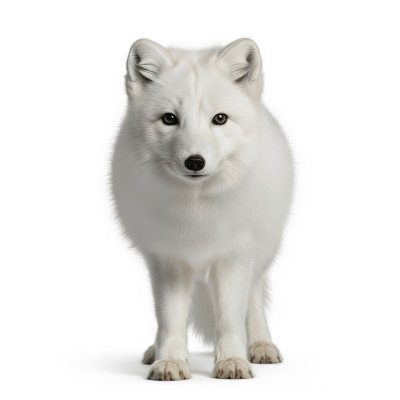
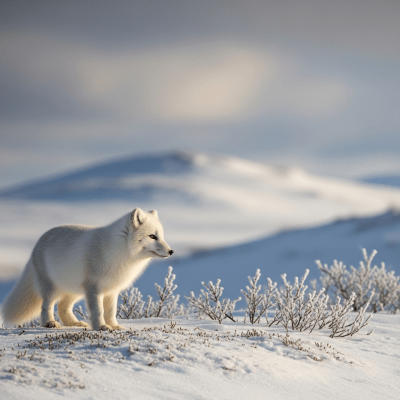

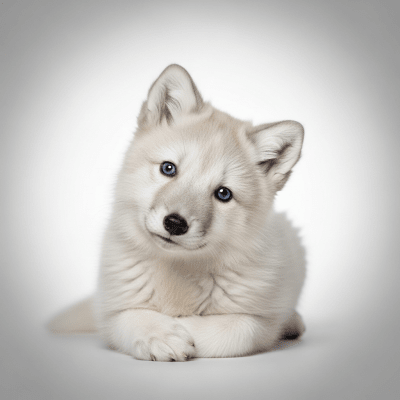
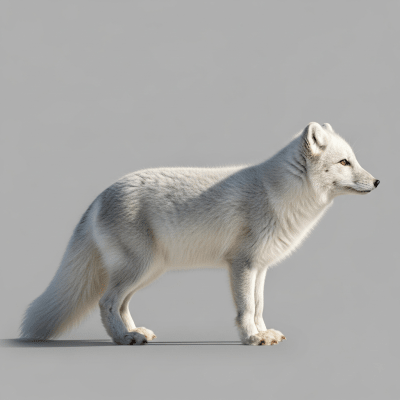
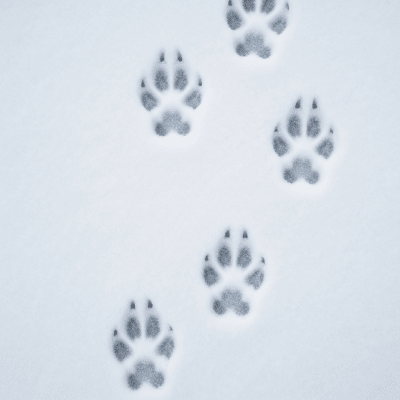
Native to the Arctic tundra and polar regions across the Northern Hemisphere, the Arctic Fox inhabits areas of Alaska, Canada, Greenland, Iceland, Scandinavia, and Siberia. It thrives in cold, treeless landscapes and is adapted to survive in some of the planet’s harshest climates, with populations concentrated in both inland and coastal zones.
As a wild species, the Arctic Fox is not subject to typical domestic care, but in captivity, it requires cold environments and a diet replicating its natural omnivorous intake. Common health challenges include vulnerability to parasites, diseases, and the effects of food scarcity during population lows.
Arctic Foxes are naturally wary and solitary animals, exhibiting territorial and scavenging behaviors. They are not traditionally trained by humans but can adapt to captive environments. Their behavior includes seasonal breeding cycles and nomadic movements following prey availability.
The Arctic Fox is currently classified as Least Concern globally, though some regional populations are vulnerable due to climate change, habitat loss, and competition with red foxes expanding northward. Conservation efforts focus on habitat protection, monitoring populations, and mitigating human impacts.