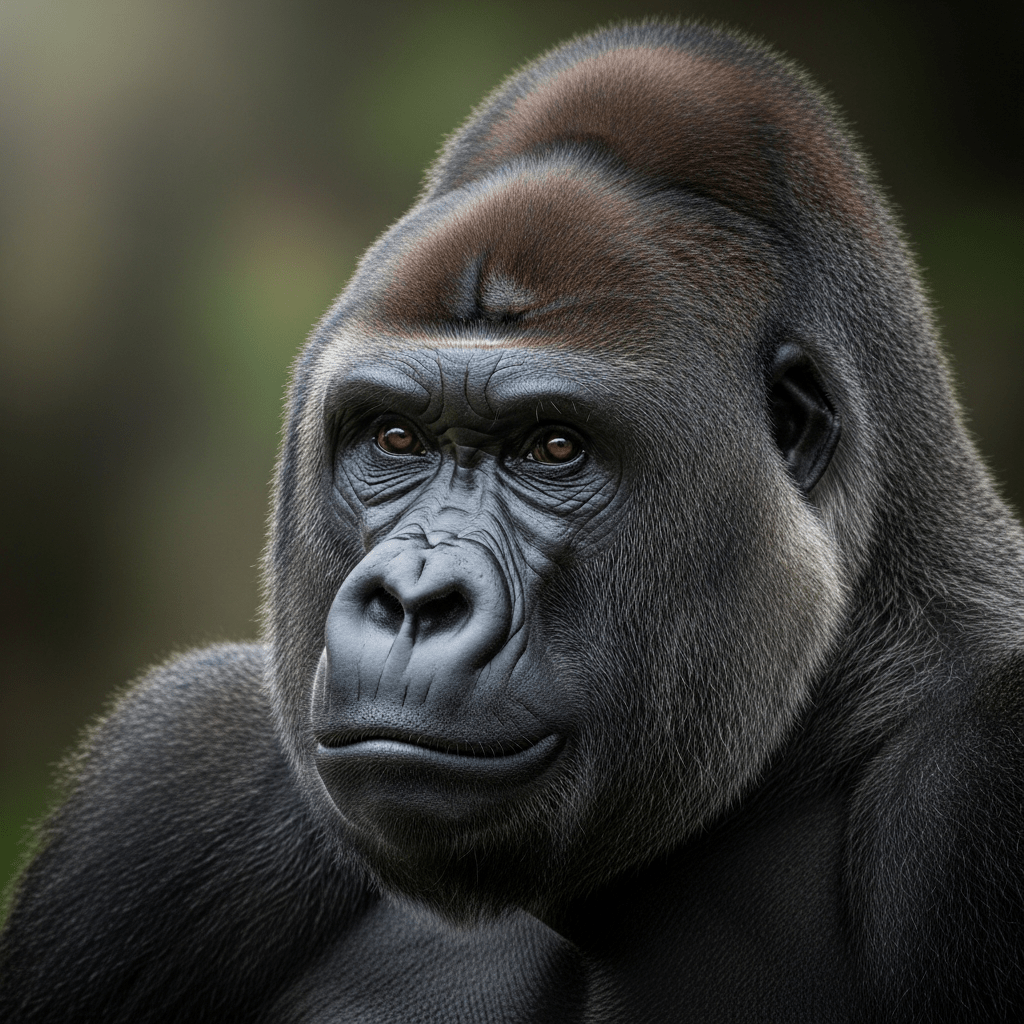
Western Lowland Gorilla
The western lowland gorilla (Gorilla gorilla gorilla) is the most numerous and widely distributed subspecies of gorilla, known for its distinctive silverback males and role as a flagship species in ape conservation.
The western lowland gorilla (Gorilla gorilla gorilla) is the most numerous and widely distributed subspecies of gorilla, known for its distinctive silverback males and role as a flagship species in ape conservation.
First described by Thomas Savage in 1847 from specimens collected in Gabon, the western lowland gorilla has its origins in the dense rainforests of Central Africa, where it has thrived for millennia as a dominant primate subspecies.
Belonging to the superfamily Hominoidea and family Hominidae, the western lowland gorilla is a subspecies of Gorilla gorilla, closely related to the Cross River gorilla (Gorilla gorilla diehli). It is classified within the subfamily Homininae and genus Gorilla.
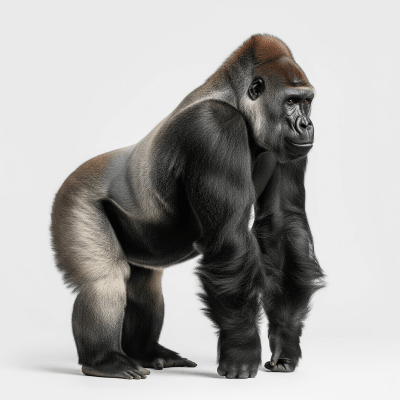
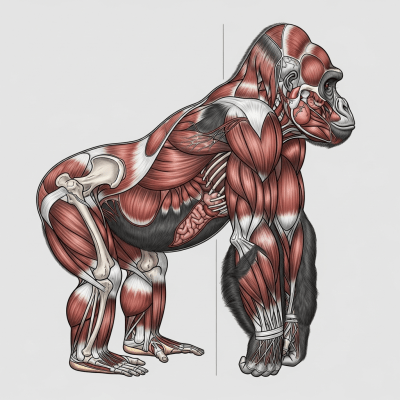
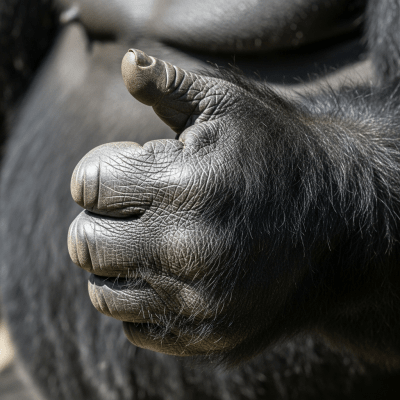
Adult males stand between 140 and 180 cm tall and weigh 140 to 200 kg, while females are smaller, averaging 100 to 120 cm in height and 70 to 90 kg in weight. Their brownish-gray coat often shows a reddish tinge on the crown, and mature males develop a characteristic silver saddle of hair on their backs, earning them the name "silverback." They have a prominent brow ridge, bare black faces, hands, and feet, and unique nose patterns that help identify individuals.
Western lowland gorillas are primarily terrestrial, moving by knuckle-walking but are adept climbers when foraging for fruit. They live in cohesive social groups led by a dominant silverback male, which protects and guides several females and their offspring. These groups typically number between 5 and 10 individuals but can sometimes reach up to 20.
Bring this kind into your world illustrated posters, mugs, and shirts.
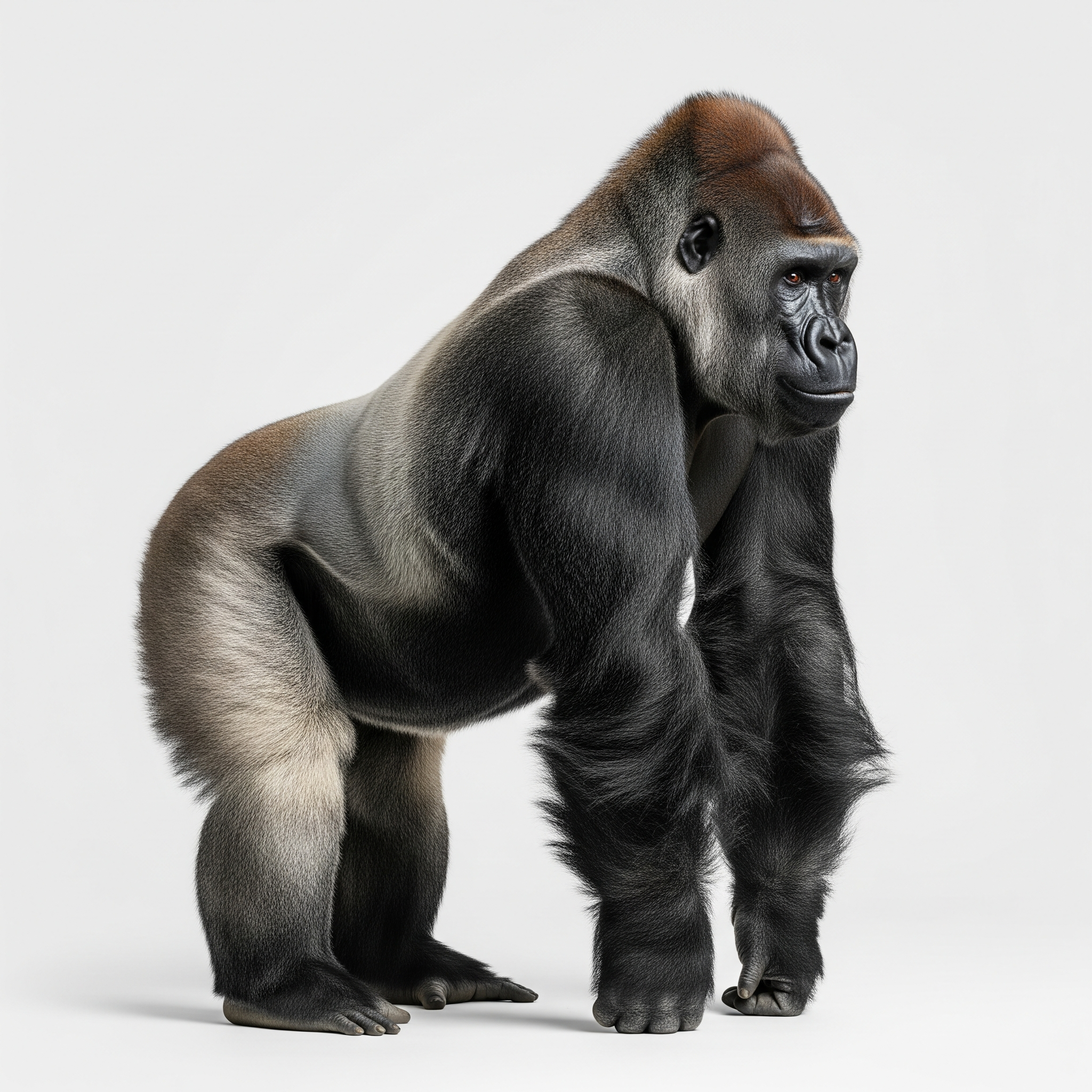
Archival print, museum-grade paper
Buy Poster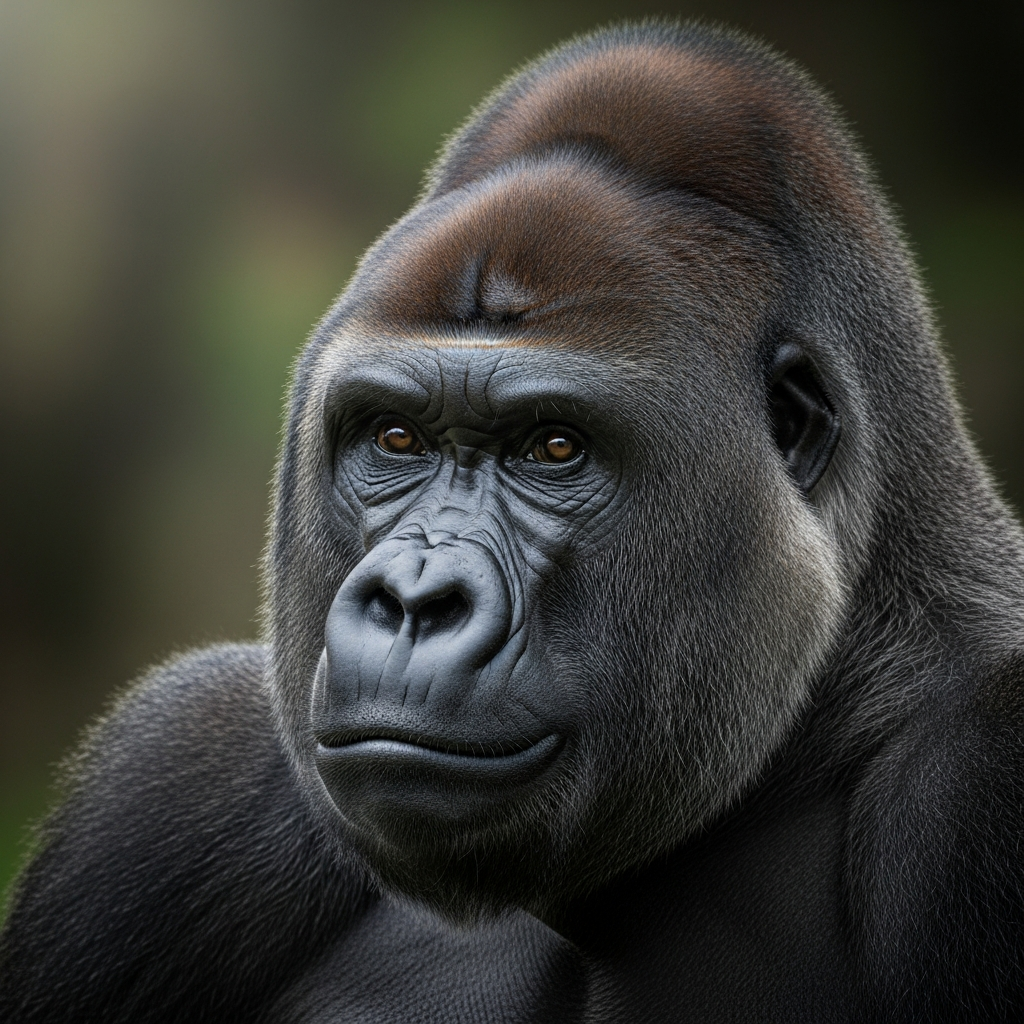
Stoneware mug, dishwasher safe
Buy Mug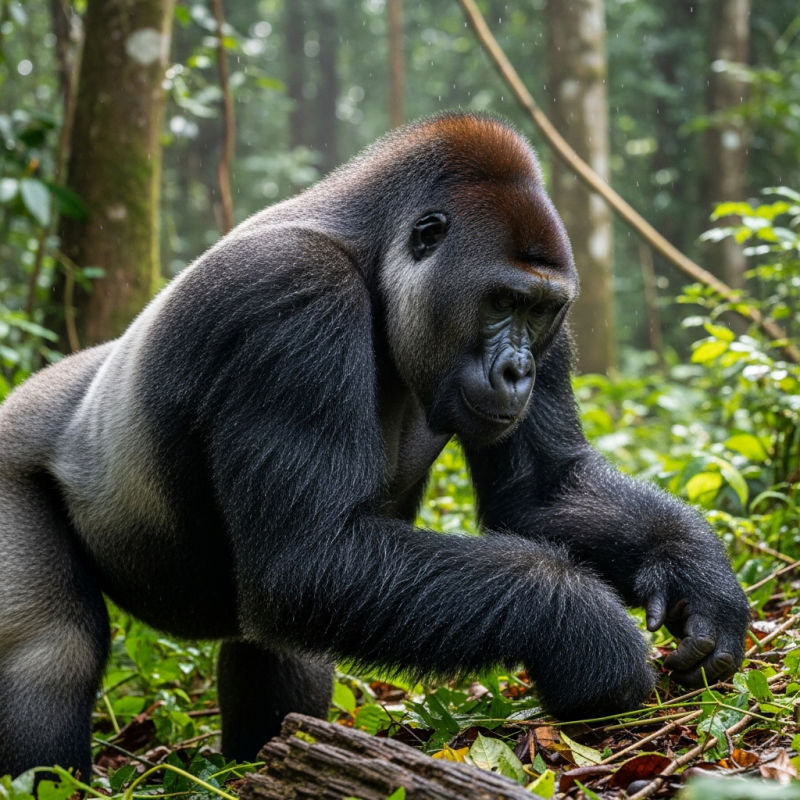
Soft cotton tee, unisex sizes
Buy ShirtAs one of the most recognizable great apes, the western lowland gorilla holds a prominent place in conservation efforts, ecotourism, and scientific research. It serves as a charismatic symbol for protecting Central African rainforests and raising awareness about endangered species worldwide. While not featured extensively in traditional art or myth, its presence in modern media and zoos has cemented its cultural importance.
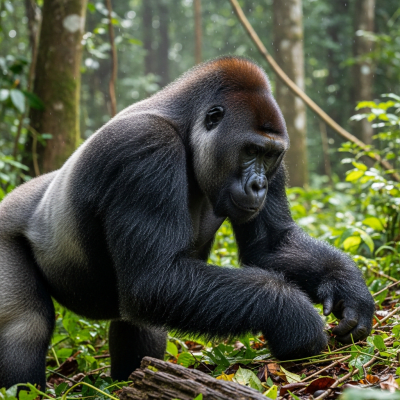
Western lowland gorillas inhabit dense, remote rainforests and swamp forests throughout Central Africa, including countries such as Gabon, Republic of Congo, and Cameroon. Their preference for thick forest cover provides both food resources and protection, though their range is increasingly fragmented due to human activities.
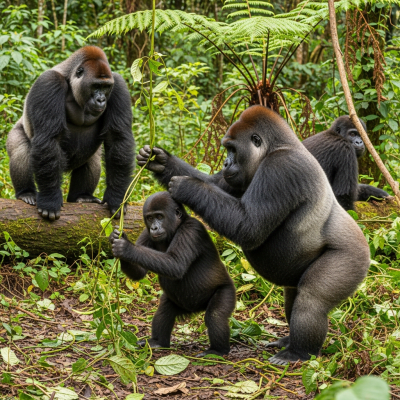
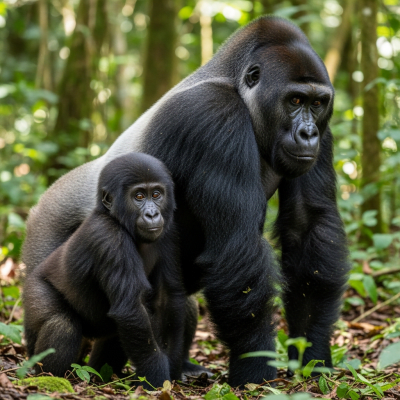
These gorillas live in stable social groups typically led by a dominant silverback male who oversees several adult females and their young. Group sizes average between 5 and 10 individuals but can grow to 20. The silverback mediates conflicts, protects the group, and leads foraging activities, while females care for offspring within this cohesive social unit.
Primarily frugivorous, western lowland gorillas feed on a variety of fruits, supplemented by leaves, stems, and occasionally insects. Though mostly terrestrial and knuckle-walking, they climb trees to access ripe fruit. Their diet varies seasonally depending on availability, reflecting their adaptability within forest ecosystems.
Classified as critically endangered, the western lowland gorilla faces severe threats from infectious diseases such as Ebola virus, habitat destruction due to logging and agriculture, and illegal hunting for bushmeat. Despite legal protections under CITES Appendix I and national laws, enforcement challenges persist. Conservation efforts focus on habitat preservation, disease monitoring, and captive breeding programs.
With a diploid chromosome number of 48, the western lowland gorilla shares close genetic ties with other gorilla subspecies but shows distinct genetic diversity within its populations. No confirmed natural hybrids exist, and captive hybridization with other gorilla taxa is rare and discouraged. Its evolutionary lineage positions it as a subspecies of Gorilla gorilla, diverging from its sister subspecies, the Cross River gorilla.