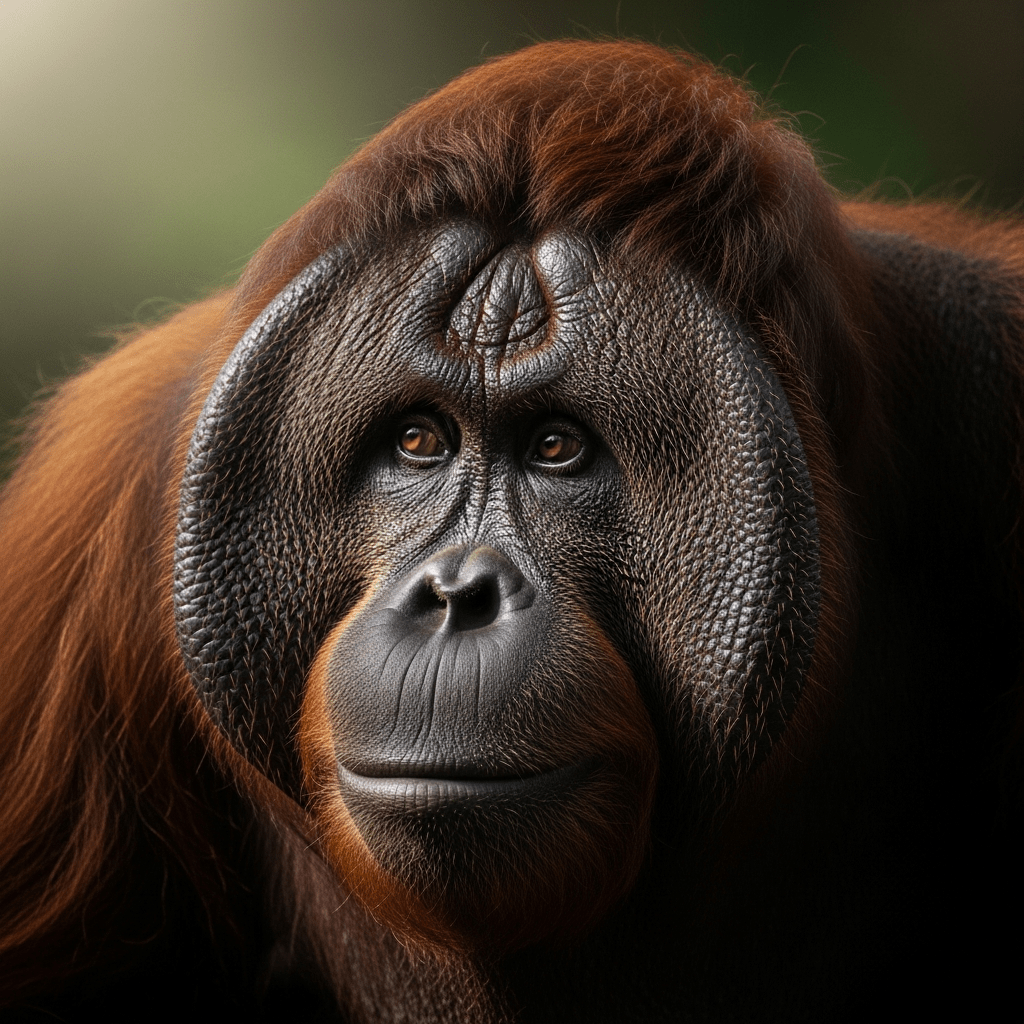
Sumatran Orangutan
The Sumatran orangutan (Pongo abelii) is a critically endangered great ape species native exclusively to the northern rainforests of Sumatra, Indonesia, known for its distinctive lighter reddish coat and arboreal lifestyle.
The Sumatran orangutan (Pongo abelii) is a critically endangered great ape species native exclusively to the northern rainforests of Sumatra, Indonesia, known for its distinctive lighter reddish coat and arboreal lifestyle.
First described in 1840 by René Lesson from specimens in northern Sumatra, the Sumatran orangutan evolved as a distinct species within the genus Pongo, diverging from other great apes around 12 to 16 million years ago. Its lineage reflects a unique adaptation to the island's lowland and montane rainforests.
The Sumatran orangutan belongs to the superfamily Hominoidea (apes), within the family Hominidae (great apes), subfamily Ponginae, genus Pongo, and is recognized as the species abelii. It is one of three extant orangutan species, distinguished from its Bornean and Tapanuli relatives by morphological and genetic traits.
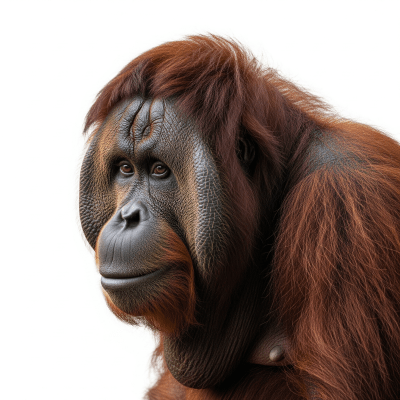
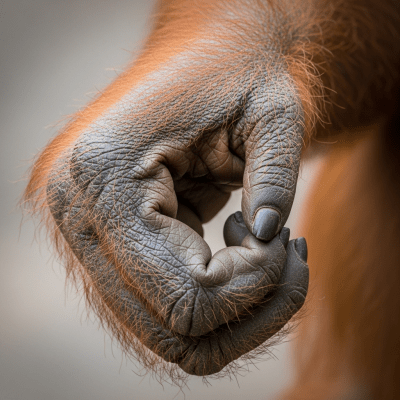
Adult Sumatran orangutans display a lighter, longer, and more reddish coat compared to their Bornean counterparts. Mature males develop prominent cheek pads known as flanges and sport distinctive beard-like facial hair. Males typically stand 120–150 cm tall and weigh between 50 and 90 kg, while females are smaller, measuring 100–120 cm and weighing 30–50 kg.
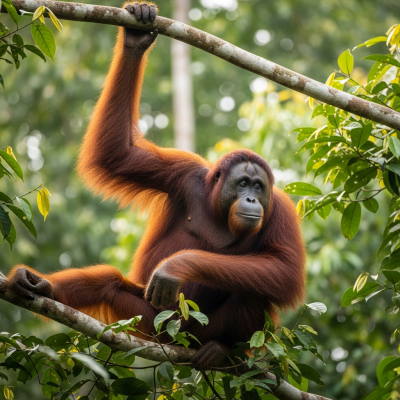
Highly arboreal, Sumatran orangutans spend most of their lives in the forest canopy, relying on their strength and dexterity to navigate the trees. They are semi-solitary, with adult males largely solitary and females accompanied by their dependent offspring. Their slow reproductive rate, with females reaching sexual maturity at 12–15 years and long interbirth intervals of 7–9 years, reflects their cautious life strategy.
Bring this kind into your world illustrated posters, mugs, and shirts.
Archival print, museum-grade paper
Buy Poster
Stoneware mug, dishwasher safe
Buy Mug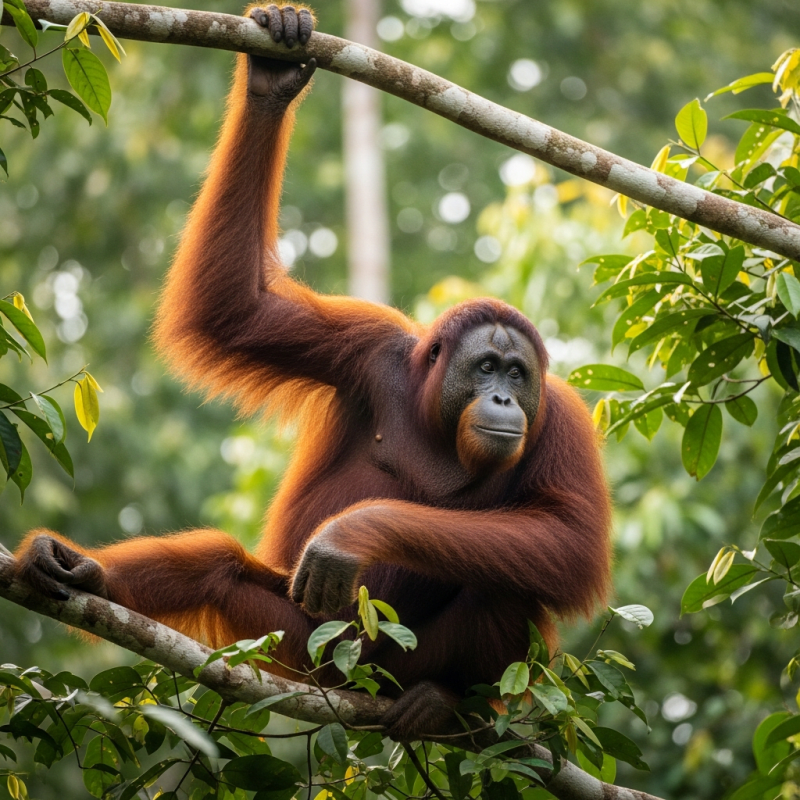
Soft cotton tee, unisex sizes
Buy ShirtLocally known as "Mawas" and broadly as "Orangutan"—meaning "person of the forest" in Malay and Indonesian—the Sumatran orangutan holds deep cultural value among indigenous communities and conservationists. It features prominently in ecotourism and environmental education efforts, symbolizing the urgent need to protect Sumatra's rich biodiversity.
Restricted to the lush lowland and montane rainforests of northern Sumatra, the Sumatran orangutan's range centers on the Leuser Ecosystem, with smaller fragmented populations in areas like Batang Toru. These forests provide the complex canopy structures essential for their arboreal lifestyle.
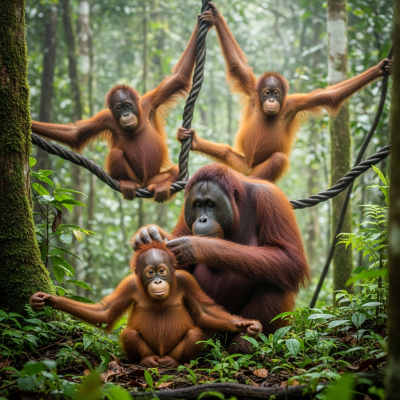

Sumatran orangutans exhibit a semi-solitary social structure. Adult males are predominantly solitary, maintaining large territories, while females tend to be accompanied by their dependent young. Social interactions are generally limited, reflecting their dispersed feeding habits and the demands of their forest environment.
Primarily frugivorous, Sumatran orangutans consume up to 60% fruit in their diet, supplemented by leaves, bark, insects, and occasionally small vertebrates. Their foraging behavior is adapted to the seasonal availability of food in the forest canopy, requiring extensive knowledge of fruiting trees.
Classified as Critically Endangered, the Sumatran orangutan faces a steep population decline due to habitat destruction from palm oil agriculture, illegal logging, and human encroachment. Hunting and capture for the illegal pet trade further threaten their survival. Conservation efforts focus on habitat protection, law enforcement, and captive breeding programs, though challenges remain significant.
The Sumatran orangutan shares a common ancestor with other orangutans dating back 12–16 million years. Genetic studies confirm its distinct species status from the Bornean orangutan, with no confirmed natural hybridization events. While hybridization in captivity is rare, their genetic diversity remains a critical focus for conservation genetics.