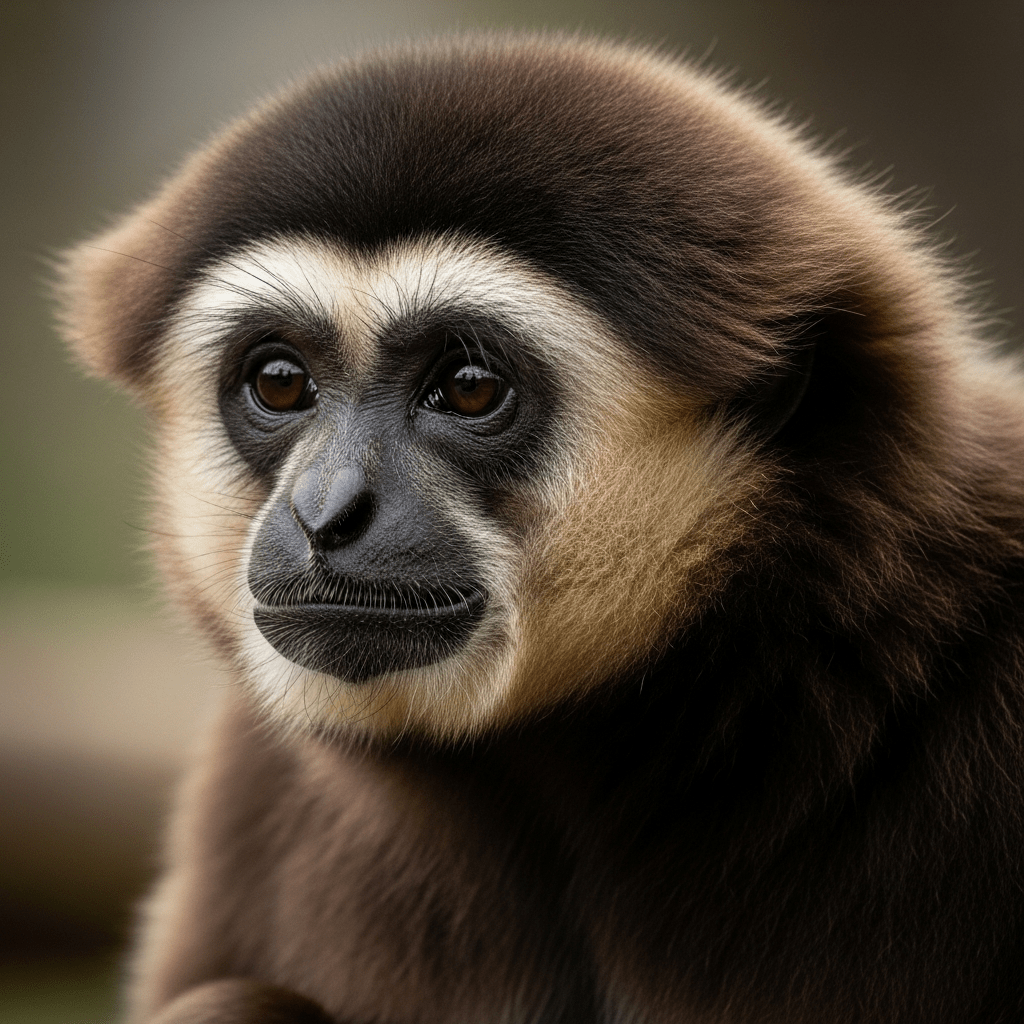
Southern White-Cheeked Gibbon
The Southern white-cheeked gibbon (Nomascus gabriellae) is a lesser ape native to Southeast Asia, recognized for its striking sexual dimorphism and melodious vocalizations that echo through forest canopies.
The Southern white-cheeked gibbon (Nomascus gabriellae) is a lesser ape native to Southeast Asia, recognized for its striking sexual dimorphism and melodious vocalizations that echo through forest canopies.
Formally described in 1995 by Thomas Geissmann, the Southern white-cheeked gibbon was identified from specimens in southern Vietnam and eastern Cambodia. It belongs to the genus Nomascus, a group distinguished by vivid sexual coloration and complex songs, reflecting its evolutionary heritage in the rich forests of Southeast Asia.
This species is part of the family Hylobatidae, commonly known as the lesser apes, within the superfamily Hominoidea. Classified as Nomascus gabriellae, it shares its genus with other gibbons noted for sexual dichromatism and elaborate vocal communication, fitting into the broader ape lineage as a specialized arboreal primate.
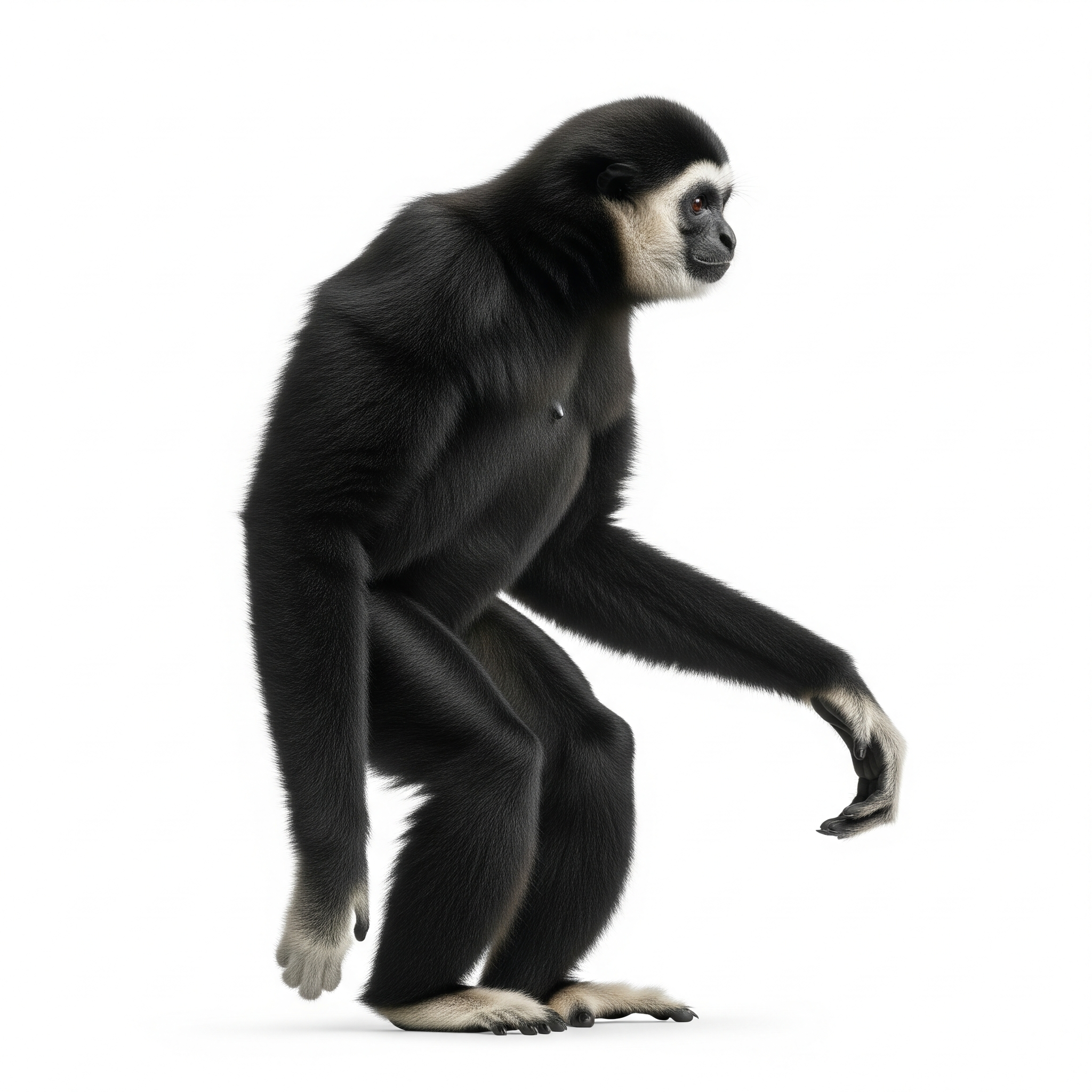
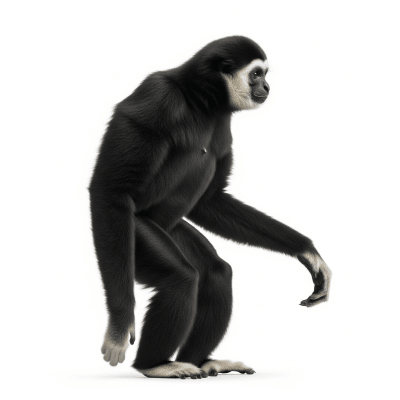
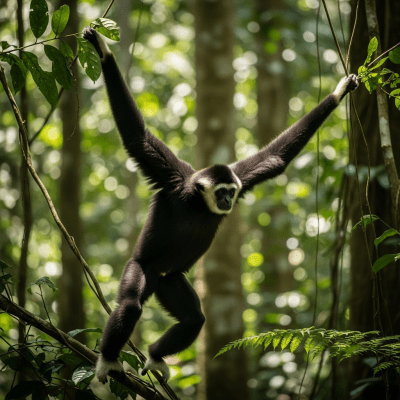
The Southern white-cheeked gibbon displays pronounced sexual dimorphism: adult males are sleek black with distinctive white cheek patches, while females sport a warm golden or buff coat with minimal facial markings. Their slender bodies, measuring 45 to 60 cm in length and weighing between 6 and 8 kg, are equipped with long arms perfectly adapted for agile brachiation through the forest canopy.
These gibbons live in small, monogamous family groups, using their complex vocalizations to defend territory and strengthen pair bonds. Their arboreal lifestyle centers on brachiation, allowing swift movement among trees. They play an essential ecological role by dispersing seeds and maintaining forest health, though they have no domesticated or agricultural uses.
Bring this kind into your world illustrated posters, mugs, and shirts.
Archival print, museum-grade paper
Buy Poster
Stoneware mug, dishwasher safe
Buy Mug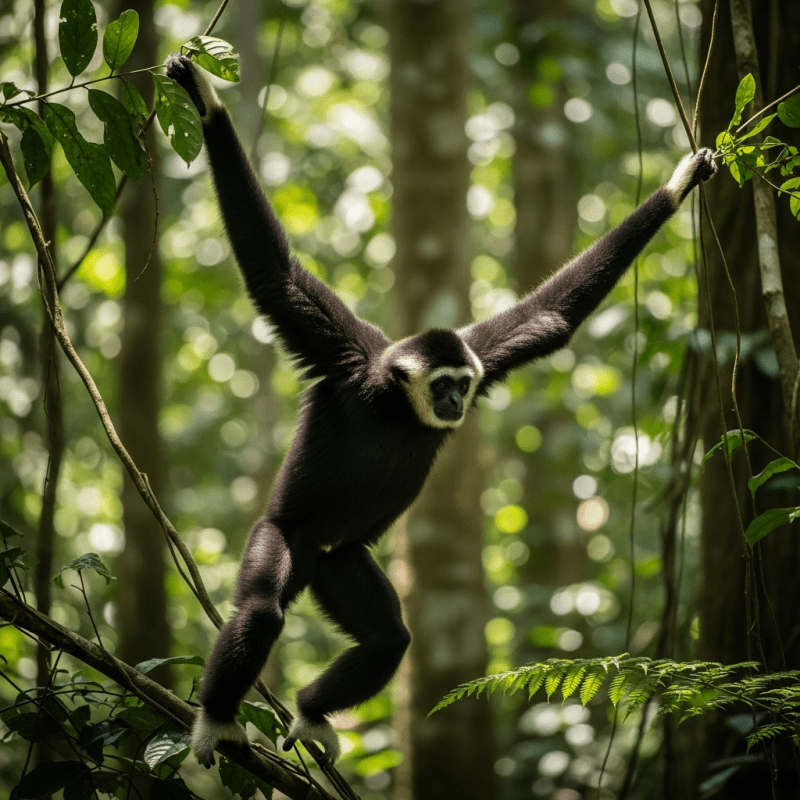
Soft cotton tee, unisex sizes
Buy ShirtWhile not widely featured in mainstream culture, the Southern white-cheeked gibbon holds significance in local folklore and conservation narratives. Its distinctive calls and striking appearance have inspired regional appreciation, though it remains less prominent than some great apes in art or mythology.
Native to the dense forest canopies of southern Vietnam and eastern Cambodia, the Southern white-cheeked gibbon thrives in tropical forest environments. Its arboreal habitat is crucial for feeding, breeding, and shelter, though ongoing deforestation threatens these vital ecosystems.



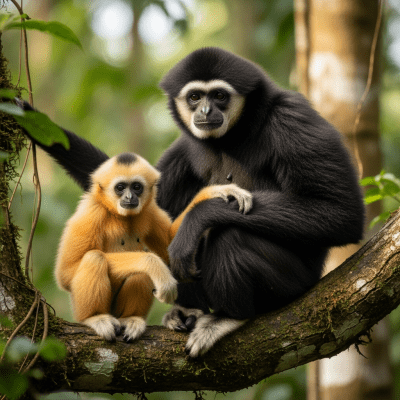
These gibbons form small, monogamous family groups typically consisting of a mated pair and their offspring. Their social bonds are reinforced through duetting vocalizations, which also serve to mark and defend their territorial boundaries within the forest.
The Southern white-cheeked gibbon is primarily frugivorous, feeding on a variety of ripe fruits found in the canopy. This diet is complemented by leaves, flowers, and occasional insects, allowing a balanced intake of nutrients essential for their active arboreal lifestyle.
Conservation Status: Endangered (IUCN). The Southern white-cheeked gibbon faces significant threats from habitat destruction due to logging and agricultural expansion, hunting for bushmeat, and illegal capture for the pet trade. Protection under CITES Appendix I prohibits international trade, yet enforcement challenges persist, making conservation efforts critical for its survival.
Within the genus Nomascus, this species exhibits no documented hybridization, though interbreeding is possible among related gibbons. Its evolutionary lineage is marked by pronounced sexual dichromatism and complex vocal behavior, traits that have evolved to support its arboreal and social lifestyle in Southeast Asian forests.