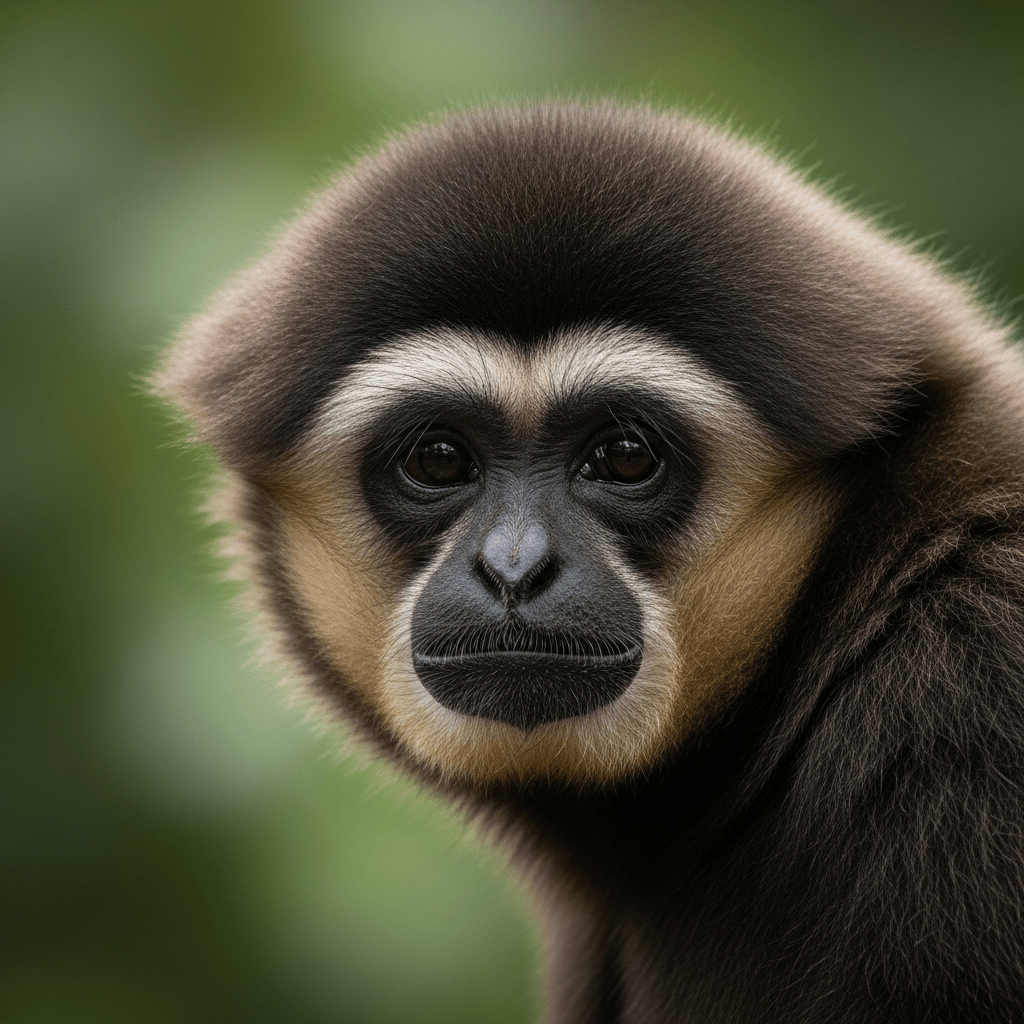
Pileated Gibbon
The pileated gibbon (Hylobates pileatus) is a lesser ape native to mainland Southeast Asia, known for its striking sexual dichromatism and melodious territorial songs.
The pileated gibbon (Hylobates pileatus) is a lesser ape native to mainland Southeast Asia, known for its striking sexual dichromatism and melodious territorial songs.
First described in 1861 by John Edward Gray from specimens collected in Thailand, the pileated gibbon has long been recognized as a distinct species within the gibbon family. Its evolutionary roots trace back within the genus Hylobates, closely related to species such as the lar and moloch gibbons.
The pileated gibbon belongs to the superfamily Hominoidea, family Hylobatidae, and genus Hylobates. As a lesser ape, it is part of a group characterized by smaller size and arboreal adaptations, distinct from the great apes of the Hominidae family.
Adult pileated gibbons exhibit marked sexual dichromatism: males are predominantly black with contrasting white hands, feet, and a white facial ring, while females display a pale gray to buff coat with a dark cap and chest patch. They measure between 44 and 64 centimeters in body length and weigh around 6 to 8 kilograms. Their slender bodies and long arms are perfectly adapted for agile brachiation through dense forest canopies.
Highly arboreal, pileated gibbons move primarily by brachiation, swinging hand-over-hand through trees with remarkable speed and grace. They live in territorial, typically monogamous pairs, using loud, melodious duets to defend their territory and strengthen pair bonds. Rarely descending to the ground, they rely on their vocalizations and agility to navigate and communicate within their forest homes.
Bring this kind into your world illustrated posters, mugs, and shirts.

Archival print, museum-grade paper
Buy Poster
Stoneware mug, dishwasher safe
Buy Mug
Soft cotton tee, unisex sizes
Buy ShirtWhile not widely prominent in global culture, the pileated gibbon holds local significance in Southeast Asian folklore and is occasionally featured in ecotourism activities. Illegal pet trade persists despite legal prohibitions, reflecting a complex relationship between local communities and this charismatic ape.
Pileated gibbons inhabit evergreen and semi-evergreen lowland and hill forests up to 1,200 meters elevation across mainland Southeast Asia, notably in Thailand, Cambodia, and Myanmar. Their preference for dense forest canopy makes them vulnerable to deforestation and fragmentation.


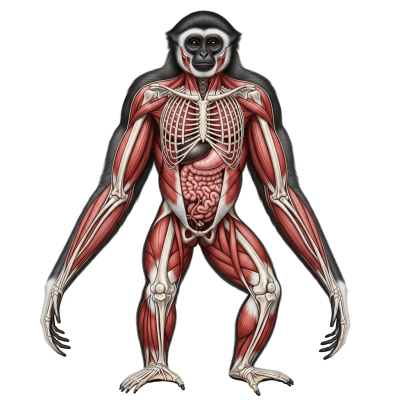



These gibbons typically form small, monogamous family groups consisting of a mated pair and their offspring. They maintain and defend territories through loud vocal duets, which also serve to reinforce pair bonds. Social interactions are centered around strong family units rather than large groups.
While specific dietary details are limited, pileated gibbons generally consume a frugivorous diet typical of gibbons, feeding on ripe fruits, leaves, flowers, and occasionally insects. Their feeding behavior supports seed dispersal critical to forest ecology.
Classified as Endangered, pileated gibbons face ongoing threats from habitat loss due to deforestation and fragmentation, as well as hunting pressures. Their sensitivity to habitat degradation limits their adaptability, making conservation efforts focused on habitat protection and anti-poaching enforcement vital. They are protected under CITES Appendix I, prohibiting commercial trade.
Genetically, the pileated gibbon is closely related to other Hylobates species such as the lar and moloch gibbons. No confirmed natural hybridization has been documented, though potential hybridization with sympatric species has been observed in captivity. Their evolutionary lineage reflects diversification within the lesser apes, distinguished by unique vocalizations and sexual dichromatism.