Origin Story

First described by Paul Matschie in 1903, the mountain gorilla inhabits isolated populations in the Virunga Volcanoes spanning Rwanda, Uganda, and the Democratic Republic of the Congo, as well as Uganda's Bwindi Impenetrable National Park. This subspecies evolved to thrive in cold, wet montane environments without any known artificial breeding or hybridization.

Classification

The mountain gorilla is one of two subspecies of Gorilla beringei, within the tribe Gorillini of the subfamily Homininae, family Hominidae, and superfamily Hominoidea. It shares its lineage with the eastern lowland gorilla (Gorilla beringei graueri), distinguishing itself by habitat and morphological traits.

Appearance or Form

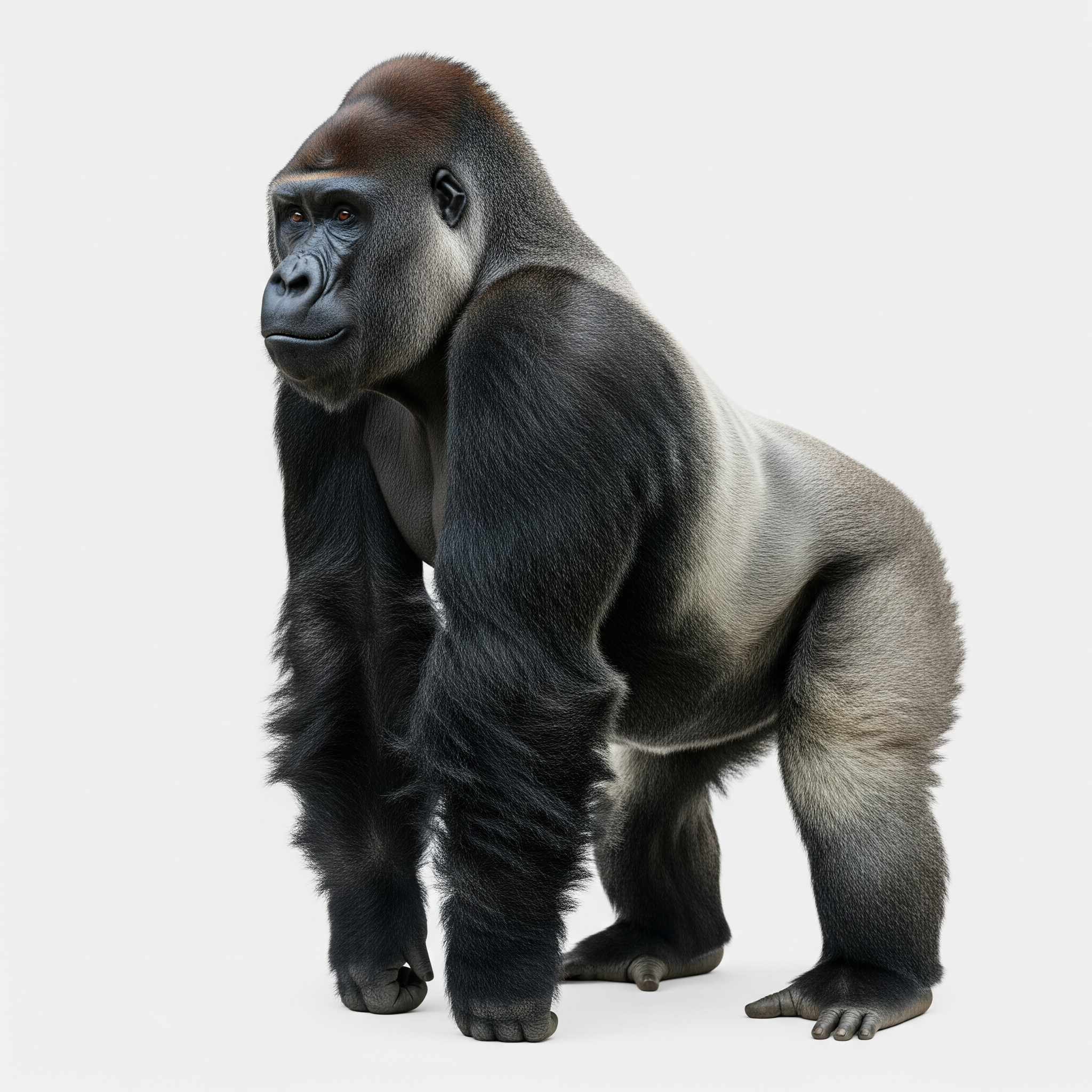
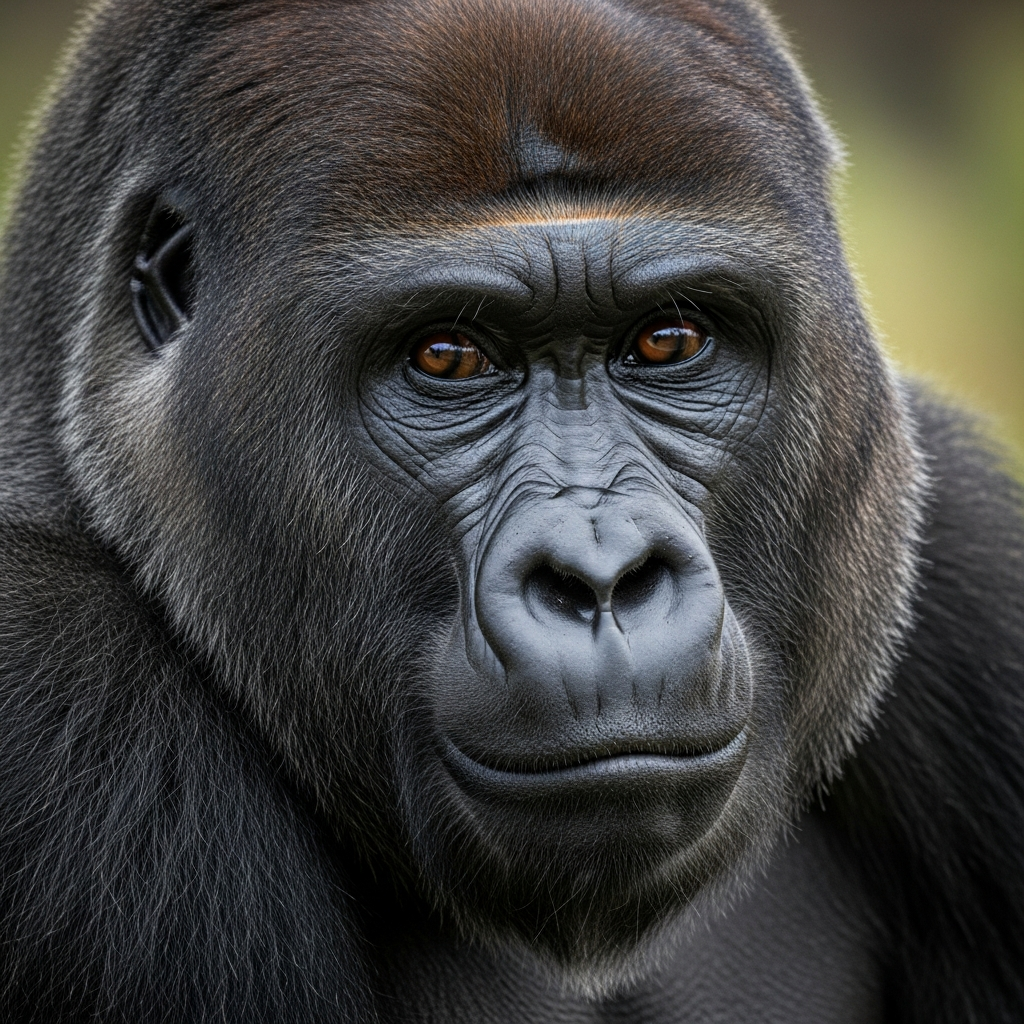
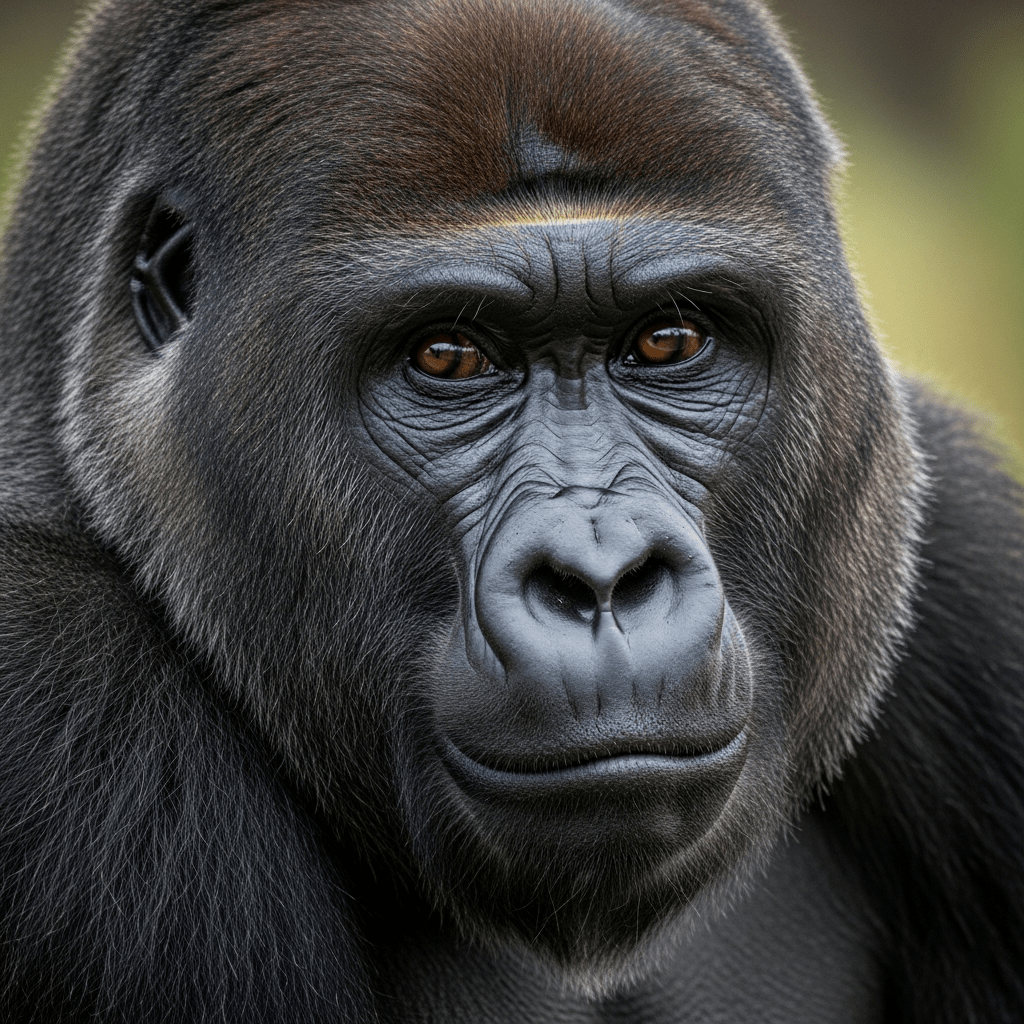
Mountain gorillas are the largest living primates, with adult males reaching up to 170 cm in height and weighing between 140 and 205 kg, while females are smaller, averaging 70 to 115 kg. They possess dense, long fur that insulates them against cold montane climates. Distinctive features include pronounced brow ridges, broad chests, muscular limbs, and thick fur that sets them apart from other gorilla subspecies.

Behavior or Usage

These gorillas are diurnal and terrestrial, building nests daily for rest. They live in cohesive troops led by a dominant silverback male, exhibiting complex social interactions. Their slow reproductive rate involves females giving birth every 4 to 6 years, with extended parental care. Mountain gorillas play a vital role in their ecosystem and are a focus of ecotourism, which supports conservation efforts while minimizing disturbance.

Merchandise & Prints

Bring this kind into your world � illustrated posters, mugs, and shirts.

Mountain Gorilla Mountain Gorilla Poster

Mountain Gorilla Poster

Archival print, museum-grade paper

Mountain Gorilla Mountain Gorilla Mug

Mountain Gorilla Mug

Stoneware mug, dishwasher safe

Mountain Gorilla Mountain Gorilla Shirt

Mountain Gorilla Shirt

Soft cotton tee, unisex sizes

Attributes & Insights

Taxon-Specific Insights

🌍Cultural Significance

Mountain gorillas hold a prominent place in regional culture and global conservation awareness. Known locally as "Ingagi" in Kinyarwanda and "Mbega" in Swahili, they inspire ecotourism that benefits local communities. Their image symbolizes wildlife preservation and has influenced art, documentaries, and international conservation campaigns, emphasizing the importance of protecting endangered species.

📌Notable Facts

  • Mountain gorillas are the largest living primates, with males weighing up to 205 kg.
  • They inhabit elevations between 1,500 and 4,000 meters in montane forests.
  • Despite their size, they have a gentle nature and complex social bonds.
  • All known individuals are wild-born; no captive populations exist.
  • They are highly susceptible to human respiratory diseases, making regulated tourism critical.

🌍Habitat And Distribution

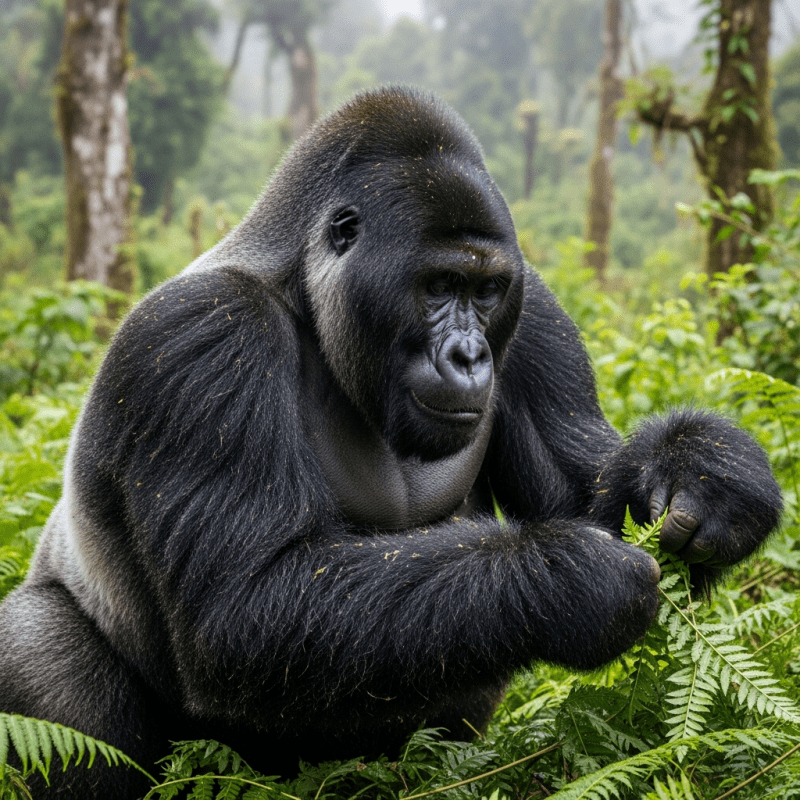
Mountain gorillas are restricted to high-altitude montane forests ranging from 1,500 to 4,000 meters in central Africa. Their populations are confined to the Virunga Volcanoes region, which spans Rwanda, Uganda, and the Democratic Republic of the Congo, and the Bwindi Impenetrable National Park in Uganda. These dense, moist forests provide the cool climate and vegetation essential for their survival.

Visual Variations

High quality studio photograph of a Mountain gorilla (subspecies)
Photograph of a Mountain gorilla (subspecies) (apes) in its natural habitat
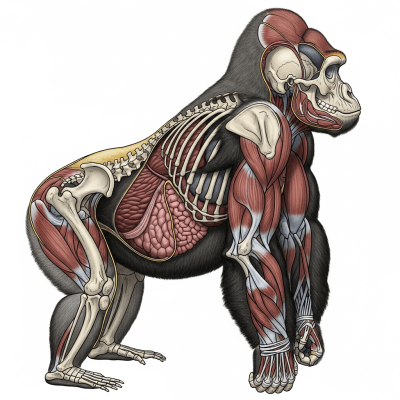
Detailed anatomical illustration of a Mountain gorilla (subspecies), part of the taxonomy apes
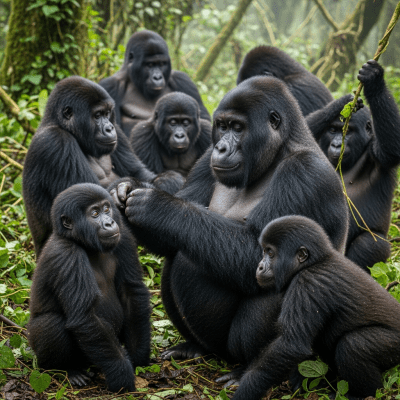
Image showing a group of Mountain gorilla (subspecies) (apes) engaging in typical social behavior
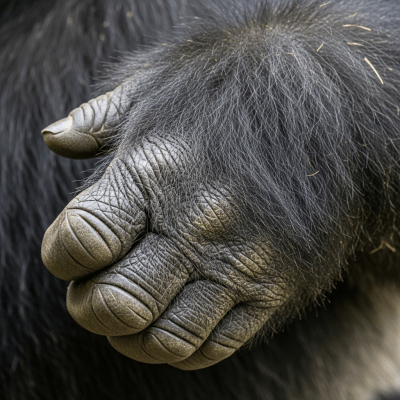
Close-up photograph of the hands or feet of a Mountain gorilla (subspecies), part of the taxonomy apes
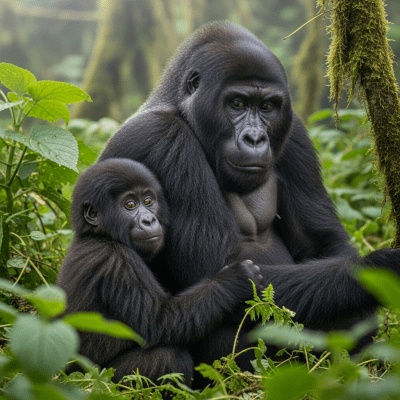
Photograph of a juvenile Mountain gorilla (subspecies) (apes) alongside an adult in their environment

Composition & Context

Taxon-Specific Insights

👥Social Structure

Mountain gorillas live in cohesive troops typically led by a dominant silverback male. These groups include multiple adult females, their offspring, and subordinate males. Social bonds are strong, with the silverback providing protection and leadership. Group sizes vary but generally maintain stable hierarchies and cooperative care of young, reflecting complex social dynamics.

🍃Diet And Feeding

The mountain gorilla's diet is primarily folivorous, consisting of leaves, shoots, stems, and bark, supplemented occasionally by fruit. Invertebrate consumption is rare. Their feeding habits reflect adaptation to the montane forest environment, where fibrous plant material forms the bulk of their nutrition.

⚠️Conservation And Threats

Classified as Critically Endangered, mountain gorillas face major threats from habitat destruction, poaching, and vulnerability to human respiratory diseases. Conservation efforts focus on habitat protection, anti-poaching patrols, and regulated ecotourism to minimize disease transmission. They are strictly protected under national laws and listed on CITES Appendix I, prohibiting hunting and trade.

🧬Genetics And Evolution

Mountain gorillas belong to the subspecies Gorilla beringei beringei, genetically distinct yet closely related to the eastern lowland gorilla. Genetic studies reveal differentiation between Virunga and Bwindi populations, although not formally recognized taxonomically. No artificial hybridization has been recorded, and they share the evolutionary lineage characteristic of great apes within the Hominidae family.

Faq

Q: Where do mountain gorillas live?
They inhabit high-altitude montane forests in the Virunga Massif and Bwindi Impenetrable Forest across Rwanda, Uganda, and the Democratic Republic of the Congo.

Q: Why are mountain gorillas endangered?
They face threats from habitat loss, poaching, disease transmission from humans, and illegal trade, despite strong conservation efforts.

Q: Can mountain gorillas be kept in captivity?
No known captive populations exist; all individuals are wild-born and managed in situ for conservation.