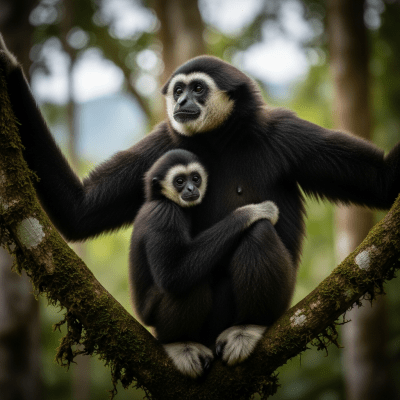
Origin Story

First described by Carl Linnaeus in 1771, the Lar gibbon originates from the tropical forests of Southeast Asia. Its precise type locality remains debated, but it is firmly rooted in the rich biodiversity of this region, where it has evolved as a key arboreal primate over millennia.

Classification

The Lar gibbon belongs to the superfamily Hominoidea, within the family Hylobatidae, commonly called the lesser apes. It is classified in the genus Hylobates, closely related to other gibbon species such as H. agilis and H. pileatus. This taxonomic placement reflects its evolutionary lineage supported by both mitochondrial and nuclear DNA studies.

Appearance or Form

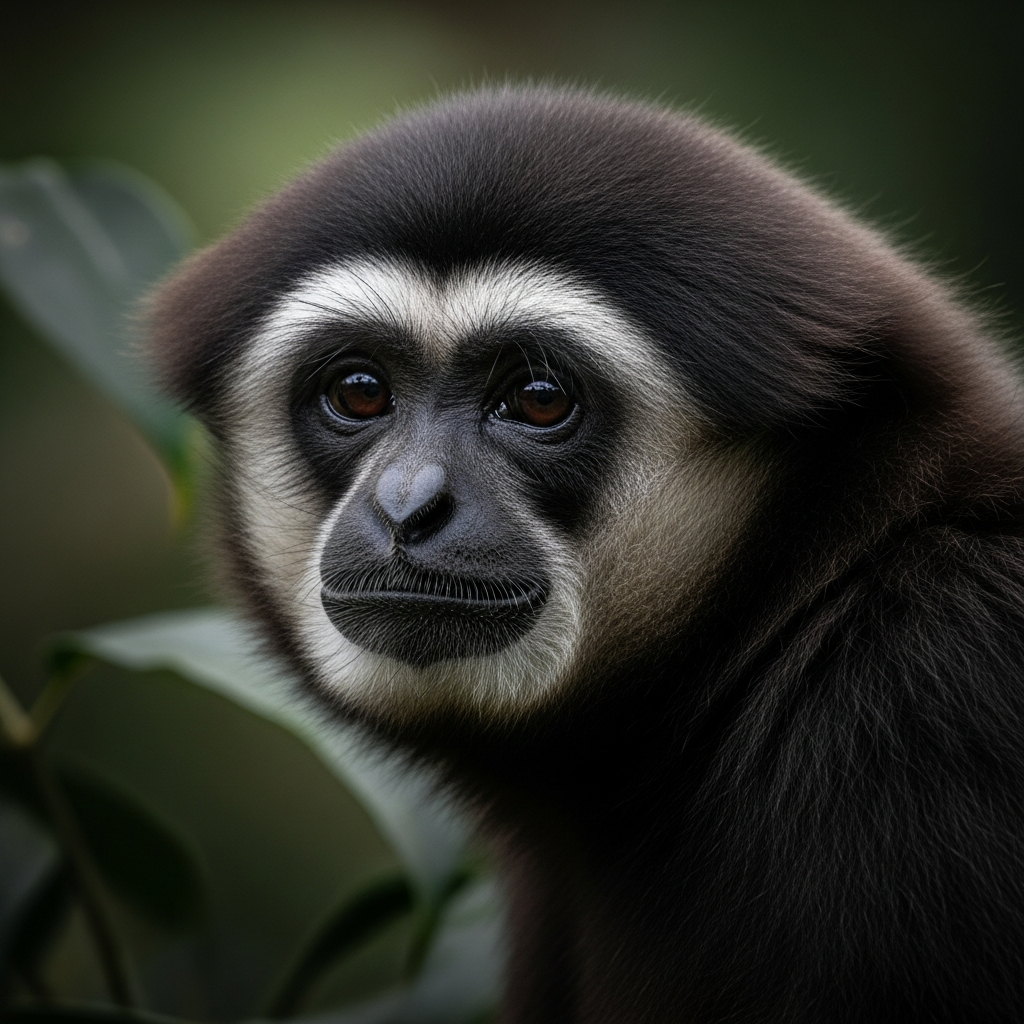
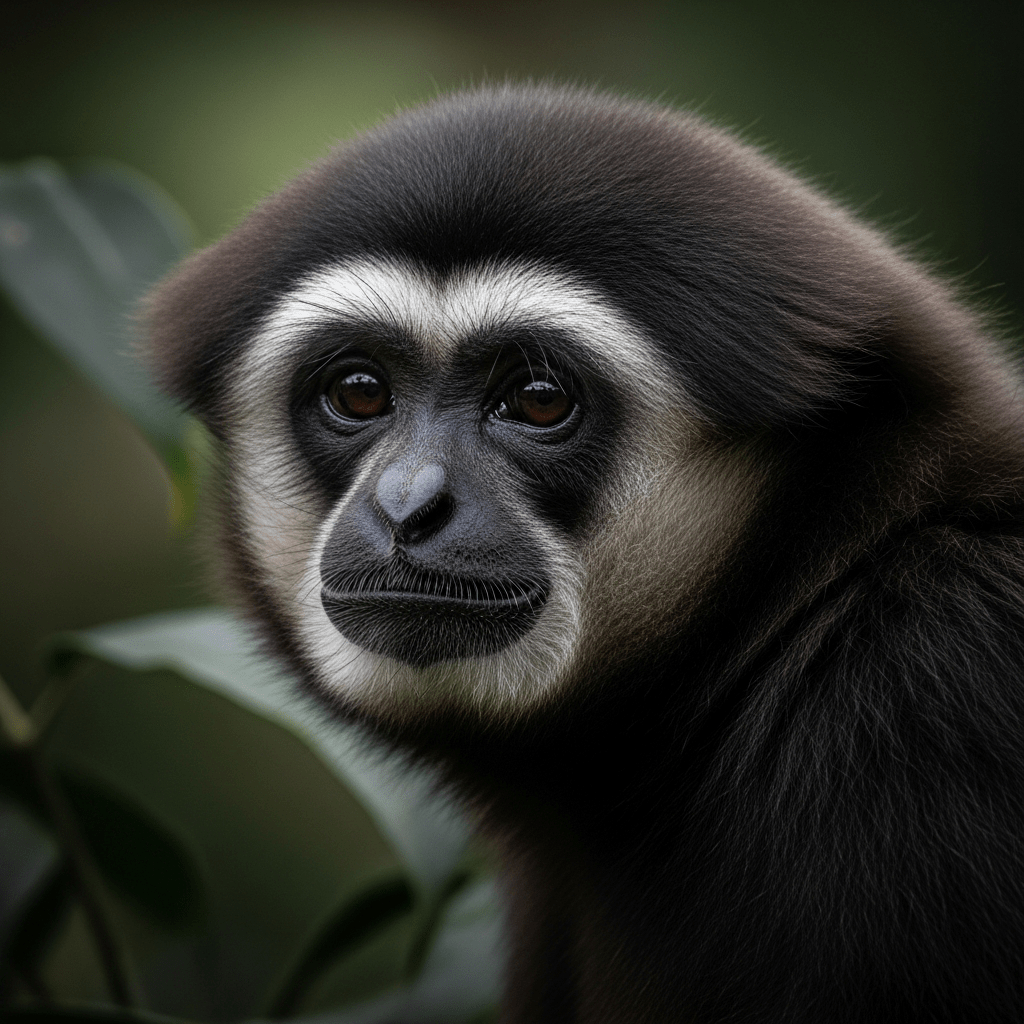
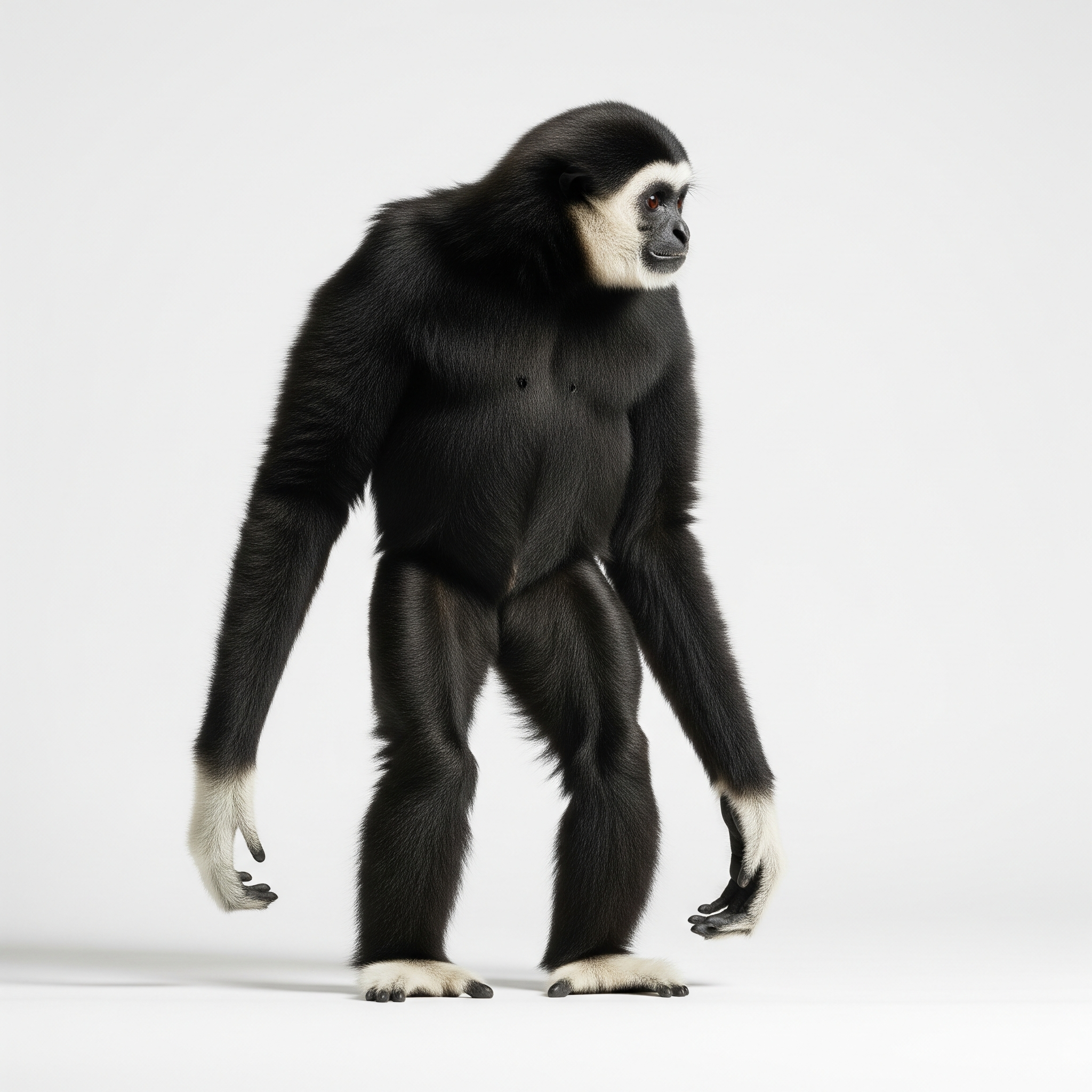
Adult Lar gibbons measure between 45 and 64 centimeters in body length and weigh from 4.0 to 7.5 kilograms, with minimal sexual dimorphism. Their fur coloration varies widely, typically ranging from black and brown to buff tones, but they consistently feature striking white hands, feet, and a distinctive white ring around the face. Their long arms and short legs are perfectly adapted for brachiation, allowing swift and graceful movement through the forest canopy. Their dental formula is 2.1.2.3/2.1.2.3, with robust canines, and they are renowned for their loud, complex vocalizations often performed in duets.
Behavior or Usage

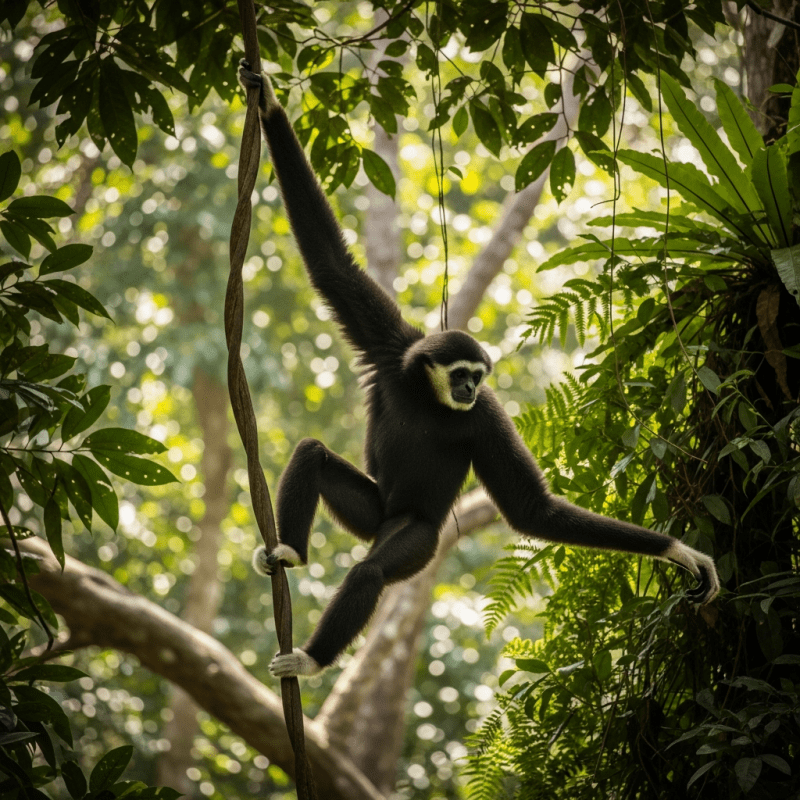
Lar gibbons are highly arboreal and exhibit exceptional brachiation skills, swinging hand-over-hand through the treetops with agility and speed. They live in monogamous pairs, using loud, coordinated calls to defend territories and maintain pair bonds. These vocal duets are a hallmark of their social behavior and communication. While they do not have direct utility to humans in terms of domestication or agriculture, they play an essential ecological role by dispersing seeds and maintaining forest health.

Merchandise & Prints

Bring this kind into your world � illustrated posters, mugs, and shirts.

Lar Gibbon Lar Gibbon Poster

Lar Gibbon Poster

Archival print, museum-grade paper

Lar Gibbon Lar Gibbon Mug

Lar Gibbon Mug

Stoneware mug, dishwasher safe

Lar Gibbon Lar Gibbon Shirt

Lar Gibbon Shirt

Soft cotton tee, unisex sizes

Attributes & Insights

Taxon-Specific Insights

🌍Cultural Significance

In Southeast Asia, the Lar gibbon holds cultural importance as a symbol of the tropical forest and biodiversity. It features prominently in local folklore and traditions across Thailand, Malaysia, and Indonesia. Beyond cultural narratives, it serves as an emblematic species in regional conservation efforts and ecotourism, drawing wildlife enthusiasts eager to witness its acrobatic displays and hear its distinctive calls.

📌Notable Facts

  • Lar gibbons form lifelong monogamous pairs, a rarity among primates.
  • They are among the most agile brachiators, capable of swinging at speeds up to 55 kilometers per hour.
  • Their loud duets can be heard over long distances, serving both territorial and social bonding functions.
  • Despite being lesser apes, they share many complex social behaviors with great apes.
  • They are highly sensitive to habitat fragmentation, making forest conservation critical for their survival.

🌍Habitat And Distribution

Native to the dense tropical and subtropical forests of Southeast Asia, the Lar gibbon occupies the forest canopies of countries such as Thailand, Malaysia, Myanmar, Laos, southern China, Sumatra, and the Malay Peninsula. They rely on continuous forest cover for brachiation and foraging, making them vulnerable to habitat fragmentation and deforestation.

Visual Variations

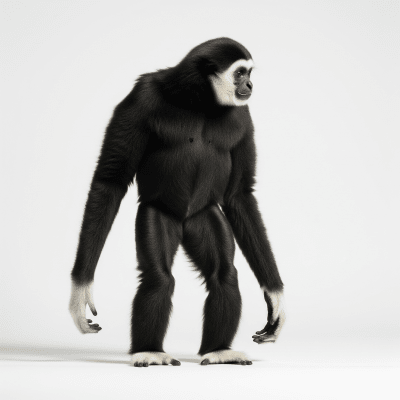
High quality studio photograph of a Lar gibbon
Photograph of a Lar gibbon (apes) in its natural habitat
Detailed anatomical illustration of a Lar gibbon, part of the taxonomy apes
Image showing a group of Lar gibbon (apes) engaging in typical social behavior
Close-up photograph of the hands or feet of a Lar gibbon, part of the taxonomy apes
Photograph of a juvenile Lar gibbon (apes) alongside an adult in their environment

Composition & Context

Taxon-Specific Insights

👥Social Structure

Lar gibbons typically live in small, stable family groups consisting of a monogamous adult pair and their offspring. These pairs maintain and defend exclusive territories through vocal duets and physical displays. Social bonds are strong, with both parents involved in offspring care, reflecting a cooperative and cohesive social system.

🍃Diet And Feeding

Primarily frugivorous, Lar gibbons feed on a variety of ripe fruits found in the forest canopy. Their diet is supplemented by leaves, flowers, and occasional insects, providing a balanced intake of nutrients. Their feeding behavior supports seed dispersal, contributing to forest regeneration.

⚠️Conservation And Threats

Classified as Endangered, Lar gibbons face significant threats from habitat fragmentation, illegal hunting, and poaching for the illegal pet trade. Despite legal protections under CITES Appendix I, enforcement challenges persist. Conservation efforts focus on habitat preservation, anti-poaching measures, and raising public awareness to curb illegal trade and promote sustainable coexistence.

🧬Genetics And Evolution

The Lar gibbon belongs to the genus Hylobates, sharing close evolutionary ties with species such as H. agilis and H. pileatus. Genetic studies using mitochondrial and nuclear DNA have clarified these relationships, underscoring the species’ place within the lesser apes. Their diploid chromosome number and genetic diversity reflect adaptations to their arboreal lifestyle, though hybridization events are rare and not well documented.

Faq

Q: Where do Lar gibbons live?
The Lar gibbon inhabits tropical and subtropical forest canopies across Southeast Asia, including Thailand, Malaysia, Myanmar, Laos, southern China, Sumatra, and the Malay Peninsula.

Q: What do Lar gibbons eat?
They primarily consume fruits, supplemented by leaves, flowers, and insects.

Q: Are Lar gibbons endangered?
Yes, they are classified as Endangered due to habitat loss and hunting pressures.