Origin Story

Formally described by Groves in 1967 from northeastern Myanmar, the Eastern hoolock gibbon was once considered a subspecies of Hoolock hoolock but is now widely accepted as a distinct species. It belongs to the genus Hoolock, which diverged from other gibbon genera within the family Hylobatidae, marking its unique evolutionary lineage in the lesser apes.

Classification

The Eastern hoolock gibbon is classified within the superfamily Hominoidea, family Hylobatidae, and genus Hoolock. As a lesser ape, it shares the family with other gibbons but is distinguished from great apes by its smaller size and arboreal lifestyle. Its species status is supported by multiple taxonomic authorities including the IUCN and Mammal Species of the World.

Appearance or Form

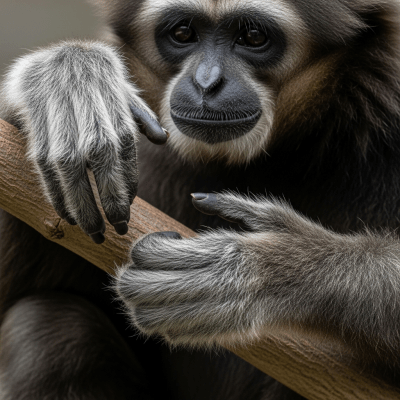
This species exhibits pronounced sexual dimorphism: adult males have black fur accented by distinctive white brows, while females display lighter buff or grayish pelage with a dark facial mask. Adults typically measure 45 to 65 centimeters in body length and weigh between 6 and 9 kilograms. Adapted for life in the trees, their long arms and agile bodies enable skilled brachiation through forest canopies.

Behavior or Usage

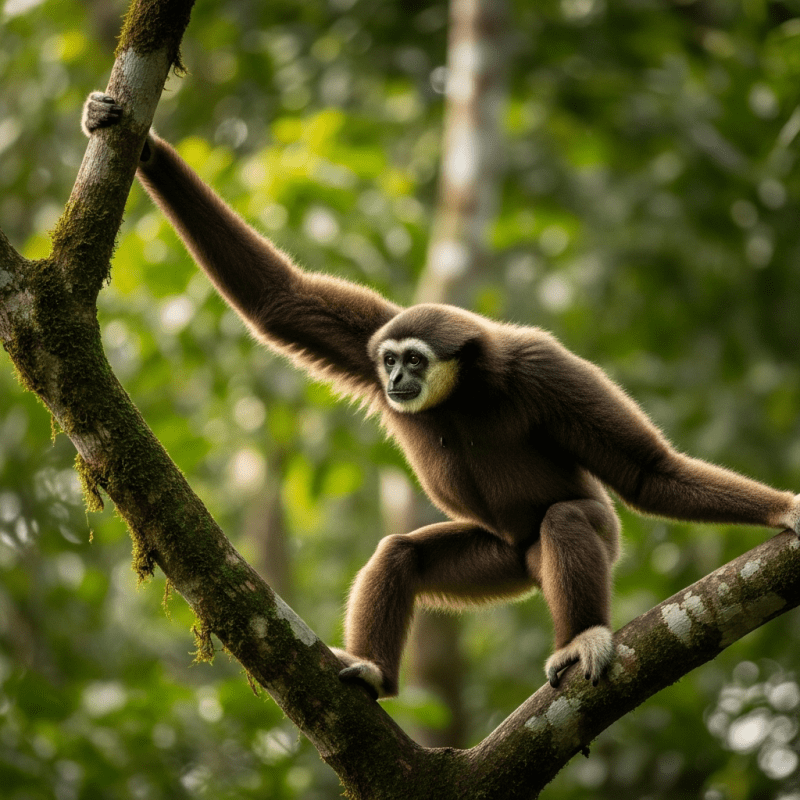
The Eastern hoolock gibbon is diurnal and arboreal, moving gracefully through the forest canopy by brachiation. It lives in small family groups, usually monogamous pairs with their offspring. Their complex, species-specific vocalizations serve important roles in territory defense and mate attraction, reflecting sophisticated social communication.

Merchandise & Prints

Bring this kind into your world � illustrated posters, mugs, and shirts.

Eastern Hoolock Gibbon Eastern Hoolock Gibbon Poster

Eastern Hoolock Gibbon Poster

Archival print, museum-grade paper

Eastern Hoolock Gibbon Eastern Hoolock Gibbon Mug

Eastern Hoolock Gibbon Mug

Stoneware mug, dishwasher safe

Eastern Hoolock Gibbon Eastern Hoolock Gibbon Shirt

Eastern Hoolock Gibbon Shirt

Soft cotton tee, unisex sizes

Attributes & Insights

Taxon-Specific Insights

🌍Cultural Significance

In local communities across its range, the Eastern hoolock gibbon holds cultural importance, often featuring in folklore and regarded as a symbol of forest health. While not widely prominent in modern media, its presence underscores the rich biodiversity valued by indigenous peoples and conservationists alike.

📌Notable Facts

  • The species was only recognized as distinct from the Western hoolock gibbon in the late 20th century.
  • It exhibits striking sexual dimorphism, unusual among many primates.
  • Its vocalizations are unique and complex, aiding in territorial and reproductive behaviors.
  • Lives at elevations ranging from 200 to 2,500 meters in diverse forest types.
  • Protected under CITES Appendix I, prohibiting international trade.

🌍Habitat And Distribution

Native to subtropical and tropical broadleaf forests, the Eastern hoolock gibbon occupies elevations from 200 to 2,500 meters. Its range spans northeastern India, Myanmar, and southwestern China, where it depends on intact forest canopies for movement and survival.

Visual Variations

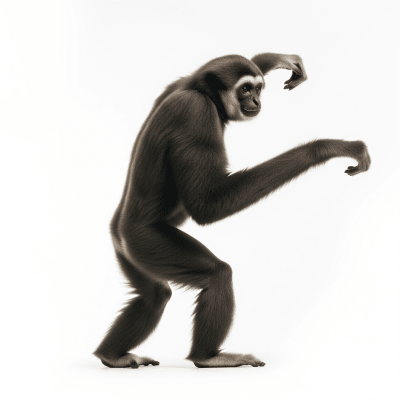
High quality studio photograph of a Eastern hoolock gibbon
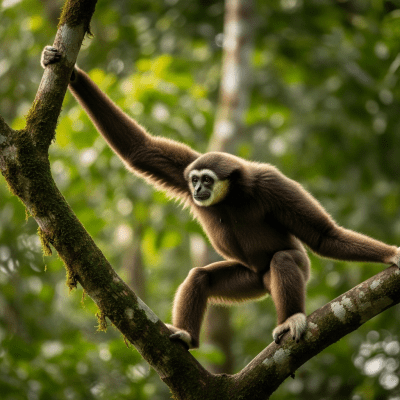
Photograph of a Eastern hoolock gibbon (apes) in its natural habitat
Detailed anatomical illustration of a Eastern hoolock gibbon, part of the taxonomy apes
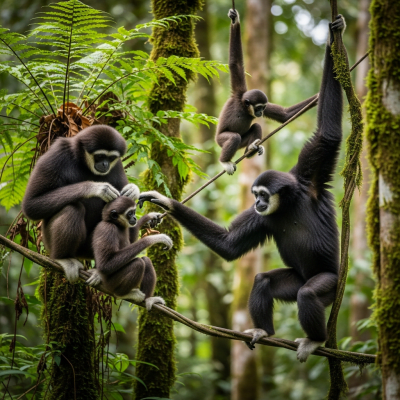
Image showing a group of Eastern hoolock gibbon (apes) engaging in typical social behavior
Close-up photograph of the hands or feet of a Eastern hoolock gibbon, part of the taxonomy apes
Photograph of a juvenile Eastern hoolock gibbon (apes) alongside an adult in their environment

Composition & Context

Taxon-Specific Insights

👥Social Structure

Typically, Eastern hoolock gibbons live in small family groups composed of monogamous pairs and their offspring. Their social interactions are reinforced by complex vocalizations used for territory defense and mate attraction, highlighting a close-knit and communicative social system.

🍃Diet And Feeding

While specific dietary details are limited, like other gibbons, the Eastern hoolock gibbon is primarily frugivorous, feeding on a variety of fruits supplemented by leaves, flowers, and occasionally insects. Its arboreal lifestyle facilitates access to diverse food sources within the forest canopy.

⚠️Conservation And Threats

Classified as Endangered, the Eastern hoolock gibbon faces significant threats from habitat loss and fragmentation due to logging, agriculture, and infrastructure development. Although protected under national laws and listed on CITES Appendix I, occasional poaching for bushmeat and traditional medicine persists, further endangering populations.

🧬Genetics And Evolution

Genetically, the Eastern hoolock gibbon is part of the genus Hoolock, which diverged from other gibbon genera such as Hylobates, Nomascus, and Symphalangus. No hybridization events with other gibbons have been documented, though species delimitation within Hoolock leuconedys remains an active area of research.

Faq

Q: Where is the Eastern hoolock gibbon found?
The species inhabits subtropical and tropical broadleaf forests in northeastern India, Myanmar, and southwestern China.

Q: What distinguishes males from females?
Males have black fur with white brows, while females have lighter buff or grayish fur with a dark facial mask.

Q: Is the Eastern hoolock gibbon endangered?
Yes, it is classified as Endangered due to habitat loss and fragmentation.