Origin Story

Described scientifically by Matschie in 1903, the eastern gorilla originated in the forests of east-central Africa. Its evolutionary lineage diverged from its western counterpart, adapting over time to the varied elevations and climates of the region, from dense lowland jungles to cool montane forests.

Classification

The eastern gorilla belongs to the superfamily Hominoidea, family Hominidae, and tribe Gorillini. It is one of two recognized gorilla species within the genus Gorilla, distinguished by two subspecies: the mountain gorilla (Gorilla beringei beringei) and the eastern lowland or Grauer’s gorilla (Gorilla beringei graueri).

Appearance or Form

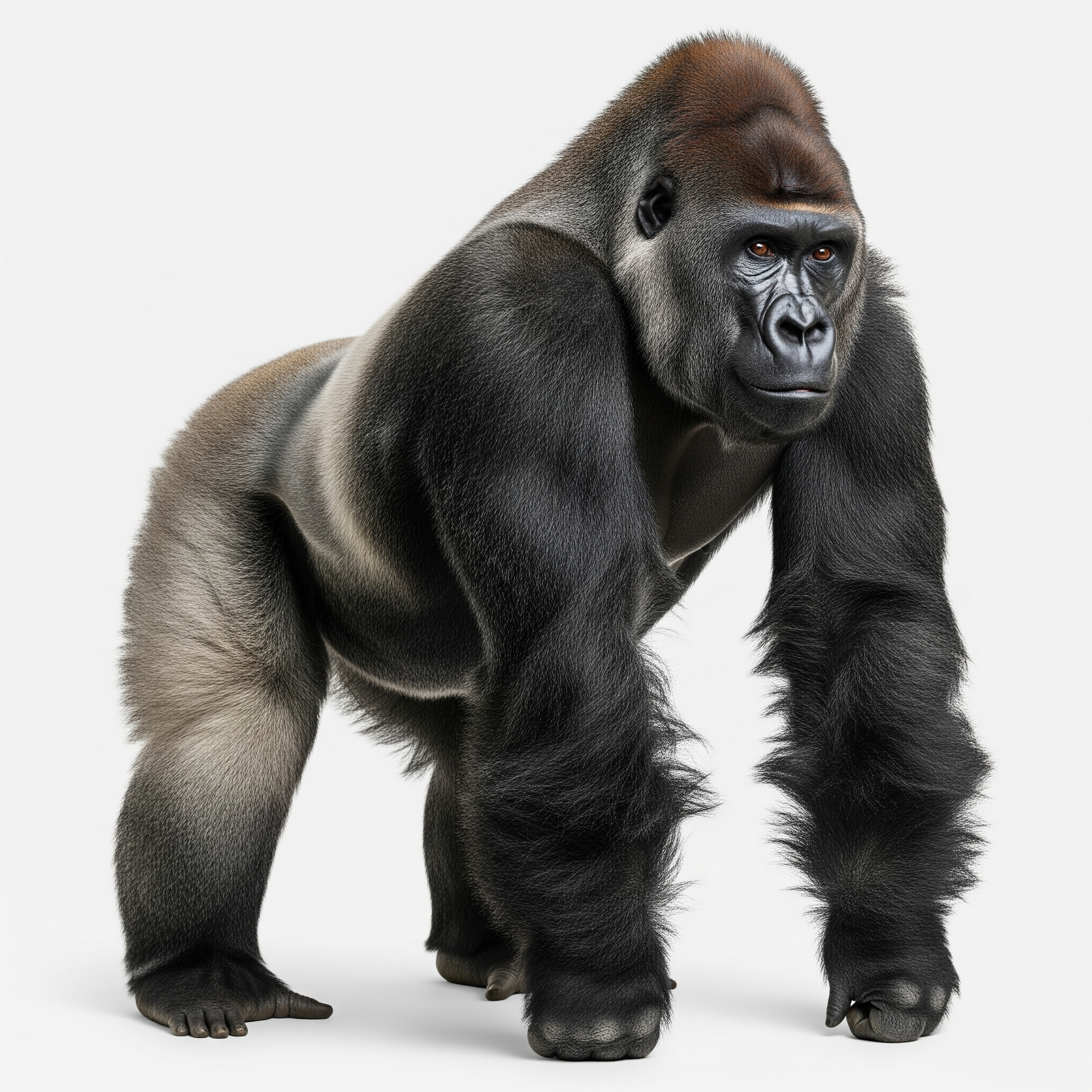
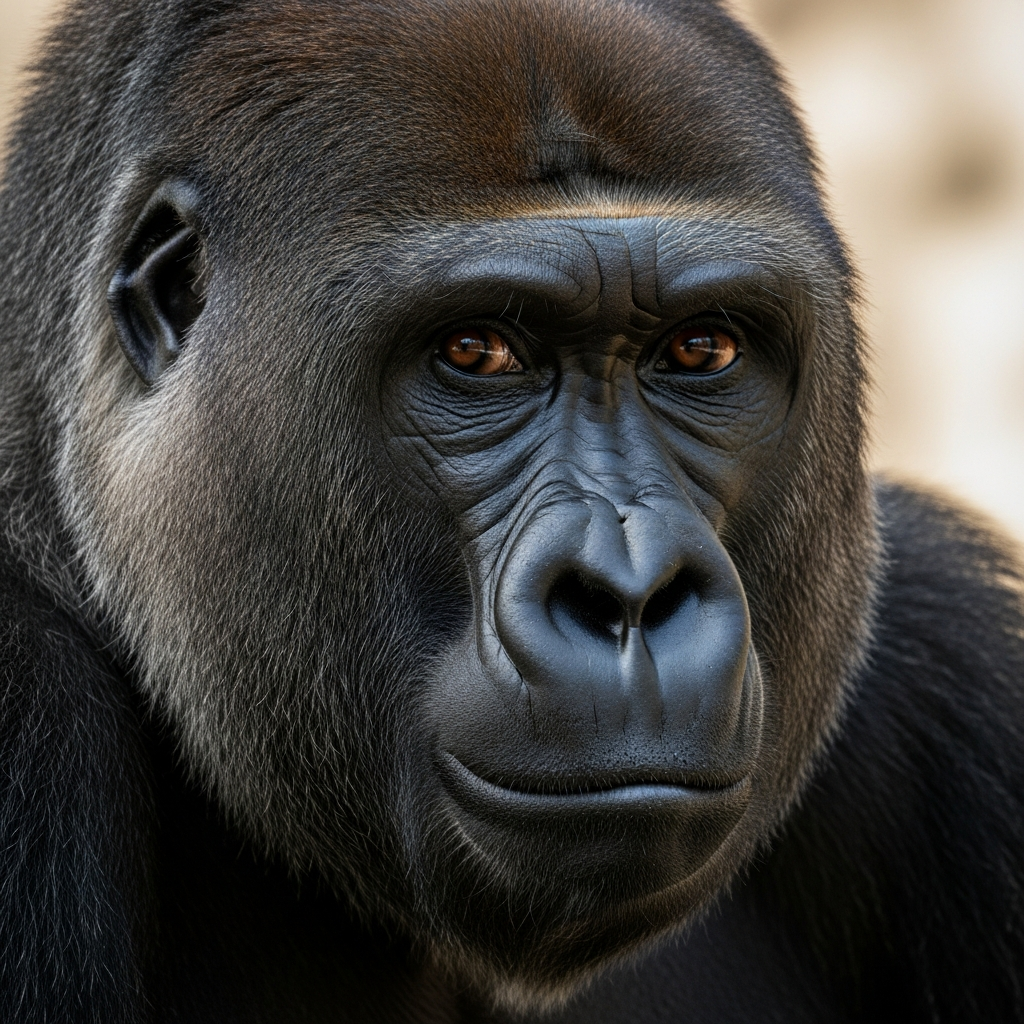
Eastern gorillas are the largest of all apes, with adult males standing up to 170 cm tall when upright and weighing as much as 195 kg. They have a robust build, broad chest, long arms, and a pronounced sagittal crest in males. Their dense fur varies by subspecies: mountain gorillas possess longer, thicker hair suited to cold montane climates, while Grauer’s gorillas have shorter, sparser coats adapted to warmer lowland forests. Their skin is black, and like all apes, they lack tails.

Behavior or Usage

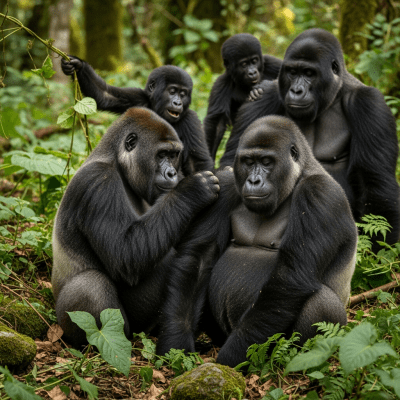
Eastern gorillas live in tightly knit social groups led by a dominant silverback male, which protects and guides multiple females and their offspring. Their behavior is largely herbivorous, feeding on leaves, stems, shoots, fruit, and bark, with occasional invertebrate consumption. Mountain gorillas tend to eat more foliage, while Grauer’s gorillas incorporate more fruit when available. These apes exhibit slow developmental rates, with extended parental care and strong social bonds within their groups.

Merchandise & Prints

Bring this kind into your world � illustrated posters, mugs, and shirts.

Eastern Gorilla Eastern Gorilla Poster

Eastern Gorilla Poster

Archival print, museum-grade paper

Eastern Gorilla Eastern Gorilla Mug

Eastern Gorilla Mug

Stoneware mug, dishwasher safe

Eastern Gorilla Eastern Gorilla Shirt

Eastern Gorilla Shirt

Soft cotton tee, unisex sizes

Attributes & Insights

Taxon-Specific Insights

🌍Cultural Significance

Eastern gorillas hold significant cultural value in their native regions, featuring in local names such as "Mbongo" in the Democratic Republic of the Congo and "Inshuti" in Rwanda. Ecotourism focused on mountain gorilla trekking has become an important economic and conservation tool in Rwanda, Uganda, and the DRC, fostering global awareness and protection efforts. While not commonly depicted in widespread art or myth outside their range, these gorillas symbolize wilderness preservation and the fragility of Africa’s great apes.

📌Notable Facts

  • Eastern gorillas are the largest living primates, with males reaching nearly 200 kg.
  • They include two subspecies adapted to distinct habitats: mountain gorillas in high-altitude forests and Grauer’s gorillas in lowland and montane regions.
  • The mountain gorilla population has seen a slight increase due to intensive conservation efforts, while Grauer’s gorillas continue to decline sharply.
  • They have a slow reproductive rate, with females giving birth roughly every four years after a gestation of about 8.5 months.
  • Eastern gorillas are susceptible to diseases such as Ebola and respiratory infections, which pose serious threats to their survival.

🌍Habitat And Distribution

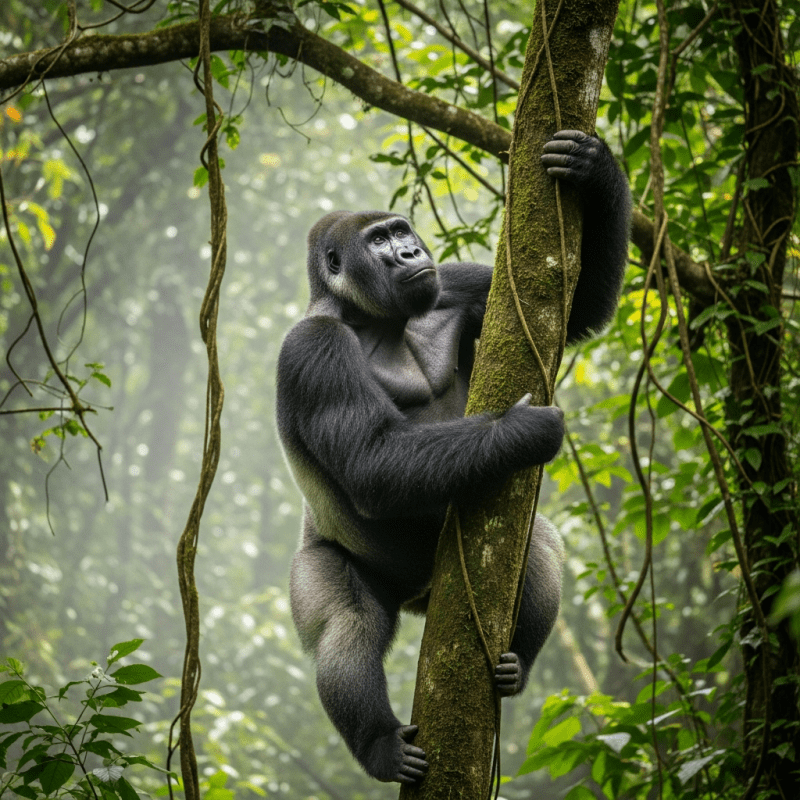
Eastern gorillas are native to the montane and lowland forests of east-central Africa. Mountain gorillas inhabit montane and subalpine forests at elevations between 2,200 and 4,300 meters, primarily within the Virunga Massif spanning Rwanda, Uganda, and the Democratic Republic of the Congo, as well as the Bwindi Impenetrable Forest in Uganda. Grauer’s gorillas occupy lowland and montane forests at 600 to 2,900 meters elevation, restricted to eastern DRC. Their ranges are fragmented due to human activity and regional instability.

Visual Variations

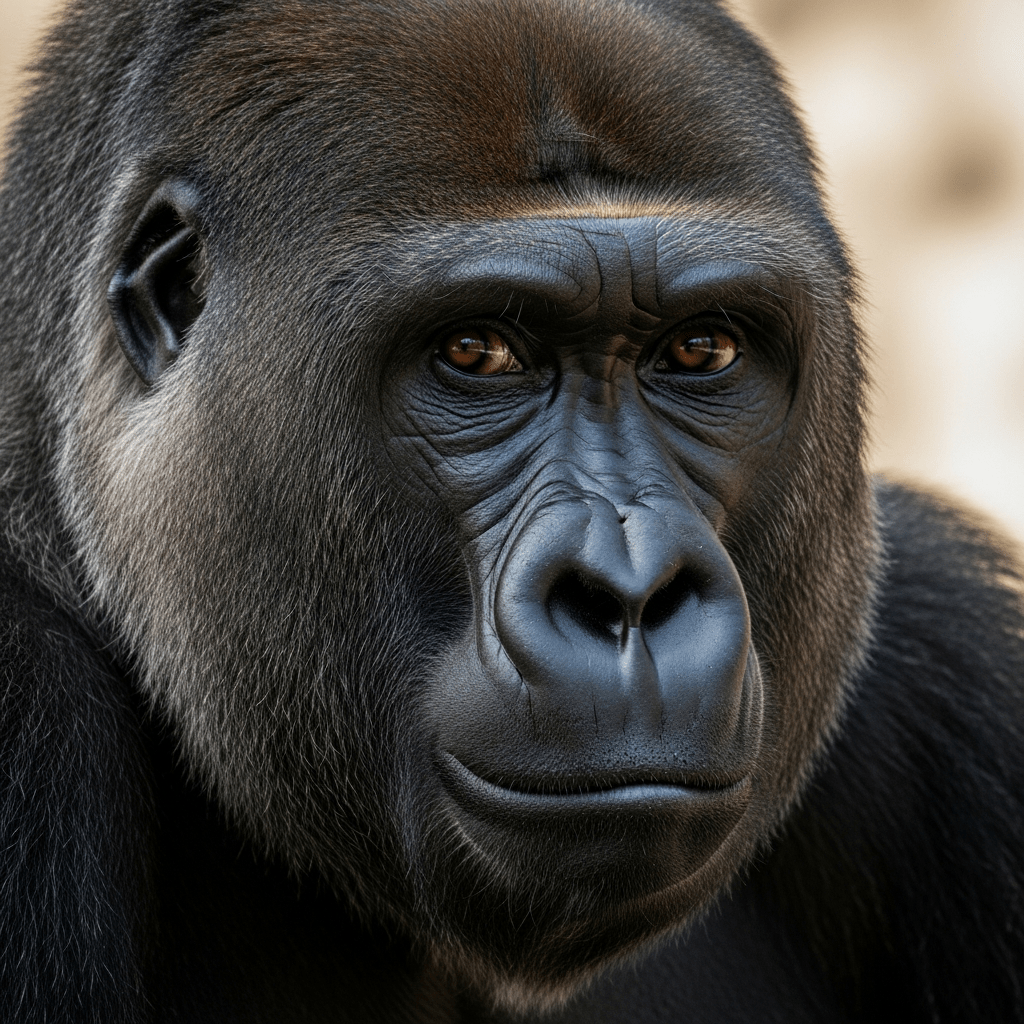
High quality studio photograph of a Eastern gorilla
Photograph of a Eastern gorilla (apes) in its natural habitat
Detailed anatomical illustration of a Eastern gorilla, part of the taxonomy apes
Image showing a group of Eastern gorilla (apes) engaging in typical social behavior
Close-up photograph of the hands or feet of a Eastern gorilla, part of the taxonomy apes
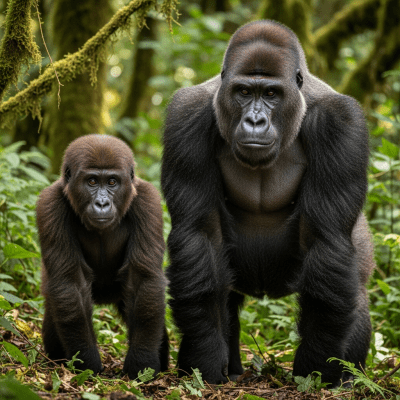
Photograph of a juvenile Eastern gorilla (apes) alongside an adult in their environment

Composition & Context

Taxon-Specific Insights

👥Social Structure

Eastern gorillas live in cohesive social groups typically led by a dominant silverback male who maintains order and protects the group. These groups include multiple adult females and their offspring, with sizes ranging from as few as two to as many as forty individuals, larger groups being more common among mountain gorillas. Social bonds are strong, with cooperative care of young and complex interactions within the group.

🍃Diet And Feeding

Primarily herbivorous, eastern gorillas feed on a variety of plant materials including leaves, stems, shoots, fruit, and bark. Mountain gorillas consume more foliage, which suits their cooler, high-altitude habitats, while Grauer’s gorillas incorporate more fruit when it is seasonally available. Occasionally, they supplement their diet with invertebrates. Their feeding behavior reflects adaptation to their specific forest environments.

⚠️Conservation And Threats

Classified as Critically Endangered, eastern gorillas face severe threats from habitat destruction caused by agriculture, mining, and logging, as well as poaching and civil unrest. Disease outbreaks, particularly Ebola and respiratory infections, have further imperiled populations. Although mountain gorilla numbers have slightly increased due to focused conservation efforts, Grauer’s gorillas have experienced over a 60% decline since 1994. Legal protections under CITES Appendix I and strict anti-poaching measures are in place, but ongoing conflict and habitat fragmentation continue to challenge their survival.

🧬Genetics And Evolution

Eastern gorillas possess a diploid chromosome number of 48 and have been the subject of extensive genomic sequencing, which confirms their close but distinct evolutionary relationship to western gorillas. Genetic studies support the clear separation of the two subspecies and show no evidence of natural hybridization with western gorillas. Their evolutionary adaptations reflect specialization to diverse African forest habitats, contributing to their morphological and behavioral distinctions.

Faq

Q: Where do eastern gorillas live?
The eastern gorilla inhabits montane and lowland forests in east-central Africa, primarily in the Virunga Massif, Bwindi Impenetrable Forest, and eastern Democratic Republic of the Congo.

Q: Are eastern gorillas endangered?
Yes, they are classified as Critically Endangered due to habitat loss, poaching, disease, and human conflict.

Q: What is the difference between mountain and Grauer’s gorillas?
Mountain gorillas live at higher elevations with denser fur, while Grauer’s gorillas occupy lower elevations with shorter hair and tend to eat more fruit.