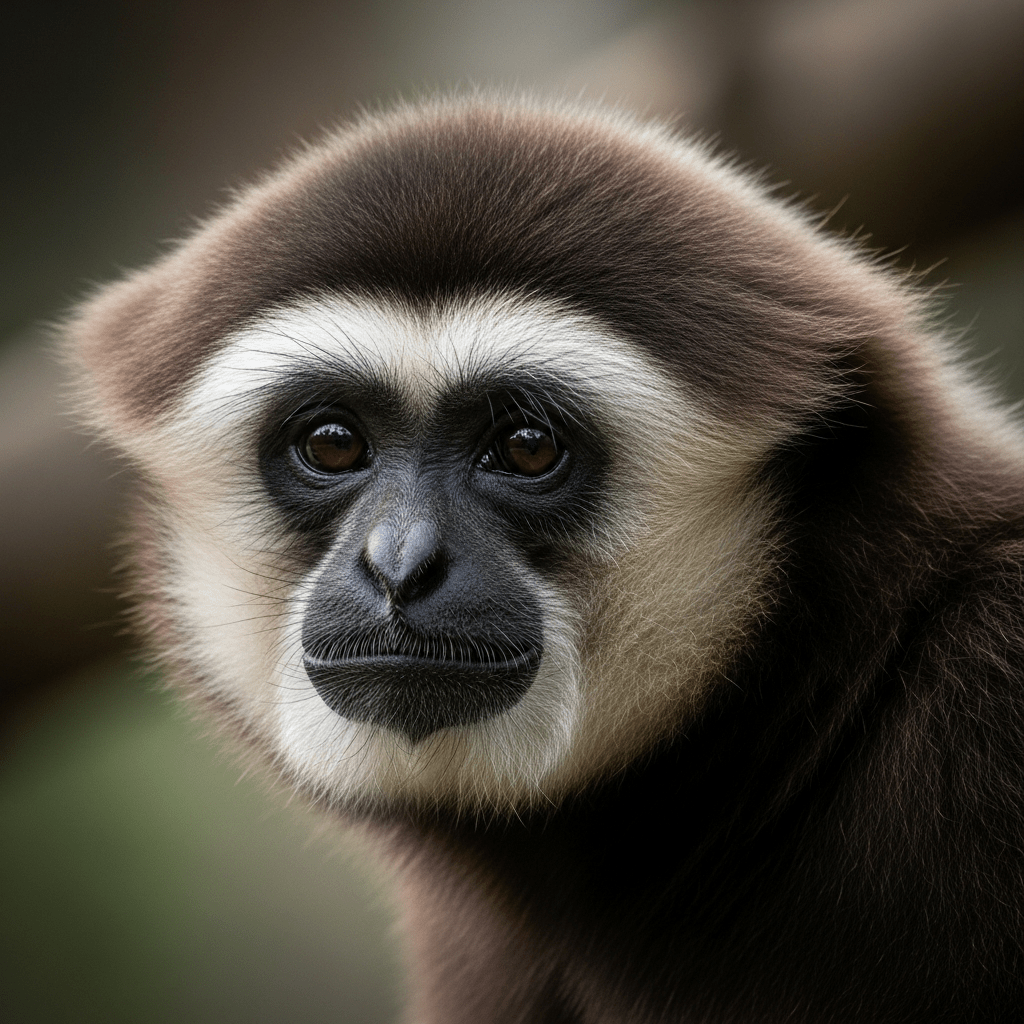
Bornean White-Bearded Gibbon
The Bornean white-bearded gibbon (Hylobates albibarbis) is a lesser ape native to southern Borneo, recognized for its striking white facial beard and remarkable agility in the forest canopy.
The Bornean white-bearded gibbon (Hylobates albibarbis) is a lesser ape native to southern Borneo, recognized for its striking white facial beard and remarkable agility in the forest canopy.
Described by Marcus Ward Lyon Jr. in 1911, the Bornean white-bearded gibbon was first identified from specimens in southern Borneo. Its distinctiveness emerged through ongoing research, distinguishing it from closely related gibbons in the region.
This species belongs to the superfamily Hominoidea and family Hylobatidae, within the genus Hylobates. It is closely related to Hylobates muelleri and Hylobates agilis, though modern phylogenetic studies support its status as a distinct species rather than a subspecies.
Medium-sized and agile, the Bornean white-bearded gibbon measures 44 to 63 centimeters in body length and weighs between 6 and 7 kilograms. Its fur is predominantly dark brown to black, accentuated by a prominent white beard and facial fringe. Its long, slender limbs and elongated hands and feet are perfectly adapted for swift brachiation through the forest canopy.
Arboreal and diurnal, this gibbon moves with exceptional agility by swinging hand-over-hand through trees. It lives in monogamous pairs that defend territories through loud, complex duet songs. These vocalizations serve both to attract mates and to ward off rivals, highlighting their social bonds and territorial nature.
Bring this kind into your world illustrated posters, mugs, and shirts.

Archival print, museum-grade paper
Buy Poster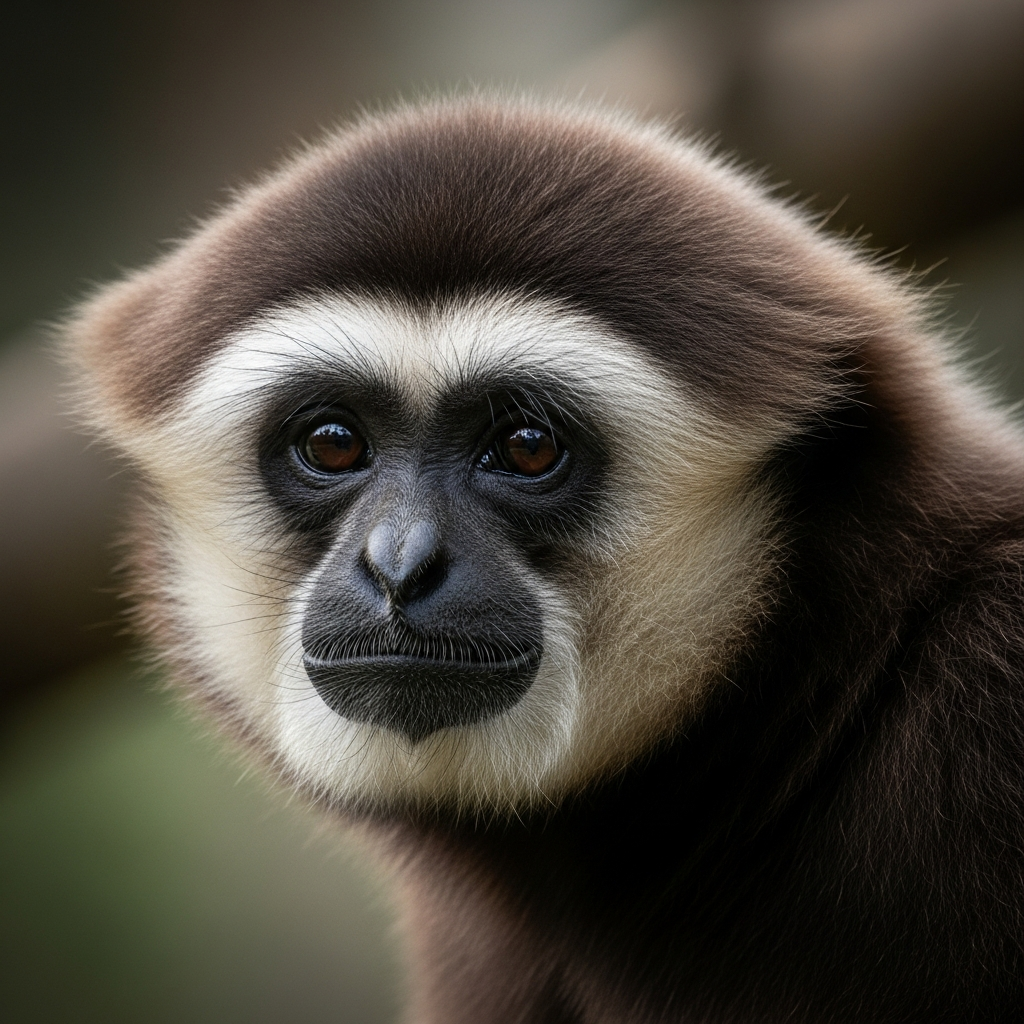
Stoneware mug, dishwasher safe
Buy Mug
Soft cotton tee, unisex sizes
Buy ShirtWhile not widely represented in global popular culture, the Bornean white-bearded gibbon holds ecological importance as a seed disperser in its native forests and features in local folklore under names such as Owa-owa and Owa berjanggut putih. Its presence underscores the rich biodiversity of Borneo's tropical forests.
Endemic to the tropical forests of southern and western Borneo, the Bornean white-bearded gibbon occupies fragmented populations mainly along the Kapuas, Barito, and Mahakam river systems. These dense forest habitats provide the canopy cover essential for its arboreal lifestyle.






This species typically lives in small, monogamous family groups consisting of a mated pair and their offspring. Territorial duet singing is a hallmark of their social interaction, reinforcing pair bonds and marking territory boundaries within the dense forest.
Though detailed dietary studies are limited, the Bornean white-bearded gibbon primarily consumes fruits, playing a vital role as a seed disperser. Its feeding behavior supports forest regeneration and biodiversity maintenance.
Classified as Critically Endangered, the Bornean white-bearded gibbon faces severe threats from habitat fragmentation, illegal pet trade, and hunting for bushmeat. Ongoing deforestation in Borneo continues to shrink its already limited range, making conservation efforts urgent.
Genetic and phylogenetic analyses place this species firmly within the Hylobates genus, closely related to H. muelleri and H. agilis. While historically treated as a subspecies, molecular evidence supports its distinct species status, reflecting evolutionary divergence within Borneo's gibbon populations.