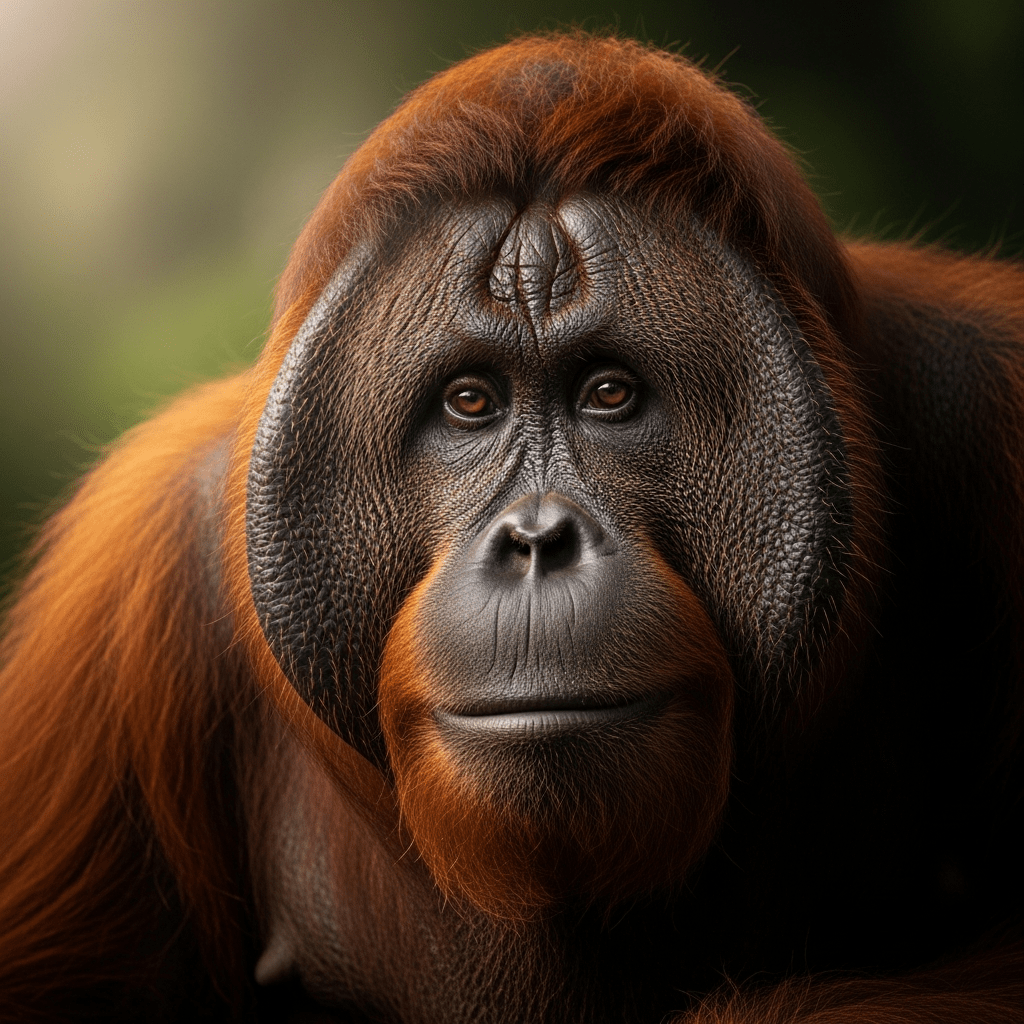
Bornean Orangutan
The Bornean orangutan (Pongo pygmaeus) is a critically endangered great ape species native exclusively to the island of Borneo, known for its distinctive reddish-brown fur and remarkable intelligence.
The Bornean orangutan (Pongo pygmaeus) is a critically endangered great ape species native exclusively to the island of Borneo, known for its distinctive reddish-brown fur and remarkable intelligence.
First described by Carl Linnaeus in 1760, the Bornean orangutan evolved on Borneo and diverged from its closest relatives—the Sumatran and Tapanuli orangutans—around 674,000 years ago. Its lineage reflects a long history shaped by the island's tropical rainforests.
Belonging to the superfamily Hominoidea and family Hominidae, the Bornean orangutan is classified within the subfamily Ponginae and genus Pongo. It is one of three recognized orangutan species, distinguished taxonomically as Pongo pygmaeus.
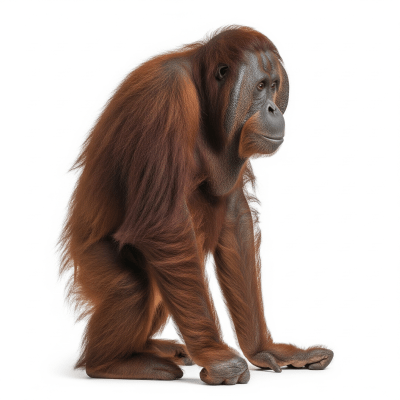
The Bornean orangutan is characterized by long, coarse reddish-brown fur and pronounced sexual dimorphism. Adult males weigh between 50 and 100 kilograms and develop large cheek pads (flanges) and throat sacs, while females are smaller, weighing 30 to 50 kilograms. Adults typically measure 110 to 150 centimeters in height.
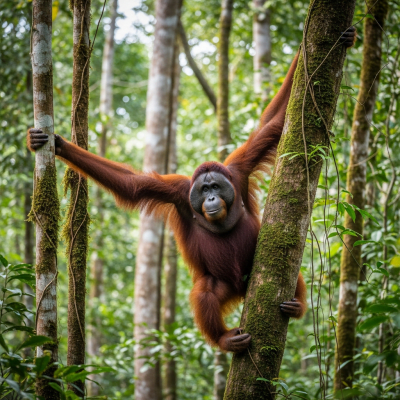
Primarily arboreal and slow-moving, Bornean orangutans lead mostly solitary or semi-solitary lives. Adult males maintain large territories that overlap with several females. Females invest heavily in offspring care, with long developmental periods reflecting their slow reproductive rate.
Bring this kind into your world illustrated posters, mugs, and shirts.
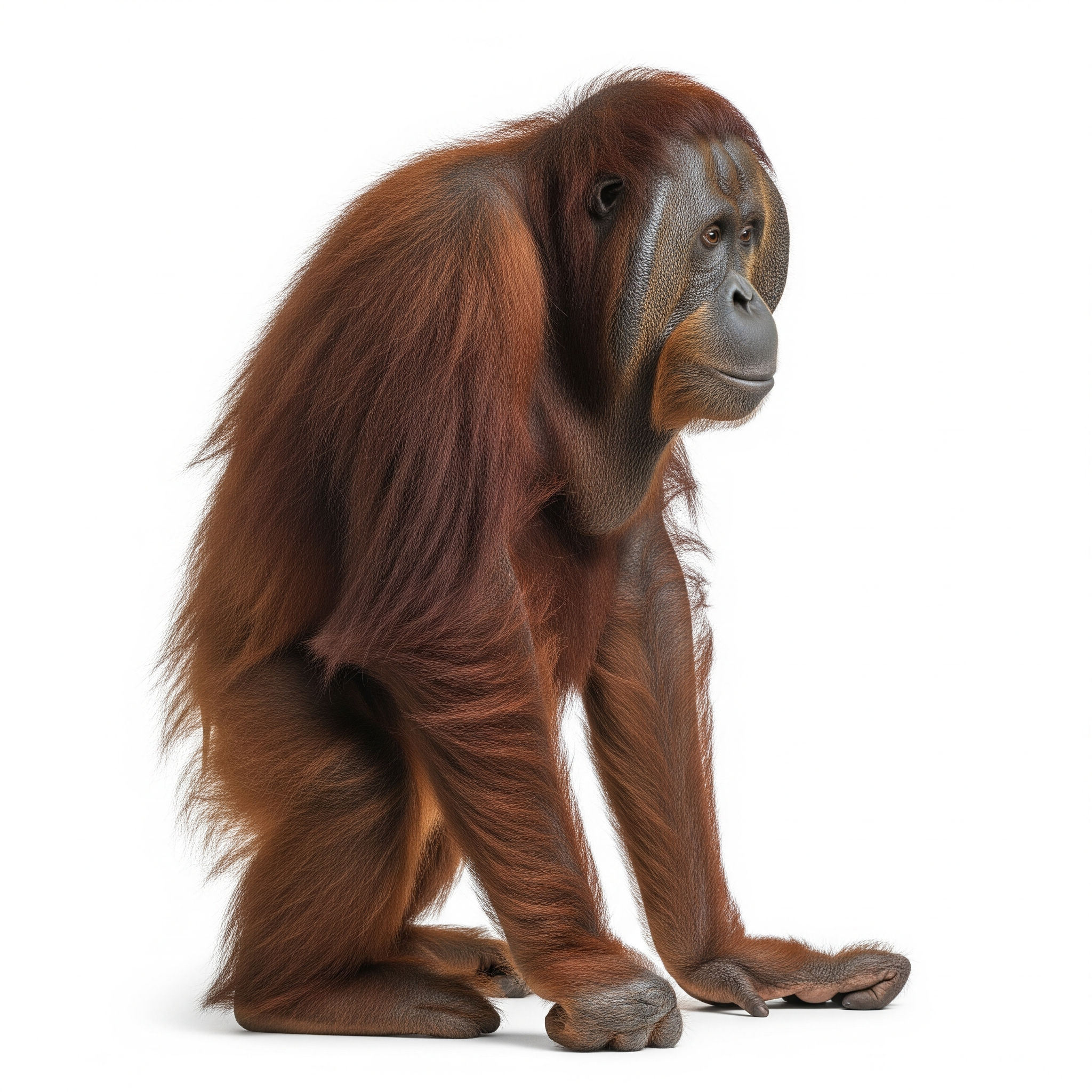
Archival print, museum-grade paper
Buy Poster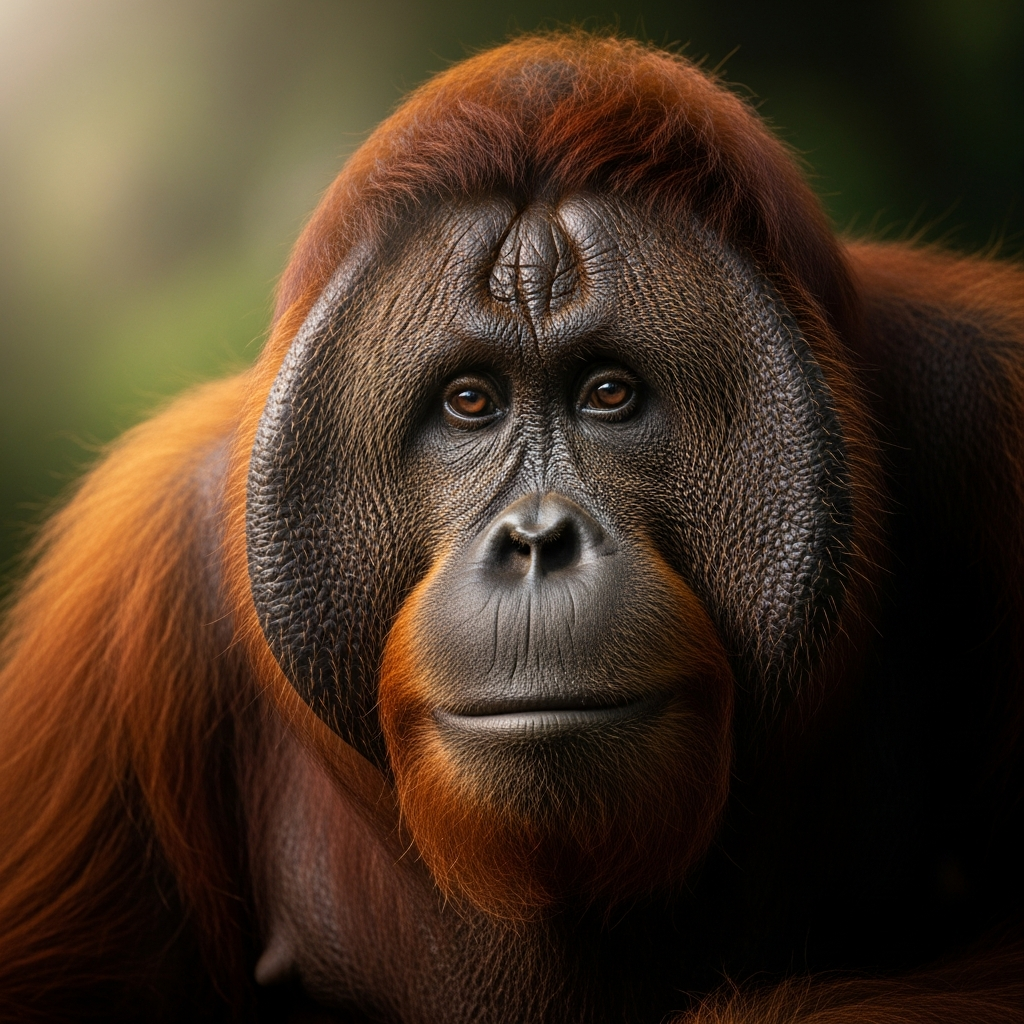
Stoneware mug, dishwasher safe
Buy Mug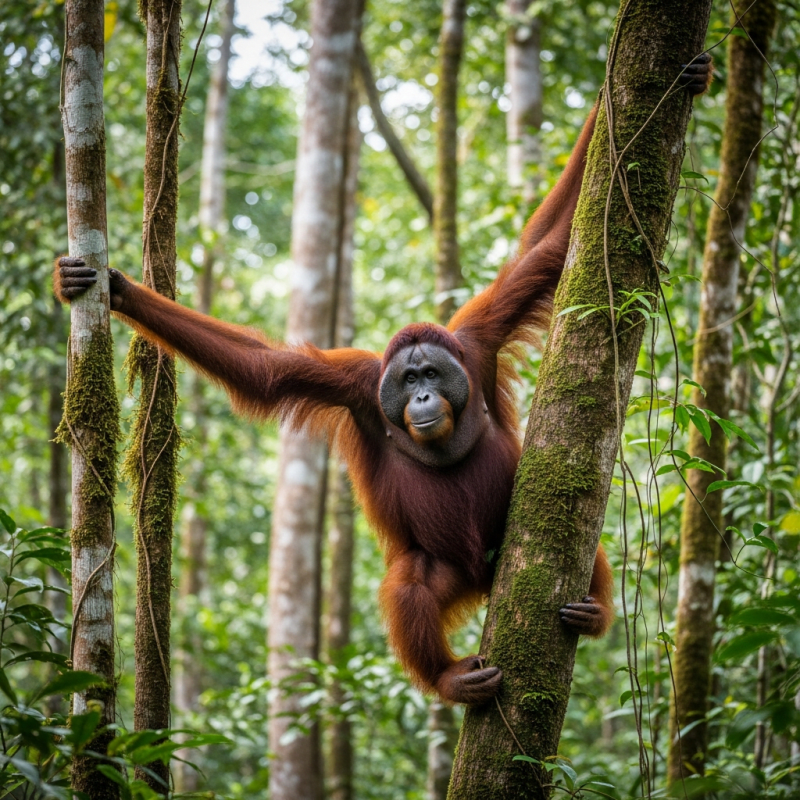
Soft cotton tee, unisex sizes
Buy ShirtKnown locally as "orang hutan," meaning "person of the forest," the Bornean orangutan holds a revered place in regional folklore and symbolizes the rich biodiversity of Borneo's rainforests. Today, it also plays a vital role in ecotourism, fostering conservation awareness and economic benefits for local communities.
Endemic to Borneo, the Bornean orangutan inhabits lowland dipterocarp, peat swamp, and montane forests below 1,500 meters elevation. It favors areas rich in fruiting trees, which support its largely frugivorous diet, and its range covers Indonesian and Malaysian territories as well as Brunei.

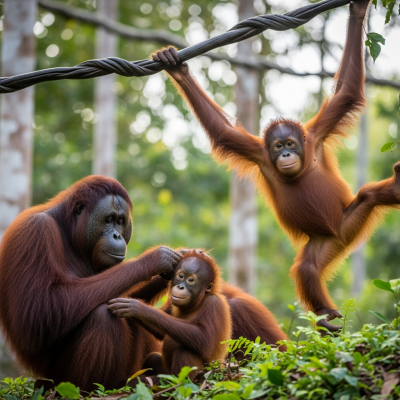
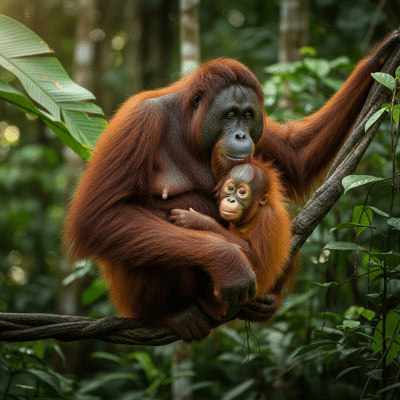
Bornean orangutans exhibit a semi-solitary social structure. Adult males maintain expansive territories that overlap with multiple females, while social interactions are generally loose and infrequent. Females primarily care for their offspring, reflecting a slow reproductive strategy.
Their diet is predominantly frugivorous, with about 60% consisting of fruit. They supplement this with leaves, bark, insects, and occasionally small vertebrates. Their feeding habits are closely tied to the seasonal availability of forest resources.
Classified as Critically Endangered, the Bornean orangutan faces rapid population decline due to deforestation, illegal hunting, habitat fragmentation, forest fires, expansion of palm oil plantations, and the illegal pet trade. Conservation efforts include habitat protection, anti-poaching measures, and captive breeding programs.
The Bornean orangutan diverged from its closest relatives roughly 674,000 years ago. It shows clear genetic distinctions from the Sumatran and Tapanuli orangutans. While no natural hybrids are known, rare captive hybridization has been documented. Genetic studies continue to refine subspecies boundaries within Pongo pygmaeus.