
Annam (Black-Crested) Gibbon
The Annam (black-crested) gibbon (Nomascus annamensis) is a species of lesser ape known for its striking sexual dimorphism and melodious calls, native to the Annamite mountain range of Southeast Asia.
The Annam (black-crested) gibbon (Nomascus annamensis) is a species of lesser ape known for its striking sexual dimorphism and melodious calls, native to the Annamite mountain range of Southeast Asia.
Formally described in 2010 by Thinh and colleagues, the Annam gibbon was distinguished through detailed molecular and morphological research. It originates from the Annamite Mountains spanning Vietnam, Laos, and Cambodia, where it diverged from related Nomascus species via allopatric speciation.
The Annam gibbon belongs to the superfamily Hominoidea, within the family Hylobatidae, which comprises the lesser apes. Its genus, Nomascus, includes several crested gibbon species, with Nomascus annamensis recognized as a distinct species based on genetic and morphological evidence.
This gibbon exhibits pronounced sexual dimorphism in coloration: males display predominantly black fur with silvery cheek patches, while females are golden or buff with a dark facial patch. Adults range from 45 to 64 centimeters in height and weigh between 7 and 8 kilograms. Adapted for an arboreal lifestyle, they have elongated arms and hook-shaped hands ideal for brachiation through forest canopies.
The Annam gibbon is arboreal and highly agile, moving gracefully through the forest canopy by swinging from branch to branch. It lives in typically monogamous family groups consisting of an adult pair and their offspring. Its complex vocalizations serve to establish territory boundaries and strengthen pair bonds, reflecting sophisticated social communication.
Bring this kind into your world illustrated posters, mugs, and shirts.

Archival print, museum-grade paper
Buy Poster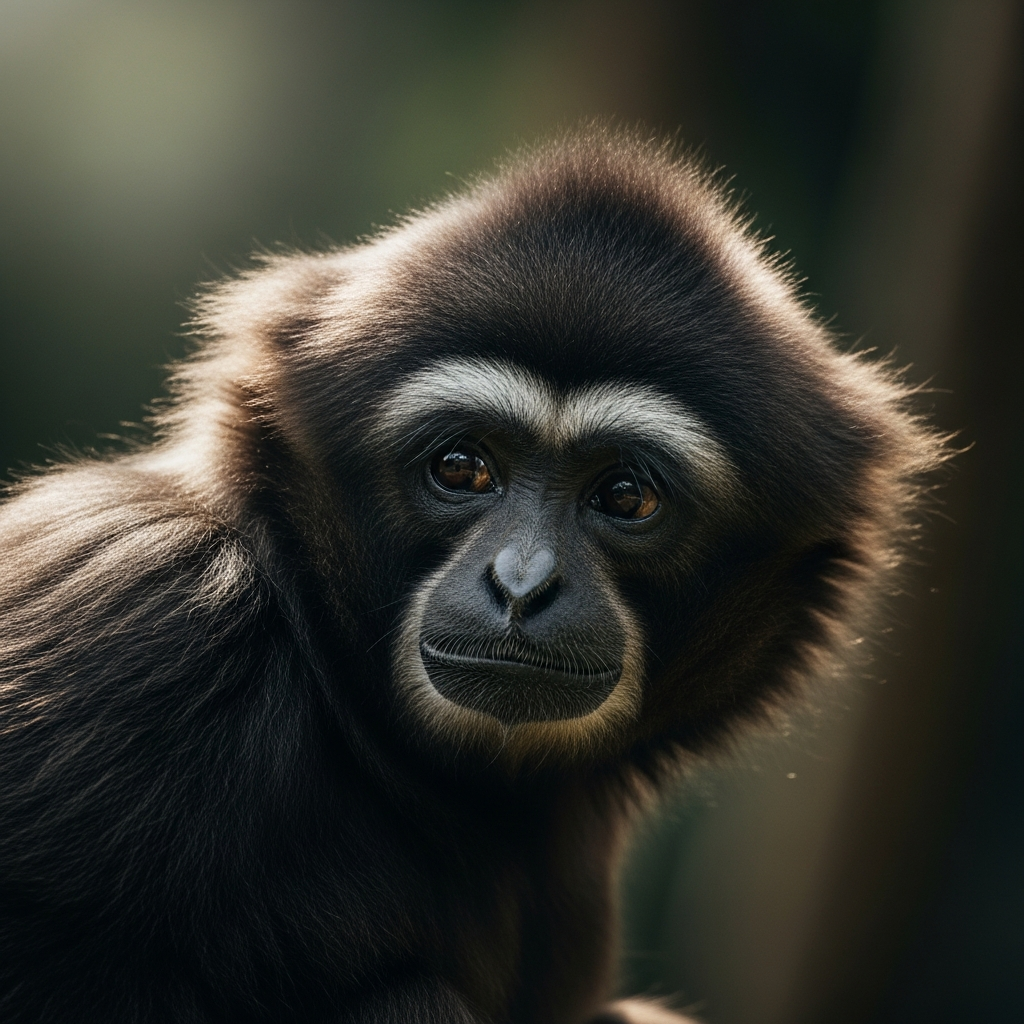
Stoneware mug, dishwasher safe
Buy Mug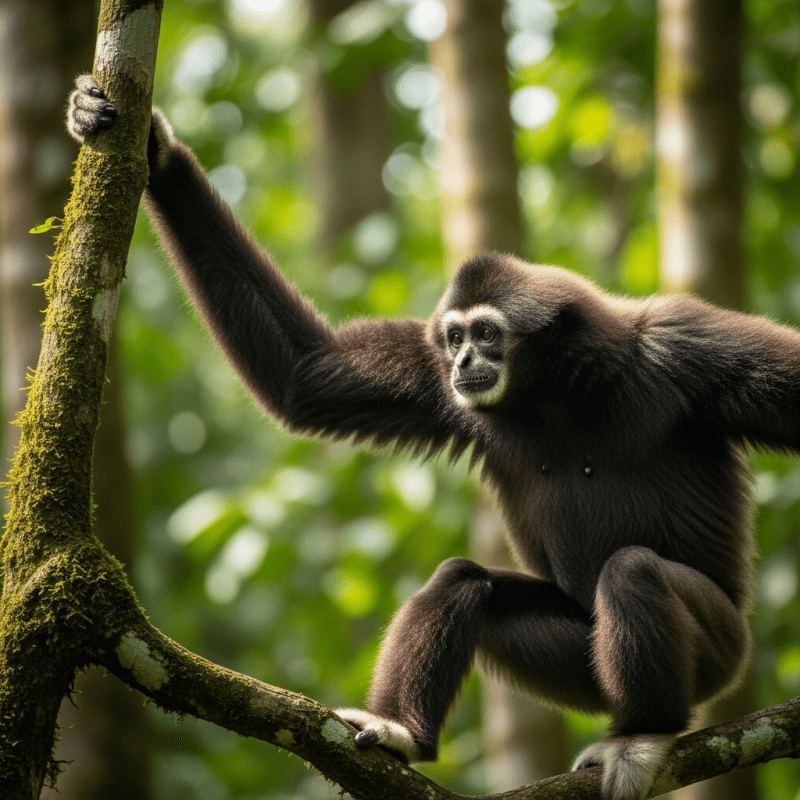
Soft cotton tee, unisex sizes
Buy ShirtLocally, the Annam gibbon holds cultural importance, appearing in regional folklore and occasionally depicted in traditional art and storytelling. Despite its elusive nature, it symbolizes the rich biodiversity of the Annamite region and features in conservation awareness efforts.
The Annam gibbon is found exclusively in the evergreen and semi-evergreen forests of the Annamite mountain range, spanning elevations from 200 to 1,500 meters. This region covers parts of Vietnam, Laos, and Cambodia, where dense forest provides essential canopy cover for its arboreal lifestyle.





Typically, Annam gibbons form small, monogamous family groups composed of an adult pair and their offspring. These tight-knit units maintain territories through vocal duets and exhibit strong pair bonds, with offspring remaining dependent for several years.
While specific dietary details are limited, like other gibbons, the Annam gibbon is primarily frugivorous, feeding on a variety of fruits supplemented by leaves, flowers, and occasionally insects. Its feeding behavior supports seed dispersal critical to forest regeneration.
Classified as Endangered, the Annam gibbon faces significant threats from habitat loss due to deforestation and illegal hunting for bushmeat and the pet trade. Its sensitivity to habitat disturbance makes conservation of its forest environment vital. It is protected under CITES Appendix I, restricting international trade.
Genetic analyses reveal that the Annam gibbon diverged from other Nomascus species through allopatric speciation, supported by mitochondrial DNA studies. This distinct lineage underscores its unique evolutionary history within the crested gibbons.