Abbott's Gray Gibbon
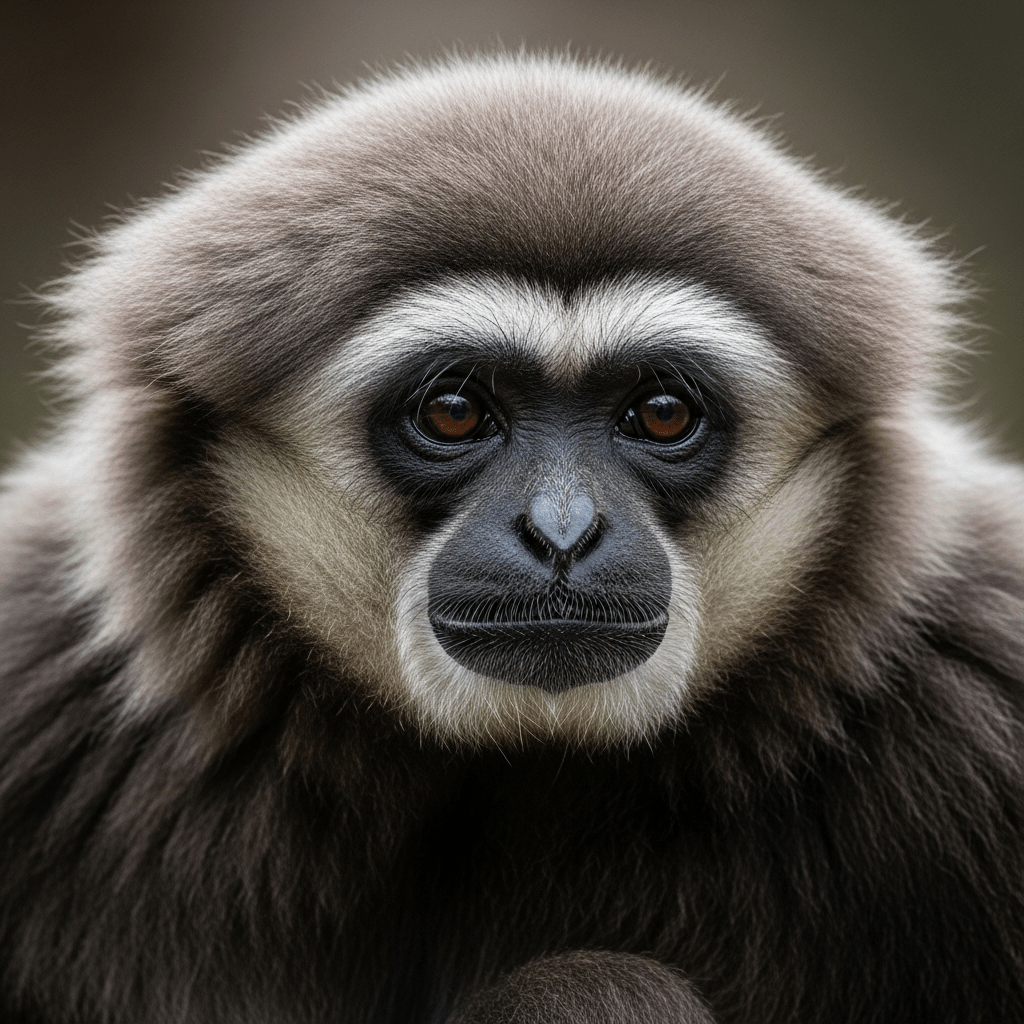
Abbott's gray gibbon (Hylobates abbotti) is a lesser ape native to Borneo, known for its distinctive gray fur and melodious vocalizations that mark its arboreal presence.
Abbott's gray gibbon (Hylobates abbotti) is a lesser ape native to Borneo, known for its distinctive gray fur and melodious vocalizations that mark its arboreal presence.
First described by Frederick W. True in 1907, Abbott's gray gibbon was identified from specimens collected in northern Borneo. Its evolutionary roots lie within the family Hylobatidae, genus Hylobates, closely related to other Bornean gibbons with ongoing discussions about its precise species status.
Abbott's gray gibbon belongs to the superfamily Hominoidea, family Hylobatidae, and genus Hylobates. It is classified as a species, though some authorities consider it a subspecies of either Hylobates muelleri or Hylobates agilis, reflecting taxonomic debates within Bornean gibbons.
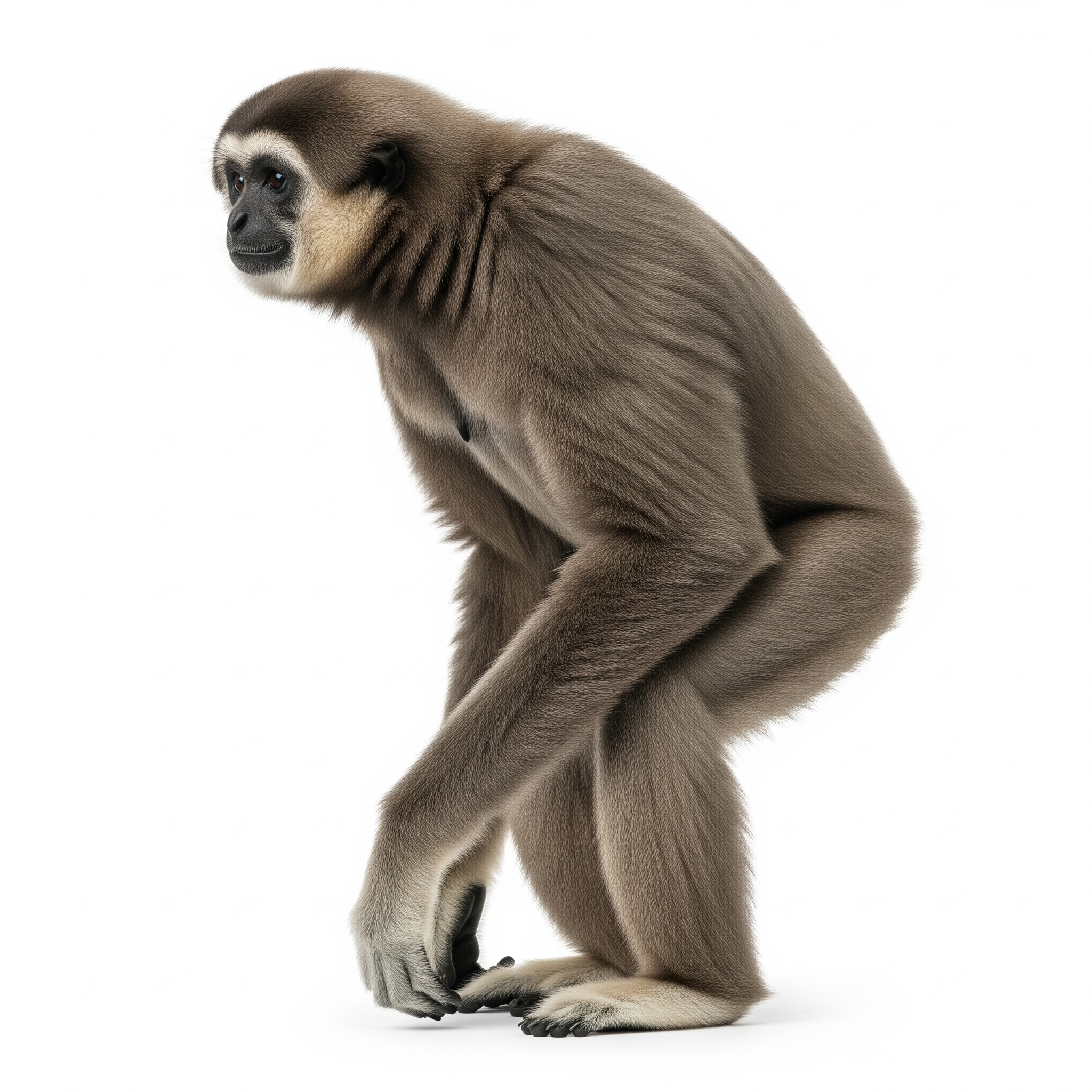
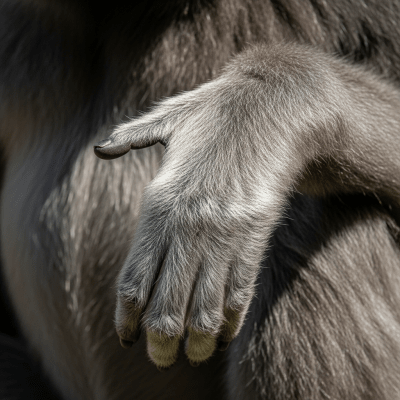
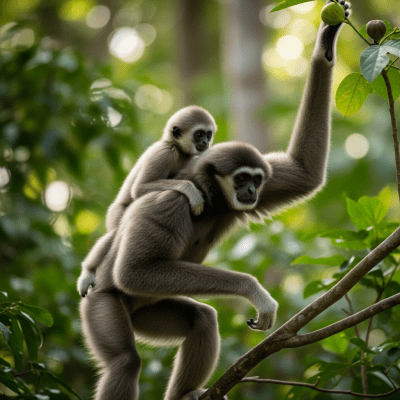
This small, slender ape measures between 44 and 60 centimeters in body length and weighs 5.5 to 7.5 kilograms. Its pelage is predominantly gray to brownish-gray, accented by lighter facial markings and a distinctive ring of white fur encircling the face. Adapted for life in the treetops, Abbott's gray gibbon moves with agile brachiation, swinging gracefully through the forest canopy.
Abbott's gray gibbon lives primarily in monogamous pairs with their offspring, exhibiting complex vocalizations that serve both territorial defense and pair bonding. Highly arboreal, it rarely descends to the ground, relying on its acrobatic arm-swinging locomotion to navigate the forest canopy.
Bring this kind into your world illustrated posters, mugs, and shirts.
Archival print, museum-grade paper
Buy Poster
Stoneware mug, dishwasher safe
Buy Mug
Soft cotton tee, unisex sizes
Buy ShirtWhile Abbott's gray gibbon holds no notable culinary or commercial use, it features in local cultural contexts under various regional names, including some Dayak terms. Its melodious calls contribute to the natural soundscape of Borneo's forests, though it is less prominent in broader art or mythological traditions.
Abbott's gray gibbon inhabits the dense, arboreal tropical forests of northern Borneo. Its range is restricted to this island, where it depends on continuous forest canopy for movement and survival. Habitat loss and fragmentation pose significant challenges to its distribution.


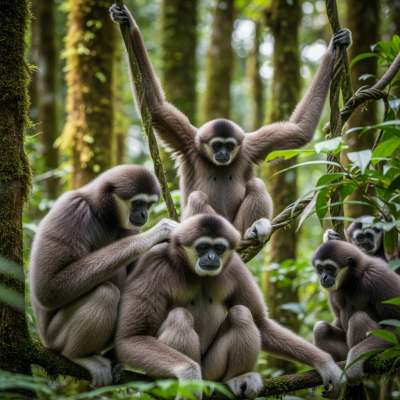
Typically, Abbott's gray gibbons form small social units consisting of monogamous pairs and their offspring. These family groups maintain territories through vocal communication and exhibit strong pair bonds reinforced by their complex songs.
While specific dietary details are limited, Abbott's gray gibbon, like other gibbons, is primarily frugivorous, feeding on a variety of fruits supplemented by leaves and other plant materials found in the forest canopy.
Classified as Vulnerable, Abbott's gray gibbon faces ongoing threats from habitat loss due to deforestation and fragmentation. Hunting and illegal pet trade further endanger its populations. Legal protections under CITES Appendix I prohibit international trade, but enforcement challenges remain.
Genetically, Abbott's gray gibbon is part of the genus Hylobates, closely related to other Bornean gibbons. Its precise species boundaries remain debated, reflecting complex evolutionary relationships within this group. No specific genetic diversity or hybridization data are currently documented.